

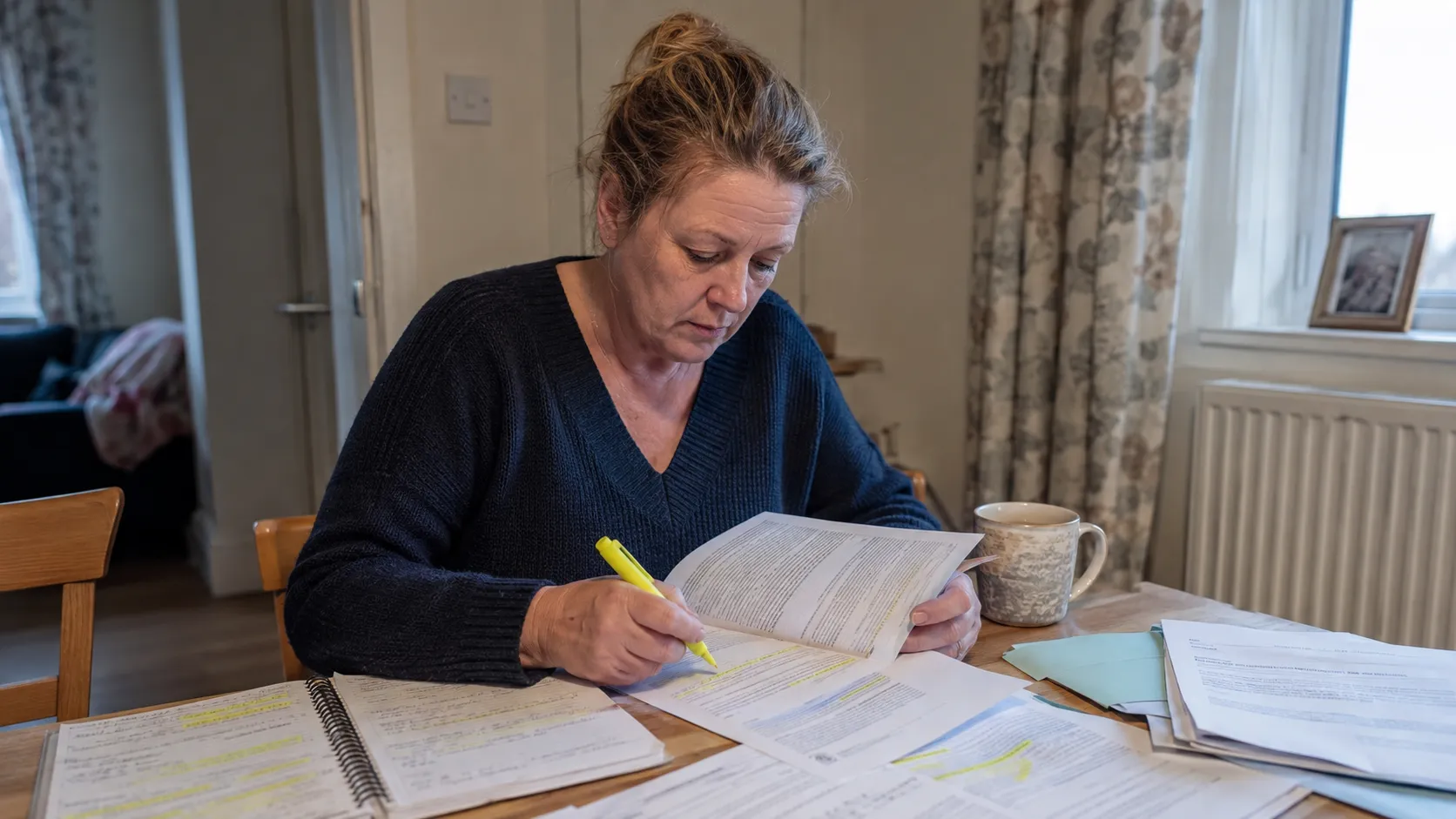
A mandatory reconsideration for PIP is the process you normally use to ask the Department for Work and Pensions (DWP) to look again at a Personal Independence Payment decision you believe is wrong.
You can request a PIP mandatory reconsideration if you disagree with a refusal, the level of your award, the points you received, the length of your award or another part of the decision.
You usually need to request mandatory reconsideration within one month of the date on your decision letter. The DWP then reviews the disputed decision and sends you a Mandatory Reconsideration Notice explaining the outcome.
Mandatory reconsideration is normally the step you must complete before appealing a PIP decision to an independent tribunal.
If you are also trying to understand wider changes to the benefit, the latest PIP benefit changes in 2026 provide separate context on payment rates and the wider PIP system.
When Can You Challenge a PIP Decision?
You can challenge a PIP decision when you believe the DWP has reached the wrong conclusion based on your circumstances and the evidence available.
This can include situations where:
- Your PIP Claim Was Refused: You believe you should have received an award
- You Received Too Few Points: You believe one or more activities were assessed incorrectly
- Your Award Is Too Low: You believe you should receive a different rate of the daily living or mobility component
- Your Award Period Is Wrong: You disagree with how long the award has been made for
- Important Evidence Was Missed: You believe information relevant to your claim was not properly considered
The purpose of a mandatory reconsideration is not simply to say that you are unhappy with the result. You should explain which part of the decision you believe is wrong and why.
If your main concern is whether you meet PIP rules rather than whether an existing decision was made correctly, information about PIP eligibility changes in 2026 can help distinguish an eligibility question from a decision challenge.
What if Your Condition Has Changed Since the Decision?
A change that happened after the original decision is different from evidence showing that the original decision was wrong.
For example, if your mobility became substantially worse several months after your decision, that does not necessarily prove that the earlier assessment was incorrect. You may instead need to report a change of circumstances.
Keep the dates clear when preparing a mandatory reconsideration. Explain what your needs were during the period covered by the decision you are challenging.
Starting work does not automatically mean that you are no longer entitled to PIP. PIP assesses how your health condition or disability affects you rather than whether you are employed.
The separate issue of employment and disability benefits is covered in the recent update on the risk of losing benefits when trying work.
What Is the PIP Mandatory Reconsideration Deadline?

You normally have one month from the date of the PIP decision to request a mandatory reconsideration.
The official GOV.UK mandatory reconsideration guidance confirms that a late request can still be made where you have a good reason, with hospital treatment or bereavement given as examples.
If you are submitting your request in writing, do not assume that posting it on the final day is enough. GOV.UK states that a written letter or form normally needs to arrive within the deadline.
Can You Request a Late Mandatory Reconsideration?
Yes, you can ask for a mandatory reconsideration after the normal one-month period, but you should explain why the request is late.
Your explanation should be truthful and specific. If illness, hospital treatment, bereavement or another serious circumstance prevented you from dealing with the decision sooner, explain what happened and how it affected your ability to make the request.
A late request should not be treated as automatically accepted. If you have already missed the deadline, it is usually better to act promptly rather than allow more time to pass.
How to Apply for a PIP Mandatory Reconsideration?
You can request a mandatory reconsideration by contacting the office that made the decision. Depending on your circumstances, you can generally request it using a form, by letter or by telephone.
Your PIP decision letter should contain the relevant contact details.
Complete the CRMR1 Form
The CRMR1 is the DWP’s Mandatory Reconsideration Request Form.
The official CRMR1 mandatory reconsideration form and guidance were available through GOV.UK and the publication page was last updated on 20 January 2026. DWP says the completed form and relevant evidence should be sent to the address shown at the top of your decision letter.
The form gives you space to identify the original decision and explain why you believe it is wrong.
When completing it, make sure you provide the required personal information accurately and deal separately with each part of the decision you want reconsidered.
Write a Mandatory Reconsideration Letter
You do not have to use the CRMR1 form in every case. DWP also allows you to challenge a decision by writing a letter.
Your letter should clearly identify:
- Your Name
- Your Address
- Your Date of Birth
- Your National Insurance Number
- The Date of the Decision
- The Decision You Are Challenging
- The Parts You Believe Are Wrong
- Why You Believe They Are Wrong
- Relevant Supporting Evidence
Keep a copy of anything you send.
Request Mandatory Reconsideration by Phone
You can also contact the benefit office by telephone.
Even where you make the initial request by phone, it is important to be clear about which part of the PIP decision you dispute. Keep your own note of when you called, what you discussed and any information you were asked to provide.
What Should You Include in a PIP Mandatory Reconsideration?
A strong PIP mandatory reconsideration should focus on the disputed findings rather than simply repeating your diagnosis or saying that the assessment was unfair.
The decision maker needs to understand what you believe was assessed incorrectly and what evidence supports your position.
Identify the Parts of the Decision You Disagree With
Work through your PIP decision carefully.
For each disputed activity, explain:
- What the Decision Says
- Why You Disagree
- What Actually Happens When You Attempt the Activity
- What Help, Supervision or Assistance You Need
- How Often the Difficulty Occurs
- What Evidence Supports Your Explanation
Addressing individual findings is normally clearer than writing one general paragraph saying that the entire decision is wrong.
Explain How Your Condition Affects Daily Living or Mobility?
PIP is concerned with the functional effect of your condition.
A diagnosis can be relevant evidence, but the name of a medical condition does not by itself explain how you manage tasks such as preparing food, washing, dressing, communicating, managing treatment, making budgeting decisions, moving around or planning journeys.
Use specific examples from your daily life.
For instance, instead of writing:
“I cannot prepare food because of my condition.”
A more informative explanation could state what happens when you try, whether you need another person, whether you use an aid, how long the task takes and what risks or difficulties occur.
Your account should reflect your actual circumstances. Do not exaggerate your limitations or copy examples that do not apply to you.
Challenge Incorrect Statements in Your PIP Assessment
If your assessment report contains information you believe is inaccurate, identify the specific statement and explain why you dispute it.
For example, an assessment might state that you completed a particular movement without difficulty.
If you believe that observation does not accurately represent your ability to perform a relevant activity repeatedly or in everyday circumstances, explain the difference and provide supporting information where possible.
Focus on errors that could affect the decision rather than spending large sections correcting minor details that have no bearing on your entitlement.
What Evidence Can Support a PIP Mandatory Reconsideration?
Relevant evidence can strengthen a mandatory reconsideration when it helps demonstrate why the decision was wrong.
Medical and Professional Evidence
Useful evidence may include information from professionals who understand your condition or support needs, such as:
- GP Records or Letters
- Consultant Reports
- Occupational Therapy Information
- Physiotherapy Reports
- Mental Health Team Evidence
- Care Plans
- Prescription or Treatment Information
The value of evidence depends on what it demonstrates.
A letter that only confirms your diagnosis may be less useful than evidence explaining how the condition affects a disputed daily living or mobility activity.
Evidence About Your Day-to-Day Difficulties
Evidence does not always have to come from a doctor.
Depending on the issue being challenged, relevant information could include records showing the support you receive, evidence concerning aids or adaptations, care documentation or detailed examples of what happens when you attempt an activity.
Specific evidence is usually more useful than sending a large volume of documents without explaining their relevance.
Do You Need New Evidence?
Not necessarily.
If the evidence already submitted clearly supports your position, your mandatory reconsideration can identify it and explain why you believe it should lead to a different conclusion.
New evidence may be useful where it adds information that was not previously available or explains your functional difficulties more clearly.
Do not delay a time-sensitive mandatory reconsideration indefinitely because you are waiting for a particular document. Keep the one-month deadline in mind.
PIP Mandatory Reconsideration Example
Consider a fictional claimant called Sarah who has a long-term condition affecting her hands.
Her PIP decision states that she can prepare a simple meal independently. Sarah disagrees because she says she cannot safely handle certain utensils and regularly needs another person to help with parts of food preparation.
Example of a Weak Explanation
“I disagree with the decision because my hands are bad and I should have received more points.”
This tells the decision maker that Sarah disagrees but gives very little information about why the finding is wrong.
Example of a Stronger Explanation
“I disagree with the decision that I can prepare food independently. Because of weakness and poor grip in my hands, I regularly drop utensils and cannot safely chop ingredients.
On most days my partner prepares ingredients for me or stays nearby to help. For example, in the week before my assessment I dropped a pan while trying to move it from the hob. My occupational therapy records also describe the problems with my grip.”
The second version is more useful because it identifies the disputed conclusion, describes the functional problem, gives a real example and points towards supporting evidence.
The example is illustrative only. Your mandatory reconsideration should always describe your own circumstances accurately.
What Happens After You Submit a PIP Mandatory Reconsideration?

The DWP will reconsider the original decision and any relevant information provided.
Once the reconsideration has been completed, you will receive a letter called a Mandatory Reconsideration Notice. It tells you whether the decision has changed and explains the reasons and evidence considered.
Can DWP Change or Reduce Your PIP Award?
A mandatory reconsideration can result in the decision changing or remaining the same.
Where you already have a PIP award and ask for it to be reconsidered, you should be aware that reviewing the decision can affect the award. DWP’s CRMR1 guidance states that the amount awarded could go up, down or stay the same, and an award can potentially stop.
That does not mean you should avoid challenging a decision you believe is wrong. It does mean you should understand what is being reconsidered and present your case accurately.
PIP also operates separately from many means-tested benefits. If you receive Universal Credit, current Universal Credit benefit rates for 2026 to 2027 can help you review that part of your household income separately.
What Is a Mandatory Reconsideration Notice?
The Mandatory Reconsideration Notice, often shortened to MRN, is the written decision issued after the reconsideration.
Keep it safely. If you still disagree with the outcome and want to appeal, you normally need the notice for the tribunal process.
How Long Does PIP Mandatory Reconsideration Take in 2026?
There is no single guaranteed processing time for every PIP mandatory reconsideration.
The latest DWP PIP statistics to April 2026 show that in April 2026, the median mandatory reconsideration clearance time was:
| Claim Type | Median Clearance Time |
|---|---|
| New PIP Claims | 43 Calendar Days |
| DLA Reassessments | 44 Calendar Days |
These are median processing times, not statutory deadlines or promises about how long your individual case will take.
DWP notes that clearance times can fluctuate because of factors including demand, staffing and operational workloads.
What Is the PIP Mandatory Reconsideration Success Rate in 2026?
There is no single percentage that can tell you whether your mandatory reconsideration will succeed.
Official DWP statistics show that 26% of mandatory reconsiderations cleared in the quarter ending April 2026, excluding withdrawn cases, resulted in a change in award.
Across the five-year period from May 2021 to April 2026, 28% of cleared mandatory reconsiderations, excluding withdrawals, resulted in a change in award.
Latest DWP Mandatory Reconsideration Figures
In the quarter ending April 2026, DWP recorded:
- 74,000 Mandatory Reconsiderations Registered
- 91,000 Mandatory Reconsiderations Cleared
- 26% Of Cleared MRs Changed The Award, Excluding Withdrawals
The figures need context.
For initial PIP decisions following an assessment between January 2021 and December 2025, DWP’s customer-journey statistics show that 16% of completed mandatory reconsiderations resulted in a change to the award, excluding withdrawals.
For award reviews following an assessment over the same period, the figure was 28%.
This is why a headline “PIP mandatory reconsideration success rate” can be misleading if it does not explain which group of cases is being measured.
Why the Statistics Do Not Predict Your Individual Outcome?
National statistics describe thousands of cases with different medical conditions, evidence, assessment histories and disputed decisions.
They cannot tell you whether your claim will change.
Your own outcome depends on the decision being challenged, the applicable PIP criteria, your circumstances and the evidence considered.
Wider policy discussions should also be kept separate from an individual MR decision. Changes elsewhere in the benefits system, including the ongoing closure of legacy DWP benefits, do not replace the need to challenge a PIP decision through the correct process.
What Happens if Your Mandatory Reconsideration Is Unsuccessful?
If the DWP does not change the decision, or changes it but you still believe the outcome is wrong, you can normally appeal to the Social Security and Child Support Tribunal.
The tribunal is independent of government. GOV.UK states that you usually need to appeal within one month of the date of your Mandatory Reconsideration Notice.
You normally cannot proceed with a PIP tribunal appeal until you have received the Mandatory Reconsideration Notice.
Appealing Your PIP Decision to a Tribunal
An appeal is different from mandatory reconsideration.
During mandatory reconsideration, DWP looks at its own decision again. At tribunal stage, an independent tribunal considers the dispute.
If you decide to appeal, read your Mandatory Reconsideration Notice carefully and make sure you understand the appeal deadline.
Keep copies of your decision documents, mandatory reconsideration request, evidence and MR notice because they can be relevant to the next stage.
Will PIP Be Backdated if the Decision Changes?
If a mandatory reconsideration results in a higher entitlement, you may receive arrears where the revised decision means additional PIP was due for an earlier period covered by the decision.
The exact amount and period depend on the effective date of the revised entitlement and the circumstances of your claim.
This should not be confused with receiving PIP for any period before you were legally entitled to it.
The difference between arrears following a delayed or revised award and general “backdating” can cause confusion. Related coverage of PIP backdated payments and arrears looks at that distinction in more detail.
Always check the dates and payment calculation shown on any revised decision rather than assuming that every successful mandatory reconsideration produces the same type of back payment.
Does the Same PIP Mandatory Reconsideration Process Apply Across the UK?
No. The process depends on where you live and which disability benefit system applies.
| UK Nation | Benefit System | Decision Challenge Process |
|---|---|---|
| England | Personal Independence Payment | DWP Mandatory Reconsideration |
| Wales | Personal Independence Payment | DWP Mandatory Reconsideration |
| Scotland | Adult Disability Payment For Transferred And New Scottish Claims | Social Security Scotland Re-Determination |
| Northern Ireland | Personal Independence Payment | Department for Communities Mandatory Reconsideration |
DWP’s latest PIP statistical release covers England and Wales and states that the transfer of Scottish PIP cases to Adult Disability Payment was completed by the end of June 2025.
In Scotland, challenges to relevant Social Security Scotland disability benefit decisions use the re-determination process.
Northern Ireland continues to operate PIP through the Department for Communities. NI Direct states that a mandatory reconsideration normally needs to be requested within one calendar month of the decision notice and can be requested by phone, letter or the MR2(NI) form.
If you live outside England or Wales, use the instructions on your own decision notice rather than assuming that every DWP form and contact route in an England-and-Wales guide applies to you.
Conclusion
A mandatory reconsideration for PIP gives you an opportunity to challenge a decision you believe is wrong before moving to a tribunal appeal.
You normally have one month from the date of your decision to request reconsideration, so checking the deadline should be one of your first priorities.
Your request should identify the parts of the PIP decision you disagree with, explain why they are wrong and connect your real-world difficulties to relevant evidence. A clear explanation of what happens when you carry out daily living or mobility activities is usually more useful than relying only on the name of your medical condition.
The latest DWP figures show that some mandatory reconsiderations result in changed awards, but national percentages cannot predict what will happen in an individual case.
If DWP does not change the decision and you still disagree, you can normally consider an independent tribunal appeal after receiving your Mandatory Reconsideration Notice.
Frequently Asked Questions About Mandatory Reconsideration PIP
How Long Do You Have to Request a PIP Mandatory Reconsideration?
You normally have one month from the date on your decision letter. A late request may be considered where you have a good reason, but you should explain why the request was delayed.
Can You Request a PIP Mandatory Reconsideration After One Month?
Yes. DWP guidance allows you to request mandatory reconsideration after the normal one-month deadline if you have a good reason. Acceptance of a late request should not be assumed automatically.
Can You Ask for a PIP Mandatory Reconsideration by Phone?
Yes. DWP says you can contact the relevant benefit office by phone, letter or a mandatory reconsideration form. The contact details should appear on your decision letter.
Do You Need Medical Evidence for a PIP Mandatory Reconsideration?
Not in every case. Relevant medical evidence can help, particularly when it explains how your condition affects the activities being disputed. The important question is whether the evidence supports your reasons for saying the original decision was wrong.
Can a Mandatory Reconsideration Reduce Your Existing PIP Award?
Yes, that is possible. DWP’s mandatory reconsideration form guidance warns that an existing award can increase, decrease, stay the same or potentially stop when the decision is reconsidered.
How Long Does PIP Mandatory Reconsideration Take?
There is no guaranteed time for every case. In April 2026, official DWP figures showed median clearance times of 43 calendar days for new claims and 44 days for DLA reassessments.
Can You Appeal if Your PIP Mandatory Reconsideration Is Unsuccessful?
Yes. If you still disagree after receiving your Mandatory Reconsideration Notice, you can normally appeal to the independent Social Security and Child Support Tribunal. The usual appeal deadline is one month from the date of the MR notice.
Important: This article provides general information about the benefits process and is not legal or welfare-rights advice. Always check your decision letter and current official guidance for the rules applying to your circumstances.