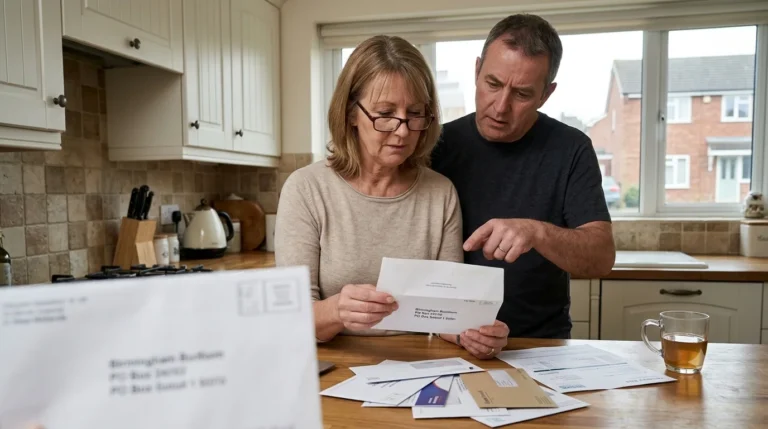


Receiving an unexpected letter marked PO Box 17, Stockport, SK1 4AJ can be concerning, particularly when it mentions an unpaid account or asks the recipient to make contact.
This address is used by Moorcroft Debt Recovery Limited, an established UK debt collection company. Moorcroft may contact individuals on behalf of banks, credit providers, utility companies, telecommunications businesses and other creditors.
The address appears genuine, but that does not automatically mean the amount claimed is correct or that the recipient is responsible for it.
Every letter should be checked carefully before personal information is disclosed, a payment is made or a repayment arrangement is accepted.
What Is PO Box 17 Stockport SK1 4AJ?
PO Box 17 is a correspondence address connected with Moorcroft Debt Recovery Limited and Moorcroft House in Stockport.
| Address detail | Information |
| PO Box number | PO Box 17 |
| Postal town | Stockport |
| Postcode | SK1 4AJ |
| Organisation commonly associated with it | Moorcroft Debt Recovery Limited |
| Likely purpose | Debt collection and account correspondence |
| Is the address genuine? | Yes, it is an established correspondence address |
| Does the address prove the debt is correct? | No, the individual account must still be verified |
Companies handling thousands of accounts frequently use PO Boxes to centralise returned mail, payment correspondence, complaints and supporting documents.
The same arrangement can be seen with other financial mailing addresses, including PO Box 189 Huddersfield, which has been associated with Lowell Financial.
Who Uses PO Box 17 Stockport SK1 4AJ?
The address is used by Moorcroft Debt Recovery Limited. The company is active in the UK and is authorised by the Financial Conduct Authority for specified activities.
Moorcroft may act as a debt collection agent for another organisation. In this situation, the original creditor still owns the account but has instructed Moorcroft to collect the outstanding balance.
The letter should identify:
- The name of the original creditor
- The Moorcroft account reference
- The account or agreement involved
- The balance allegedly outstanding
- The reason the account was referred
- The available response or payment options
Recipients should not assume that Moorcroft has purchased the debt. Its exact role should be stated in the correspondence. In many cases, it processes information and collects money under instructions from the lender or service provider.
Why Has Someone Received a Moorcroft Letter?
A letter from PO Box 17 Stockport usually means Moorcroft believes that an account connected with the recipient has an unpaid balance.
Possible reasons include:
| Reason for contact | What it could mean |
| Missed credit payment | A loan, overdraft or credit card account may be in arrears |
| Unpaid utility account | An energy or water provider may have referred the balance |
| Mobile or broadband debt | A telecommunications account may have been closed with money outstanding |
| Old account | A previous creditor may be attempting to recover an older balance |
| Repayment arrangement | Moorcroft may be reviewing or following up an existing plan |
| Incorrect identity | The debt may belong to someone with a similar name |
| Previous resident | Moorcroft’s records may still connect someone else with the address |
| Administrative error | A payment, account closure or dispute may not have been recorded correctly |
Receiving the letter does not establish liability by itself. The account could already have been paid, may be disputed or might belong to another person.
Is a Letter From PO Box 17 Stockport Genuine?
The address itself is genuinely associated with Moorcroft Debt Recovery Limited. However, the recipient should still verify the individual letter.
Fraudsters can copy real business names, postal addresses and branding. A familiar return address should therefore be considered one part of the verification process rather than conclusive proof.
A potentially genuine Moorcroft letter will normally contain:
- A recognisable creditor or service provider
- A clear account reference
- An explanation of the outstanding balance
- Consistent personal information
- Reasonable instructions for responding
- Information about repayment difficulties or complaints
- Contact details that match independently checked company records
Suspicious features can include:
- Demands for immediate payment without an explanation
- Requests for online banking passwords or security codes
- Payment instructions involving cryptocurrency or gift cards
- A bank account in an unrelated person’s name
- A QR code leading to an unfamiliar website
- Threats of immediate arrest
- Claims that goods will be removed without a court process
- Pressure to borrow more money to clear the balance
Other unfamiliar PO Boxes require the same evidence-led approach. For example, the identity behind PO Box 6887 Coventry cannot be established safely from the return address alone.
What Should a Recipient Do After Receiving the Letter?
The letter should not be ignored, but an immediate payment should not be made simply because it appears urgent.
1. Read the Complete Letter
The recipient should review every page, including the header, footer and small print. The original creditor’s name may be less prominent than the Moorcroft branding.
Important details include:
- The full name of the person being contacted
- The current and previous addresses shown
- The original creditor
- The account reference
- The opening balance
- Interest, charges or payments added
- The requested response date
- Any reference to legal proceedings
2. Keep the Letter and Envelope
The correspondence should be stored safely. The envelope may show the return address, postal date or other information that becomes useful if the account is disputed.
Any replies, emails, payment receipts and notes from telephone conversations should also be retained.
3. Verify Moorcroft Independently
The recipient should compare the letter with independently sourced information for Moorcroft Debt Recovery Limited. Contact details should be obtained separately rather than relying entirely on a telephone number, website or QR code printed in unexpected correspondence.
The original creditor can also be contacted through a trusted number to confirm whether the account has genuinely been referred to Moorcroft.
4. Check the Debt Details
Before accepting liability, the recipient should check personal records such as:
- Bank statements
- Credit agreements
- Final utility bills
- Account closure emails
- Previous creditor letters
- Payment receipts
- Credit reports
- Existing repayment agreements
A mismatch should be raised in writing.
5. Respond Before Important Deadlines
A standard collection letter is not the same as a court claim. However, the recipient should act promptly if the correspondence includes a formal Letter of Claim, claim form, judgment or fixed response deadline.
The DCB Legal parking fine process demonstrates how an ordinary collection dispute can become more serious if formal legal correspondence is left unanswered.
What If the Debt Is Not Recognised?
If the recipient does not recognise the creditor, account or amount, the debt should be disputed in writing.
The response can request:
- The original creditor’s full name
- The type of account involved
- The original account or agreement number
- The date the account was opened
- A complete balance breakdown
- Details of payments and charges
- Evidence connecting the recipient to the account
- Confirmation of Moorcroft’s authority to collect it
For regulated consumer credit debts, a firm must investigate a dispute based on potentially valid grounds. This includes situations where the recipient says that the debt does not exist, the amount is wrong or another person is responsible.
The collector is responsible for establishing that it is pursuing the correct person and the correct amount. A recipient should not be pressured into paying merely to stop further letters.
What If the Letter Is Addressed to a Previous Resident?
An unopened letter for someone who no longer lives at the address can normally be marked “Not known at this address” and returned through the postal system.
The current resident should not:
- Pay the previous resident’s debt
- Provide unnecessary personal information
- Pretend to be the named recipient
- Give details about where the former resident may now live unless there is a proper reason to do so
- Assume the debt has become connected with the property
Personal debts normally belong to the named individual, not to the address. Receiving someone else’s debt letter does not make the current occupier liable.
If letters continue, the current resident can notify Moorcroft in writing that the named person does not live there and request that its records be corrected.
What If the Debt Has Already Been Paid?
A recipient who has already settled the account should send copies of relevant evidence rather than original documents.
Useful evidence may include:
- Bank statements showing the payment
- A settlement confirmation
- A zero-balance statement
- An account closure email
- Receipts from the original creditor
- Confirmation of a previous repayment arrangement
The response should state clearly that the debt is disputed because payment has already been made. It should also ask Moorcroft to confirm the outcome of its investigation in writing.
Can Moorcroft Debt Recovery Enter a Home?
Moorcroft is a debt collection company, not automatically a court-appointed enforcement agent.
An ordinary debt collector cannot:
- Force entry into a home
- Seize possessions
- Remove a vehicle
- Pretend to have bailiff powers
- Order an employer to deduct money
- Issue a County Court Judgment by itself
A Moorcroft representative may request contact or, in some circumstances, propose a visit. However, a routine debt collector does not have the enforcement powers available to a properly authorised enforcement agent acting under the appropriate legal authority.
Court proceedings and enforcement are separate stages. A creditor would normally need to follow the relevant legal process before enforcement action could be considered.
Can Moorcroft Take Someone to Court?
Court action may be possible if a valid debt remains unpaid, but a letter from PO Box 17 does not mean that a court case has already started.
Depending on ownership and authority, Moorcroft may continue collecting for the creditor, return the account to the creditor or arrange for further legal action to be considered.
Before a recipient assumes that court proceedings are underway, the person should check whether the document is:
- A routine payment request
- A notice of arrears
- A default notice
- A Letter of Claim
- An official court claim form
- A court judgment
- An enforcement notice
Official court papers should never be ignored, even when the underlying debt is disputed.
Could the Debt Be Too Old to Enforce?
Some older debts may become statute-barred or prescribed, but the rules depend on the type of debt, where the recipient lives, whether court action has already occurred and whether a payment or written acknowledgement was made.
The general limitation period is often six years in England, Wales and Northern Ireland, while Scotland generally applies a five-year prescriptive period to many debts. These are not universal rules.
A recipient dealing with a very old account should obtain individual debt advice before:
- Making a payment
- Acknowledging liability in writing
- Entering a repayment plan
- Signing a settlement
- Assuming the debt is legally unenforceable
A debt being absent from a credit report does not automatically mean that it cannot be pursued.
Will a Moorcroft Letter Affect a Credit Score?
Receiving the letter itself does not create a new negative credit entry.
However, the original missed payments, default or court judgment connected with the account may already affect the recipient’s credit history.
Moorcroft’s involvement does not necessarily mean that a second default can be recorded for the same account.
If the credit file contains incorrect information, the entry can be disputed with the organisation reporting it and the relevant credit reference agency.
How Can Someone Complain About Moorcroft?
A complaint may be appropriate when Moorcroft:
- Continues pursuing a debt that has been validly disputed without investigating
- Contacts the wrong person repeatedly
- Refuses to correct inaccurate personal information
- Misstates the amount owed
- Uses misleading language about its powers
- Applies unreasonable pressure
- Ignores evidence of payment
- Fails to consider a reasonable repayment offer
- Does not make appropriate adjustments for vulnerability
The complaint should be submitted in writing and include the account reference, dates, supporting evidence and the resolution requested.
Keeping a clear written record can be particularly important if the complaint later needs to be reviewed by an independent complaints body.
Conclusion
PO Box 17 Stockport SK1 4AJ is a genuine correspondence address used by Moorcroft Debt Recovery Limited. A letter from this address will commonly concern an unpaid account that Moorcroft has been instructed to collect.
However, the existence of the address does not prove that every individual demand is accurate. The recipient should verify the sender, identify the original creditor, check the balance and request supporting information when the debt is unclear or disputed.
If the debt is genuine but unaffordable, the appropriate response is to propose a sustainable arrangement and seek independent debt advice.
Ignoring correspondence can allow the matter to escalate, while paying without checking could result in money being sent for an incorrect, duplicated or fraudulent claim.
FAQs
Who owns PO Box 17 Stockport SK1 4AJ?
The address is used by Moorcroft Debt Recovery Limited for debt collection and account correspondence.
Is PO Box 17 Stockport a scam address?
No. It is an established Moorcroft correspondence address. Nevertheless, every individual letter should be verified because genuine business details can be copied.
Why is Moorcroft contacting someone?
Moorcroft may have been instructed by a bank, lender, utility provider, telecommunications company or another creditor to collect an alleged outstanding balance.
Should a Moorcroft letter be ignored?
No. The letter should be checked and answered appropriately, even if the response is to dispute the debt or explain that the named person does not live at the address.
Does the recipient have to pay immediately?
No payment should be made until the recipient has confirmed that the debt belongs to them, the amount is accurate and the payment instructions are genuine.
Can Moorcroft send bailiffs?
Moorcroft cannot give an ordinary collector bailiff powers. Enforcement agents would normally become relevant only after the required legal and court procedures.
What happens if the debt belongs to a previous resident?
The current occupier is not normally responsible. The unopened letter can be returned as “Not known at this address”, and Moorcroft can be asked to update its records.
Can someone request proof of the debt?
Yes. A recipient can dispute an unfamiliar account and request information showing the original creditor, account details, balance calculation and basis of liability.
Can Moorcroft accept monthly payments?
An affordable repayment proposal may be considered after the debt has been verified. A person should not agree to payments that make essential household bills unaffordable.
Does a Moorcroft letter automatically create a CCJ?
No. A CCJ can only arise through a court process. A standard collection letter is not a judgment and does not automatically create one.