


The DWP has removed the immediate risk of losing certain benefits if you try work or volunteering. From the end of April, starting a job will no longer automatically trigger a reassessment if you receive new-style ESA, PIP or the Universal Credit health element. The change is designed to help you test whether work is right for you without fearing that your support will disappear straight away.
Key points you need to know:
- Trying work will not automatically lead to a benefit review
- The new rules apply to ESA, PIP and the Universal Credit health element
- Volunteering is also protected under the new legislation
- Existing reassessments that were already due can still go ahead
- The government says 37% of disabled people want to work but fear losing benefits
- The new “Right to Try” policy comes into force at the end of April 2026
Why Has the Government Introduced These New Benefit Rules?
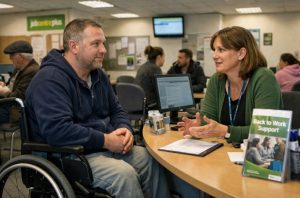
The government introduced these new rules because many disabled people and those with long-term health conditions have said they want to work, but are afraid that trying a job could leave them worse off.
According to the DWP, more than a third of disabled people who want to work have been held back by fears that starting employment would trigger a reassessment and possibly reduce or stop their benefits.
The new “Right to Try” policy is intended to remove that fear. Ministers believe that the previous system created a barrier by making people feel they had to choose between financial security and testing whether they could work again.
As Sir Stephen Timms explained,
“Giving sick and disabled people legal protection to try work without fear is vital for their futures and for growing our economy. It’s part of the work we’re doing to bear down on the cost of living and boost living standards for sick or disabled people in every corner of the country. With 2.8 million people out of work due to long-term sickness, we’re removing the barriers that have held people back for too long.”
Which Benefits Are Protected Under the New DWP Rules?
The new DWP rules do not apply to every benefit. They specifically protect three health-related benefits where fear of reassessment has often stopped people from trying work. If you receive one of these benefits, taking a job or doing voluntary work will no longer automatically trigger a review.
The policy covers:
- New-style Employment and Support Allowance (ESA)
- Personal Independence Payment (PIP)
- The health element of Universal Credit
These protections only apply where work itself is the reason for a reassessment. If your review was already planned, or if your circumstances change in another important way, the DWP can still reassess your claim.
How Will the Changes Affect People Receiving Employment and Support Allowance (ESA)?
If you receive new-style ESA, the new rules mean you can try work without worrying that simply accepting a job will instantly lead to another work capability assessment.
In the past, many ESA claimants avoided trying even a few hours of work because they feared that the DWP would assume they were now fit for full-time employment. The new legislation is designed to remove that assumption.
You may now be able to:
- Take on a part-time role
- Try a short-term job
- Build confidence through supported work
- Leave a job if it is not suitable without immediately losing ESA support
However, the amount of work you do may still matter in the long term. If you begin working regularly or your health improves significantly, the DWP may later decide that your circumstances have changed. The difference is that the job itself is no longer an automatic trigger.
What Does the New Rule Mean for Personal Independence Payment (PIP) Claimants?
If you claim Personal Independence Payment (PIP), the new rules are particularly important because PIP is based on how your condition affects daily life, not whether you are working.
Many people have worried that accepting a job could make the DWP think they no longer need support. Under the new policy, starting work will not automatically lead to a PIP reassessment.
This could make it easier for you to:
- Try a flexible or part-time role
- Return to work gradually after illness
- Accept work that matches your condition
- Volunteer before deciding whether paid work is realistic
For example, you may be able to work a few hours a week while still needing help with mobility, travel, preparing food or managing your condition. The government has said that having a job does not automatically prove that your disability or health needs have changed.
How Does the Universal Credit Health Element Fit Into the New Policy?

The new rules also protect people who receive the health element of Universal Credit, sometimes called LCWRA. This is the extra amount paid if the DWP has decided that your condition limits your ability to work.
Under the previous system, some people avoided even small amounts of work because they worried they would lose this extra payment. The new “Right to Try” guarantee means taking a job will not automatically lead to the health element being reviewed.
You can now explore options such as:
- A gradual return to work
- Reduced hours
- Temporary employment
- Voluntary work before paid employment
The government says this should help people move closer to work without feeling pressured to risk their income. However, there are wider changes happening to Universal Credit.
New claimants may receive a lower health element than existing claimants, so it is important to understand that this separate reform is not the same as the new protection against reassessment.
Will Starting a Job Still Trigger a Benefit Reassessment?
In most cases, no. Under the new legislation, starting a job by itself will no longer automatically trigger a reassessment if you receive ESA, PIP or the Universal Credit health element. That is the biggest change introduced by the DWP.
However, this does not mean reassessments have disappeared completely. If you already have a review booked, it can still happen as planned. The DWP can also reassess your claim if there is evidence that your condition, working hours or personal circumstances have changed significantly.
The government has stressed that the new rules are designed to stop people being penalised for simply trying work. They are not a guarantee that your benefits can never be reviewed again.
This distinction is important because some claimants have wrongly believed that all future assessments have been cancelled. In reality, the DWP is removing one specific trigger: the act of starting work.
Can You Volunteer Without Losing Your Benefits?
Yes. The new legislation specifically protects volunteering as well as paid work. This was added after disabled people and charities told the government that volunteering can be an important step towards employment.
You can now volunteer without worrying that the DWP will automatically reassess your claim simply because you are giving your time to a charity, community group or local organisation.
Many people use volunteering to:
- Build confidence after illness
- Test whether they can manage regular activity
- Gain new skills
- Improve mental wellbeing
- Move gradually towards paid work
Mental Health UK said,
“People often tell us that fear of reassessment, or even losing essential support if things don’t work out, is a significant barrier to taking those first steps back into work. The Right to Try is a positive and practical step that will ensure people have a safety net when exploring opportunities for work or volunteering. This welcome initiative will ensure people are more supported and help them to build confidence, skills and connection at a pace that supports their recovery to better mental health.”
Who Will Benefit Most From the New “Right to Try” Legislation?

The new rules are likely to help different groups in different ways. The people who stand to benefit most are those who want to work but have delayed doing so because they feared losing financial support.
For many claimants, the issue has never been a lack of interest in work. Instead, it has been the risk that one unsuccessful attempt could leave them without enough money or support.
How Could the Changes Help People With Mental Health Conditions?
People with mental health conditions are among the groups most likely to benefit. Many conditions can change over time, making it difficult to predict whether you will manage work consistently.
Someone with anxiety, depression, bipolar disorder or PTSD may feel able to work for a few hours one week but struggle the next. Under the old system, many people worried that even trying a job would make the DWP believe they no longer needed support.
The new rules could help you:
- Return to work gradually
- Test flexible hours
- Build confidence without immediate pressure
- Leave work again if your condition worsens
Mind welcomed the changes. Its representative said, “Many people with mental health problems want to work but often worry about losing financial support from the benefits system if they try to do so. These reforms are a step in the right direction to help disabled people build up their confidence and skills to move into sustained and meaningful employment where this is an option. It’s positive to see the inclusion of volunteering as part of these changes.”
Why Could People With Learning Disabilities Benefit From the New Rules?
People with learning disabilities often face additional barriers when trying to enter work. They may need more time, more support and more flexibility before they can decide whether a job is right for them.
The new protection is important because it removes some of the fear that comes with trying something new. If you or a family member receive benefits, you may now feel more able to explore work placements, supported employment or volunteering.
Possible benefits include:
- Trying a job gradually rather than immediately committing to full-time work
- Taking part in supported work schemes
- Volunteering to build confidence and routine
- Knowing that one attempt at work is unlikely to put benefits at risk
Mencap has said that many people with a learning disability want to work, but the benefits system has often been one of the biggest barriers. The charity believes these changes could help rebuild trust and make it easier for more people to take their first step into employment.
What Difference Could the Changes Make for People With Long-Term Illnesses?
If you live with a long-term illness such as arthritis, multiple sclerosis, chronic pain or a heart condition, you may have wanted to try work but worried about whether your health would hold up.
The new policy could make a difference because it gives you more room to test what you can realistically manage.
You may decide to try:
- A few hours of work each week
- A temporary contract
- Home-based work
- Volunteering before returning to paid employment
The key point is that if the job does not work out, you should not immediately lose your benefit entitlement simply because you tried. That may encourage more people to explore work opportunities without feeling trapped between work and financial security.
What Has Stayed the Same Despite the New Rules?
Although the new policy is a major change, much of the wider benefits system remains the same. The DWP has not removed reassessments altogether, and it has not guaranteed that everyone who starts work will keep exactly the same level of support forever.
Your benefits can still be reviewed if:
- You already had a reassessment due
- Your health improves significantly
- Your working hours increase substantially
- Your income or living circumstances change
The DWP also still expects you to report important changes to your situation. If you start work, increase your hours or move house, you may still need to tell the department.
The rules for how PIP, ESA and Universal Credit are calculated have not changed either. The new policy only changes one part of the process, trying work will no longer be treated as automatic evidence that you are fit and no longer need support.
What Are People Getting Wrong About the New DWP Changes?

Some confusion has already developed around the new rules. The biggest misunderstanding is that many people think the DWP has completely stopped all reassessments. That is not true.
The changes only mean that starting work or volunteering will not automatically trigger a review. Other reasons for reassessment still exist. People are also wrongly assuming that every benefit is covered.
In reality, the policy only applies to:
- New-style ESA
- PIP
- The Universal Credit health element
Another common myth is that you can now work unlimited hours without affecting your benefits. The DWP has not said that. If your work pattern changes your health, income or circumstances, your claim could still be reviewed later.
There is also some confusion because the new protection has been announced at the same time as separate reforms that reduce the Universal Credit health element for some future claimants. These are two different policies, and one does not cancel out the other.
Are There Any Risks or Limits You Should Still Be Aware Of?
Yes. While the new rules reduce the fear of immediately losing benefits, there are still some limits you should understand before trying work.
You should still be aware that:
- Existing reassessments can continue
- Significant changes to your condition can affect your claim
- Working more hours over time may still change what you receive
- The DWP can still review your claim if your circumstances change
Some disability groups have also warned that the government needs to provide more detail about how the new rules will work in practice. For example, it is still not fully clear how long someone can try work before the DWP decides their circumstances have changed.
Campaigners have also asked who will decide whether a work trial has been successful. Some people may manage a few days at work but then experience pain, exhaustion or a decline in their health afterwards. That is why many charities say the policy is helpful, but more guidance is still needed.
How Does This Policy Fit Into the Government’s Wider Welfare Reforms?
The new “Right to Try” legislation is only one part of a much wider set of welfare reforms. The government says it wants to encourage more people into work while reducing the number of people who feel trapped on benefits.
Alongside these new protections, ministers have announced £3.5 billion of extra employment support by the end of the decade. This includes programmes such as WorkWell and Connect to Work, which are designed to help disabled people find suitable jobs and keep them.
At the same time, the government is also changing the Universal Credit health element for future claimants. Ministers say these changes are meant to remove what they call “perverse incentives” that discourage people from trying work.
Supporters believe the reforms could help more people return to work. Critics argue that the changes must be introduced carefully so that disabled people do not feel pressured or financially worse off.
What Support Is Available if You Want to Try Work?
The government says you should not be expected to return to work without support. Alongside the new rules, extra help is being offered through employment programmes and specialist advice.
You may be able to get support through:
- WorkWell, which is expected to help around 250,000 people
- Connect to Work, which will provide personalised support over the next five years
- Jobcentre advisers
- Local disability employment services
- Volunteering opportunities and supported work schemes
You may also be able to get practical help with:
- CV writing
- Confidence building
- Flexible working options
- Workplace adjustments
- Finding employers who understand your condition
The aim is to make trying work feel less risky and more realistic. Instead of being left to manage on your own, the government says you should have access to support that matches your health needs and personal circumstances.
What Could a Real-Life Example of the New Rules Look Like?

Imagine you receive PIP and the Universal Credit health element because of a long-term back condition. You have not worked for three years, but you are thinking about trying a part-time office job for ten hours a week.
Under the old system, you may have worried that accepting the job would immediately trigger a reassessment and put your benefits at risk. Because of that fear, you might have decided not to apply.
Under the new rules, you can try the job without work itself automatically causing a review. If you later discover that the pain becomes too difficult and you cannot continue, your benefits should not instantly stop simply because you gave work a chance.
For many people, that reassurance may be enough to make trying work feel possible again.
What Should You Do Before Trying Work While Claiming Benefits?
Before you start work, it is still sensible to understand how the new rules apply to your own situation. The protection is helpful, but every claim is different.
You should consider:
- Checking which benefits you receive
- Confirming whether you already have a reassessment due
- Keeping a record of how your condition affects you
- Asking for advice if you are unsure
It can also help to speak to:
- Your Jobcentre adviser
- A welfare rights adviser
- A disability charity
- A trusted support worker or family member
If you decide to try work, think about starting gradually. A few hours a week, volunteering or a short-term role may help you understand what is realistic without putting too much pressure on yourself. The new rules are intended to give you more freedom to test work safely, not force you into something before you are ready.
Could This Change Encourage More People to Return to Work?
It could. The government believes the new policy may persuade more disabled people and those with health conditions to try work because the biggest fear has been reduced.
For years, many claimants have said they wanted to work but felt trapped by the risk of losing their benefits. Removing that automatic trigger may help some people feel more confident about taking the first step.
The impact could be particularly important because there are currently around 2.8 million people in the UK who are out of work because of long-term sickness. Even if only a small number decide to try work, the change could make a meaningful difference to their confidence, finances and future opportunities.
However, whether the policy succeeds will depend on how well it works in practice. People are more likely to trust the new system if they feel the DWP follows through on its promise that trying work will not leave them worse off.
Conclusion: What Does the DWP Change Mean for Your Future?
The DWP’s new “Right to Try” rules could be one of the most significant changes to disability benefits in recent years. If you receive ESA, PIP or the Universal Credit health element, you may now be able to try work or volunteering without the immediate fear of losing your support.
The new policy does not remove every reassessment, and it does not guarantee that your benefits can never change. However, it does remove one of the biggest barriers that has stopped many people from taking the first step.
For some people, that may simply mean volunteering or trying a few hours of work. For others, it could become the start of a return to employment. The most important change is that you no longer have to choose between testing work and protecting your financial security.
FAQs
Could you lose your benefits if a new job does not work out?
No, the new DWP rules are designed to let you try work without immediately losing your benefits if the job is not suitable. If you stop working because of your condition, your existing claim should not automatically end.
Does the new DWP rule apply across England, Scotland and Wales?
Yes, the new Right to Try legislation applies to eligible claimants across England, Scotland and Wales. It covers people receiving ESA, PIP and the Universal Credit health element.
Can you do part-time work and still keep your benefits?
Yes, you may be able to work part-time and still continue receiving your benefits under the new rules. Starting part-time work alone will not automatically trigger a reassessment.
Will volunteering count as work for benefit purposes?
No, volunteering will not automatically be treated in the same way as paid work for reassessment purposes. The new legislation specifically protects volunteering so you can build confidence without fear of losing support.
Do you need to tell the DWP before starting a job?
Yes, you should still tell the DWP if you start a job or your circumstances change. Although work no longer triggers an automatic reassessment, you are still expected to keep your claim information up to date.
Does this change apply to old-style ESA and other legacy benefits?
No, the new protection currently applies to new-style ESA, PIP and the Universal Credit health element. It does not automatically cover older legacy benefits unless the government confirms further changes later.
When do the new DWP Right to Try rules come into force?
The new rules are due to come into force at the end of April 2026. From that point, trying work or volunteering should no longer automatically trigger a reassessment for eligible claimants.