

Yes, EuroMillions is tax free in the UK when the prize is paid to the winner. A UK winner does not normally pay Income Tax or Capital Gains Tax simply because they have won a jackpot.
HMRC specifically lists National Lottery winnings among income that is not taxed, while lottery and betting winnings are also excluded from Capital Gains Tax.
The important distinction is what happens after the money arrives. Interest, dividends, investments, rental income, gifts, inheritance planning and means-tested benefits can all create separate financial consequences.
| Country | Tax On Original EuroMillions Prize | Important Point |
|---|---|---|
| UK | None | Later income and estate planning may be taxable |
| Ireland | None | Gifts and inheritances can fall within CAT rules |
| France | Generally none | Investments and later gifts can be taxed separately |
| Belgium | None on National Lottery winnings | Interest generated afterwards may be taxable |
| Luxembourg | Generally no separate prize tax | Local inheritance and investment rules still matter |
| Austria | None | Lottery winnings are outside taxable income categories |
| Spain | 20% above €40,000 | Tax applies to the portion above the exemption |
| Portugal | 20% above €5,000 | Applies to the portion of qualifying State social-game prizes above €5,000 |
| Switzerland | Threshold-based | The 2026 federal exemption for qualifying large-game winnings is CHF1,071,000 |
Tax rules depend on where the ticket was bought and, in some situations, where the winner is tax resident.
Why Are EuroMillions Winnings Tax Free In The UK?
The UK does not normally treat a genuine National Lottery prize as taxable personal income. Instead, there is a separate tax system applying to the lottery itself.
For the 2026/27 tax year, Lottery Duty remains 12% of the price paid for a National Lottery ticket or chance. HMRC charges this duty on stake money rather than taking tax directly from the winner’s jackpot.
This does not mean 12% is deducted from a winner’s advertised prize. The Lottery Duty sits within the operating structure of the National Lottery.
National Lottery sales also fund prizes, operating costs, retailers and Good Causes. In 2025, the operator reported £8.1 billion of sales, more than £1.7 billion generated for Good Causes and £967 million raised in Lottery Duty.
What Tax Can Apply After A EuroMillions Win?

The jackpot itself may be tax free, but money generated from the jackpot is normally treated under ordinary tax rules.
Savings Interest
For 2026/27, the Personal Savings Allowance is:
- Basic-Rate Taxpayer: £1,000
- Higher-Rate Taxpayer: £500
- Additional-Rate Taxpayer: £0
A starting rate for savings of up to £5,000 may also be available where other taxable income is sufficiently low.
A large winner keeping substantial sums in bank accounts can therefore generate significant taxable interest. More detail on how savings interest is reported to HMRC is particularly relevant after a large cash win.
From 6 April 2027, savings Income Tax rates are scheduled to rise to 22%, 42% and 47%.
Dividends And Investments
From 6 April 2026, the dividend ordinary rate is 10.75% and the upper rate is 35.75%. The additional dividend rate remains 39.35%. The Dividend Allowance for 2026/27 is £500.
Capital gains made after investing the winnings can also become taxable even though the original lottery payment was not.
Property Income
A winner who buys rental property may owe Income Tax on rental profits.
From 6 April 2027, separate property-income rates of 22%, 42% and 47% are due to apply in England, Wales and Northern Ireland.
ISA Changes
From 6 April 2027, people under 65 will have a £12,000 annual Cash ISA subscription limit, although the overall ISA limit remains £20,000. People aged 65 and over retain a £20,000 Cash ISA limit.
How Much Tax Could The Money Generate?
Consider a simplified example. A £10 million jackpot placed into accounts producing 4% annual interest would generate £400,000 of interest.
An additional-rate taxpayer has no Personal Savings Allowance. At the current 45% savings additional rate, £400,000 could produce £180,000 of Income Tax, assuming the entire amount falls within that rate.
From April 2027, the scheduled 47% additional savings rate would increase that figure to £188,000. This is an illustration only. Actual tax depends on the winner’s other income, tax residence, investment structure and available allowances.
What Happens If A Winner Gives Money To Family?
The UK does not have a separate general gift tax, but substantial gifts can affect Inheritance Tax. The standard IHT nil-rate band is £325,000. The residence nil-rate band can add £175,000 where the qualifying conditions are met. These thresholds are now due to remain frozen through the end of the 2030/31 tax year.
Useful gift exemptions include:
- Annual Exemption: £3,000 each tax year, with one unused year’s exemption capable of being carried forward
- Small Gifts: Up to £250 per person, subject to the rules
- Wedding Gift To A Child: Up to £5,000
- Wedding Gift To A Grandchild Or Great-Grandchild: Up to £2,500
- Wedding Gift To Another Person: Up to £1,000
- Normal Expenditure From Income: Potentially exempt where HMRC’s conditions are satisfied
HMRC’s official rules for gifts and Inheritance Tax explain these exemptions in detail. Winners considering major transfers may also find the rules on declaring cash gifts to HMRC useful.
What Is The Seven-Year Rule?
If a person survives for seven years after making a qualifying gift, it normally falls outside their estate for IHT purposes.
Where taxable gifts exceed the available nil-rate band, taper relief can reduce the tax applying to certain gifts:
| Years Between Gift And Death | Potential Rate |
|---|---|
| Less than 3 years | 40% |
| 3 to 4 years | 32% |
| 4 to 5 years | 24% |
| 5 to 6 years | 16% |
| 6 to 7 years | 8% |
| 7 years or more | 0% |
Taper relief does not simply reduce every gift automatically. The value and timing of earlier gifts and available exemptions must also be considered.
Are EuroMillions Syndicate Winnings Tax Free?
A genuine syndicate share is normally different from one person winning and later deciding to give money to others.
A written syndicate agreement created before the draw can help demonstrate how ownership of the ticket and prize was divided. Records should show the members, contributions and agreed percentage shares.
Without clear evidence, a large transfer after the win could instead be regarded as a personal gift, bringing IHT planning into the picture.
How Is EuroMillions Taxed In Other Countries?
Country rules should not be copied from the UK position. In Spain, qualifying lottery prizes above €40,000 are taxed at 20% on the amount exceeding €40,000.
A €130 million prize would therefore have approximately €25.992 million withheld, leaving roughly €104.008 million before considering any later financial consequences.
In Portugal, qualifying State social-game prizes are subject to 20% Stamp Duty on the portion exceeding €5,000. Ireland does not tax genuine lottery winnings themselves.
However, later gifts and inheritances can be subject to Capital Acquisitions Tax at 33%, with the current Group A threshold for qualifying parent-to-child transfers at €400,000 rather than the older €335,000 figure.
France does not normally impose Income Tax on ordinary lottery winnings. Separate gift rules can still apply. For example, each parent can generally give a child up to €100,000 every 15 years using the relevant allowance, subject to the detailed rules.
Switzerland also requires particular care. The old CHF1,000 figure sometimes quoted online is outdated. For 2026, the federal exemption for qualifying large-game winnings is CHF1,071,000.
The threshold increases to CHF1,076,100 for 2027. Tax treatment above the threshold can depend on federal and cantonal rules.
Are Millionaire Maker, Superdraw And Other UK Lottery Prizes Tax Free?

A UK EuroMillions Millionaire Maker prize is treated as a National Lottery win rather than normal taxable income. The current guaranteed UK Millionaire Maker prize is £1 million.
A EuroMillions Superdraw does not create a different UK personal tax category. A larger jackpot remains a lottery prize. Set For Life currently offers a top prize of £10,000 every month for 30 years.
Its game-specific rules define the monthly annuity payment as £10,000 after tax based on the applicable rules used by the game. Money later saved or invested can still generate taxable income.
National Lottery Scratchcard prizes and Premium Bond prizes are also generally tax free when won.
A betting website is different from buying an actual EuroMillions ticket. The Gambling Commission confirmed in 2026 that customer gambling winnings in the UK are tax free regardless of the amount, while operators are taxed instead.
Ticket-courier arrangements need more care. If the service buys an actual ticket in Spain, Portugal or another country, local prize taxes and the provider’s contractual terms may apply. A UK resident should establish whether they legally own a ticket or merely hold a contractual right to a payout.
Can A EuroMillions Win Affect Benefits, Care Fees Or Divorce?
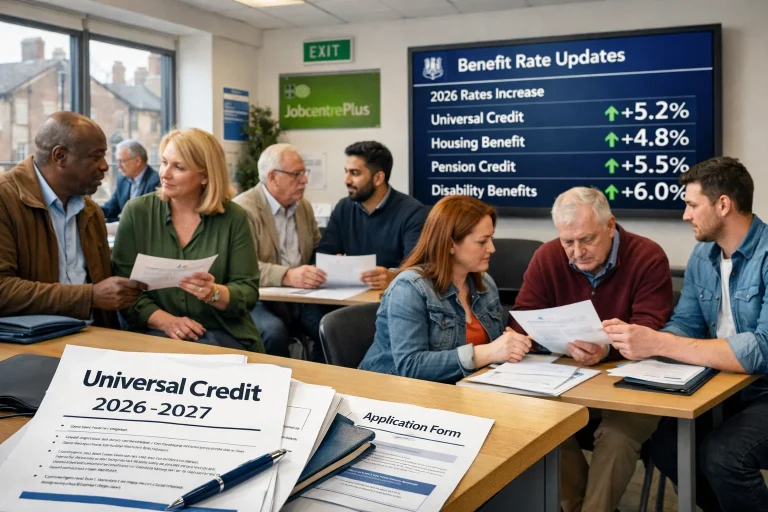
Yes. A tax-free prize can still affect other financial assessments. For Universal Credit, capital below £6,000 normally does not reduce an award.
Capital between £6,000 and £16,000 can reduce entitlement, while capital above £16,000 normally prevents entitlement. A major lottery win would therefore usually end a means-tested Universal Credit award.
The broader interaction between large cash amounts and means-tested support is covered in more detail under how money and capital can affect benefits.
Care funding can also change. In England for 2026/27, the upper capital limit for local-authority financial support remains £23,250, although rules differ across the UK.
Lottery money can also become relevant during divorce or dissolution proceedings. How assets are dealt with depends on circumstances including when the money was won and the financial needs of the parties.
The treatment of investments, shares and property during divorce provides useful context for assets created from a large win.
How Do You Claim A EuroMillions Prize?
National Lottery draw-game prizes must normally be claimed within 180 days of the draw. The official National Lottery claiming guidance confirms the deadline and explains the different process for online and retail tickets.
A winner should:
- Protect the original ticket or online account
- Verify the result through official channels
- Contact the official claims team for a major prize
- Complete identity and ticket validation
- Arrange secure banking before transferring large amounts
- Keep records showing the source of the funds
- Obtain tax, legal and financial advice before making major gifts
Winners can also choose whether to remain anonymous. The National Lottery states that publicity is the winner’s decision. Prizes that are not claimed within the relevant claim period are forfeited.
How Can You Calculate EuroMillions Tax?
For a UK National Lottery EuroMillions ticket:
Tax on original prize = £0
For money generated afterwards:
Taxable Savings Interest = Interest Received − Available Savings Allowance
The applicable tax rate then depends on the winner’s total taxable income.
For Spain:
Estimated Prize Tax = 20% × Amount Above €40,000
For Portugal:
Estimated Prize Tax = 20% × Amount Above €5,000
These formulas are useful for basic estimates, but an interactive calculator cannot reliably account for tax residence, investments, trusts, gifts, inheritance planning or cross-border rules.
Conclusion
So, is EuroMillions tax free in the UK? Yes, the original UK prize is normally tax free.
The more important financial question begins after the win. Interest, dividends, property income, investments, gifts, Inheritance Tax, benefits and cross-border arrangements can all change the position.
For a substantial jackpot, keeping clear records and obtaining regulated financial, tax and legal advice before moving or gifting large sums can prevent an initially tax-free prize from creating avoidable problems later.
FAQs
Do I Have To Declare EuroMillions Winnings To HMRC?
The original UK EuroMillions prize does not normally need to be declared as taxable income. Tax reporting may become necessary later if the winnings generate taxable interest, dividends, rental profits or capital gains.
Is EuroMillions Tax Free In England?
Yes. The original prize is normally tax free in England, as it is across the wider UK. Later income or gains produced from the money can still be taxable.
Is EuroMillions Tax Free In Ireland?
Genuine lottery winnings are exempt from Irish tax for the winner. Later gifts and inheritances can fall within Capital Acquisitions Tax rules.
Is EuroMillions Tax Free In France?
Ordinary EuroMillions winnings are generally not subject to French Income Tax when received. Investing, gifting or transferring the money later can create separate French tax consequences.
Is EuroMillions Tax Free In Spain?
Not completely. Spain applies a 20% special tax to the portion of qualifying lottery winnings above the €40,000 exemption.
Is A EuroMillions Superdraw Taxed Differently?
Not for a UK National Lottery winner. A Superdraw changes the jackpot structure but does not create a separate personal tax treatment for the UK prize.
Is £10,000 A Month From Set For Life Tax Free?
Set For Life’s rules provide for the £10,000 monthly top-prize payment on an after-tax basis. Interest or investment returns produced after receiving those payments can still become taxable.
What Happens If A UK Resident Wins EuroMillions Abroad?
The tax treatment can depend on where the ticket was purchased. Spain and Portugal, for example, can withhold local prize tax even if the winner normally lives in the UK, so cross-border advice may be needed.