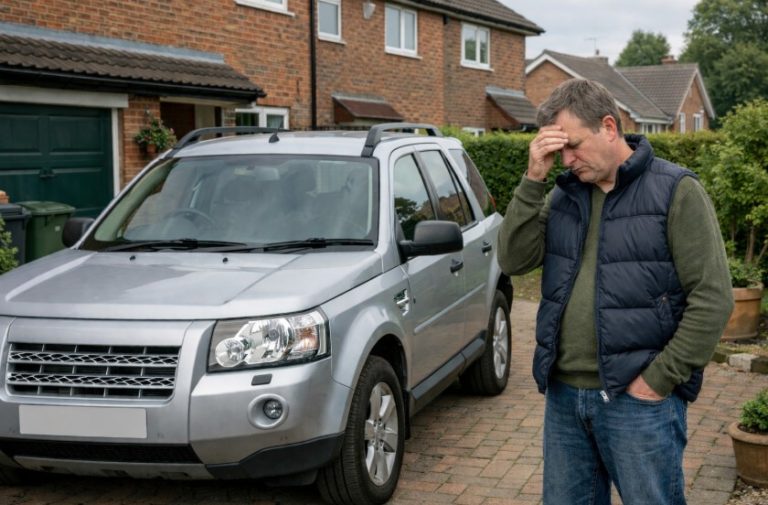

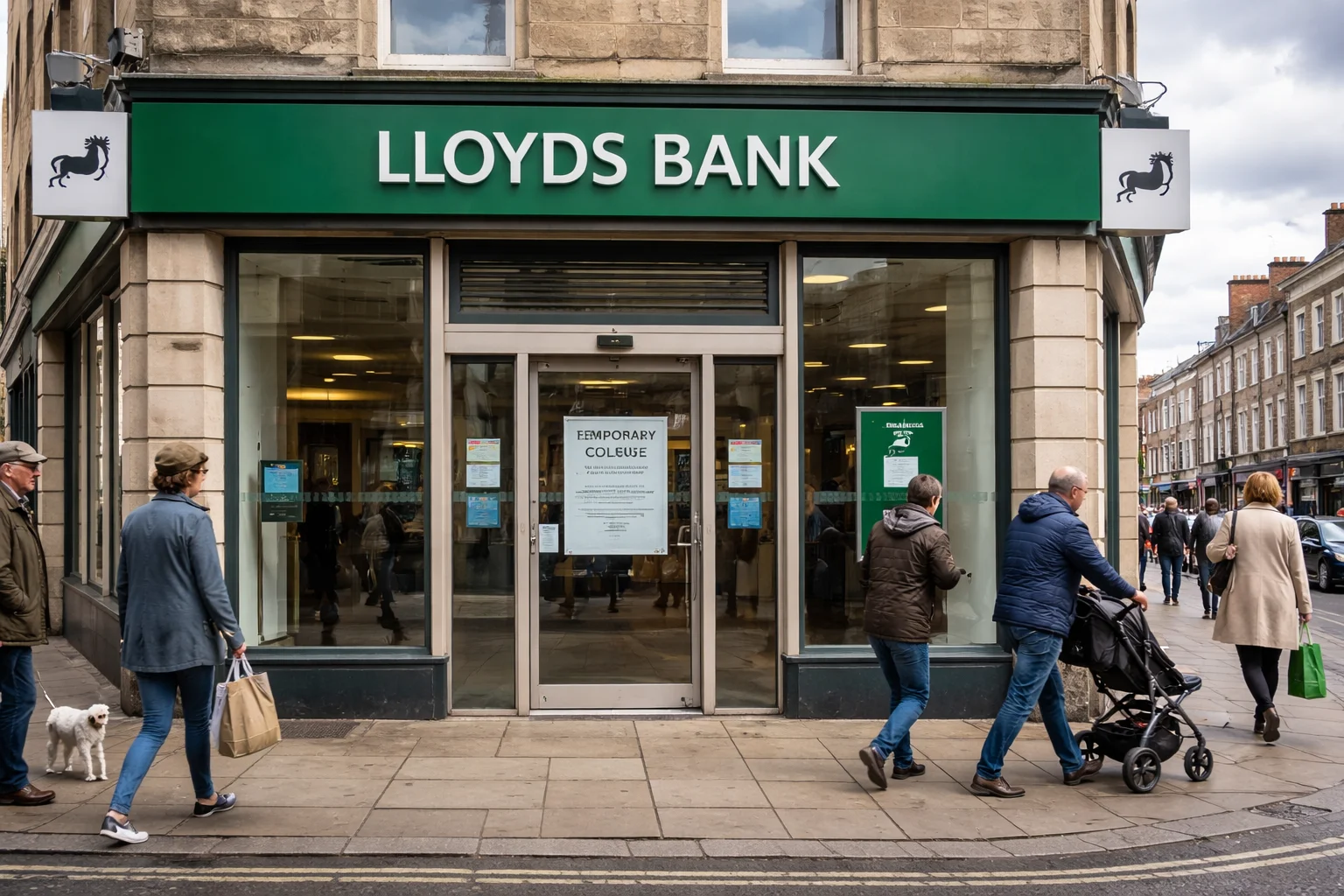
Lloyds Banking Group has confirmed it will close 95 bank branches across the UK between May 2026 and March 2027, citing a sharp shift toward digital banking. These closures include 53 Lloyds, 31 Halifax, and 11 Bank of Scotland branches, leaving the group with 610 branches nationwide. The move continues a growing trend in UK banking, raising major concerns for vulnerable customers and rural communities.
Key Takeaways:
- 95 new branch closures confirmed (on top of 49 already underway).
- Closure reasons rise in digital banking, with falling footfall.
- Lloyds promises alternative services like PayPoint and banking hubs.
- Full list of affected branches included below.
Why Are Lloyds Bank Branches Closing Across the UK?
The closure of 95 additional Lloyds Banking Group branches is driven primarily by changes in how customers interact with banks.
According to the group, more than 21 million customers now use mobile or online platforms as their main method of banking. With demand for in-person services dropping significantly, maintaining underused physical locations is no longer viable for the bank.
The financial landscape in the UK has evolved rapidly, especially since the COVID-19 pandemic, which accelerated the adoption of digital banking tools. Lloyds, like many other UK banks, is restructuring its operations to focus on efficiency and cost-effectiveness, aligning branch services with consumer behaviour.
This shift isn’t isolated to Lloyds. Other major banks, such as Santander, have also announced widespread closures. The reality is that the UK’s banking model is adapting to a digital-first economy, where high street branches play a diminishing role in daily financial transactions.
What Does This Closure Mean for Customers in the UK?
For many customers, especially those in rural towns or who rely on face-to-face interactions, these closures could significantly affect their access to essential financial services. While digital platforms offer convenience, they are not a complete replacement for personal banking support.
Customers most affected include:
- Older people who may not be digitally savvy.
- Rural communities with poor internet infrastructure.
- Small businesses that rely on branch-based services like cash handling.
- People with disabilities who benefit from physical support.
Although Lloyds is promoting alternatives such as banking apps and PayPoint locations, these solutions may not fully meet the needs of all customer groups. The closure of familiar, longstanding local branches removes a valuable point of contact and trust for many individuals and communities.
Additionally, there are concerns about job security for branch employees, though Lloyds has pledged that staff will be offered redeployment to other roles within the group.
Full List of Lloyds, Halifax, and Bank of Scotland Branches Closing
Below is a complete table listing the 95 new closures across Lloyds Bank, Halifax, and Bank of Scotland, including the branch name, location, brand, and confirmed closure date.
Town Branch Address Closure Date
Aberdare 12 Canon Street CF44 7AR 23/06/2026
Alfreton 21 High Street DE55 7DR 19/01/2026
Altrincham 76 Stamford New Road WA14 1BS 09/06/2026
Ammanford 19 Quay Street SA18 3DB 12/01/2026
Bideford 5 High Street EX39 2AD 13/01/2026
Birkenhead 1 Borough Pavement CH41 2XX 08/06/2026
Birmingham 140 Bordesley Green B9 4SU 16/06/2026
Birmingham 2 Hawkhurst Road B14 5HS 04/06/2026
Birmingham 125 High Street B17 9NP 08/10/2026
Birmingham 153 High Street B65 0EB 10/06/2026
Birmingham 595 Kingstanding Road B44 9TB 03/06/2026
Brigg 69 Wrawby Street DN20 8JG 05/03/2026
Bristol 697 Fishponds Road BS16 3UJ 06/08/2026
Bournemouth 45-47 Old Christchurch Road BH1 1ED 28/05/2026
Camborne Market Square TR14 8JT 07/10/2026
Cardiff 514 Cowbridge Road East CF5 1BL 03/06/2026
Caterham 21 Station Avenue CR3 6YT 05/03/2026
Chepstow 7 Manor Way NP16 5HZ 07/10/2026
Chester-le-Street 81-85 Front Street DH3 3AJ 14/01/2026
Clevedon 16 The Triangle BS21 6NG 15/03/2027
Coalville 20 Belvoir Road LE67 3QH 23/06/2026
Crowborough The Regent TN6 1DA 09/06/2026
Croydon 137 North End CR0 1TN 05/05/2026
Daventry 18 High Street NN11 4HT 03/08/2026
Deal 2 High Street CT14 7AD 08/10/2026
Didcot Market Place OX11 7LQ 24/06/2026
Ebbw Vale 25 Market Street NP23 6HP 15/03/2027
Falmouth 11-12 Killigrew Street TR11 3RA 18/05/2026
Fleet 174 Fleet Road GU51 4DD 13/01/2026
Gillingham High Street SP8 4AQ 08/01/2026
Glossop 2 High Street East SK18 8DA 09/03/2026
Gorseinon 113 High Street SA4 4BR 12/10/2026
Havant 4 West Street PO9 1PE 19/01/2026
Hedge End St John's Centre SO30 4QU 21/01/2026
Hedon 25 St Augustines Gate HU12 8EU 25/03/2026
Heswall 137 Telegraph Road CH60 0AN 23/06/2026
Hinckley 23 The Borough LE10 1NL 10/06/2026
Hoddesdon 68 High Street EN11 8EZ 22/06/2026
Honiton 82 High Street EX14 1JJ 16/03/2027
Horncastle 14 High Street LN9 5BL 10/08/2026
Houghton le Spring 33 Newbottle Street DH4 4AP 10/03/2026
Hucknall 5 High Street NG15 7HQ 04/03/2026
Hull 348 Hessle Road HU3 3SD 10/06/2026
Hull 362 Ings Road HU8 0NA 15/06/2026
Ivybridge 13 Fore Street PL21 9AD 14/01/2026
Kingswinford 70 High Street DY6 8AE 22/06/2026
Lancaster 49 Market Street LA1 1JH 09/06/2026
Leominster 9 Corn Square HR6 8LT 03/03/2026
Lewes 8 High Street BN7 2AD 19/01/2026
Llangefni 23 High Street LL77 7NB 16/06/2026
London (East Central) 70-71 Cheapside EC2V 6EN 01/06/2026
London (North West) 8 Golders Green Road NW11 8LJ 08/06/2026
London (South East) 69/73 Borough High Street SE1 1NQ 03/06/2026
London (South East) 25 Camberwell Green SE5 7AB 22/06/2026
London (South West) 186 Streatham High Road SW16 1BE 28/05/2026
London (South West) 98 Victoria Street SW1E 5JL 27/05/2026
London (West) 113-117 Oxford Street W1D 2HW 27/05/2026
London (West) 88 Tottenham Court Road W1T 4TH 27/05/2026
Lymington 39 High Street SO41 9ZF 08/06/2026
Manchester 276 Moston Lane M40 9WB 11/03/2026
Mitcham 9 Majestic Way, St Marks Place CR4 2JS 08/01/2026
Moreton-in-Marsh High Street GL56 0AY 15/06/2026
New Addington 13 Central Parade CR0 0JB 14/01/2026
Newmarket 48 High Street CB8 8LF 24/06/2026
Norwich 343 Aylsham Road NR3 2RU 02/06/2026
Okehampton Fore Street EX20 1HJ 25/03/2026
Penzance Market House TR18 2TN 21/01/2026
Peterlee 31 Yoden Way SR8 1AW 03/03/2026
Petersfield 5 The Square GU32 3HL 21/10/2026
Reading 53 Crockhamwell Road RG5 3JR 17/06/2026
Redhill 1 London Road RH1 1ND 28/05/2026
Ringwood 25 High Street BH24 1BD 23/06/2026
Ryde 35 Union Street PO33 2LH 07/10/2026
Seaton The Square EX12 2QH 11/03/2026
Sevenoaks 83 High Street TN13 1LG 18/06/2026
Sleaford 2 Northgate NG34 7BL 12/03/2026
Southam 6 High Street CV47 0HA 09/06/2026
Staines-upon-Thames 73/75 High Street TW18 4PP 01/06/2026
Stamford 65 High Street PE9 2AT 13/10/2026
Stoke-on-Trent 18-20 The Strand ST3 2RP 17/03/2027
Stoke-on-Trent Tower Square Tunstall ST6 5DL 09/03/2026
Street 64 High Street BA16 0ED 15/03/2027
Swadlincote 59 High Street DE11 8JA 20/01/2026
Swansea Beaumonth House, Phoenix Way SA7 9DL 02/07/2026
Tewkesbury 19 High Street GL20 5AW 17/06/2026
Thornbury 5 High Street BS35 2AE 26/02/2026
Totnes 31 Fore Street TQ9 5HH 08/01/2026
Totton 30 Commercial Road SO40 3TH 12/10/2026
Uttoxeter 7 Carter Street ST14 8HD 18/06/2026
Wareham 3 South Street BH20 4LX 16/06/2026
Wednesbury 111 Walsall Street WS10 9BY 16/03/2027
West Byfleet 23 Old Woking Road KT14 6LN 01/06/2026
Wolverhampton 28a High Street, Tettenhall WV6 8QT 11/06/2026
Wymondham 4 Market Place NR18 0AG 12/03/2026
When Will the Lloyds Bank Closures Take Place?
The announced Lloyds Bank branch closures are scheduled in phases between May 2026 and March 2027, following a strategic timeline that aligns with customer usage data and operational planning.
Alongside these 95 newly announced closures, 49 branches from a previous closure programme are already being shut down, with most expected to close by October 2026. Once all closures are complete, Lloyds Banking Group will operate 610 branches across the UK.
Timeline: From May 2026 to March 2027
Lloyds, Halifax, and Bank of Scotland branches will close gradually over this 11-month period, with specific dates already confirmed for many locations.
Closures are scheduled in waves, grouped regionally to manage customer transitions and support redeployment for staff. For example, closures in London and the South East tend to fall in May to July, while branches in Scotland and the North are primarily scheduled for June and later.
Additional 49 Closures Underway Until October 2026
In addition to the 95 new closures, an ongoing wave affecting 49 other sites continues. This makes the total number of branches being shut down even higher, deepening the impact on local banking services. These closures are part of Lloyds’ multi-year branch transformation strategy.
Post-closure: Only 610 Branches Remain
Once the full closure programme is executed, Lloyds Banking Group will operate with just 610 branches, down from well over 1,000 a few years ago. This represents a dramatic downsizing of physical infrastructure, consistent with the broader shift toward digital-first banking.
Key Points:
- Closure dates confirmed and staggered by region.
- The majority of closures are scheduled between May and October 2026.
- A smaller number of closures continue through early 2027.
- Final network to consist of 610 branches.
- Staff at affected locations will be offered alternative roles.
What Alternatives Is Lloyds Offering to Its Customers?
In light of these closures, Lloyds Banking Group is emphasising digital tools and physical alternatives to help customers maintain access to banking services.
While closing branches, the bank is investing in other ways to reach customers, particularly those who prefer or require in-person interaction.
Customer Alternatives Include:
- Lloyds, Halifax, and Bank of Scotland apps for mobile banking.
- PayPoint locations, where customers can withdraw cash and pay bills.
- Community Bankers, operating in areas affected by closures.
- The remaining branch network of 610 UK-wide locations.
- Banking Hubs, which offer shared banking services across multiple banks.
Lloyds aims to provide flexibility and ensure continued access, especially for older or vulnerable customers. However, critics argue that while these options are helpful, they cannot fully replicate the convenience or trust of a local branch.
Are Banking Hubs Replacing Physical Branches Effectively?
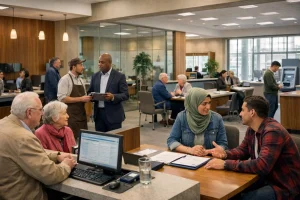
Banking hubs are presented as a key solution to mitigate the impact of widespread bank branch closures across the UK. These are shared spaces staffed by representatives from multiple banks, designed to serve the general public with basic banking services such as cash withdrawals, deposits, and bill payments.
Explanation of Banking Hubs (Shared Facilities)
Banking hubs function as collaborative service centres, typically set up in town centres or rural areas that have lost multiple bank branches. They’re designed to ensure continued access to essential services for communities who may otherwise be left behind in the shift to digital.
Staff rotate from participating banks to ensure that customers can access services relevant to their own banking provider. Hubs are also open during standard business hours, similar to traditional branches.
Link’s Role in New Hub Rollout
The Link network, which coordinates UK-wide access to cash services, is managing the identification and deployment of new banking hubs. Link assesses community needs, banking access gaps, and closure impacts to determine where hubs should be located.
According to the latest updates, Link has confirmed 15 new banking hub locations to offset the 95 Lloyds Group branch closures. These include towns where no remaining bank presence will exist.
15 New Hubs vs. 95 Closures – A Service Gap Concern
Although the rollout of hubs is welcomed by many, there is concern that 15 new hubs are insufficient compared to the 95 closures taking place. This leaves many towns without immediate access to any in-person banking services.
Key Takeaways:
- Banking hubs are shared spaces serving customers of multiple banks.
- Link manages and approves new locations based on access needs.
- Only 15 new hubs announced to counter 95 closures.
- Critics say this leaves many communities underserved.
What Has Lloyds Said About the Branch Closures?

Lloyds Banking Group has repeatedly stated that the branch closures are a direct response to changing customer preferences and the growing dominance of digital banking.
A spokesperson for the group explained:
“Customers want the freedom to bank in the way that works for them, and we offer more choice and ways to manage money than ever before.”
According to the bank, over 21 million customers now use Lloyds’ digital services, such as mobile apps and online platforms, as their primary method of banking, signalling a significant shift in how financial services are accessed.
The spokesperson further added:
“From our leading apps and 24/7 messaging service to local banking options like our community bankers, PayPoint and access to all of our Lloyds, Halifax and Bank of Scotland branches, we’re giving our customers the flexibility to bank wherever and whenever they need us.”
To address potential job losses, Lloyds has confirmed that no redundancies will occur due to the closures. All employees at affected locations will be offered redeployment within the business, though not necessarily in the same roles or locations.
Despite these assurances, many customers, particularly vulnerable individuals, elderly people, and those without digital access, have expressed concern that the available alternatives do not fully match the support and personal interaction of traditional face-to-face banking.
Conclusion: Is This the End of High Street Banking in the UK?
The decision by Lloyds Banking Group to close 95 additional branches marks a significant milestone in the UK’s transition to digital-first banking. While digital platforms are convenient for many, this shift presents real challenges for those who still rely on physical bank branches.
High street banking is not dead, but it is clearly evolving. Branches are becoming less common, and shared facilities like banking hubs are being tested as replacements. For now, the future of banking in the UK appears to hinge on the balance between technological innovation and social responsibility.
As Lloyds adapts to modern customer behaviour, the key question remains, can digital alternatives truly replace the trust, accessibility, and community connection that local bank branches once provided?
FAQs
How can I find out if my local Lloyds branch is closing?
You can check Lloyds Banking Group’s official closure list or refer to the detailed list included in this blog post.
What are my banking options if my local branch closes?
You can use the Lloyds app, visit PayPoint locations, or access remaining branches and banking hubs in your area.
Are banking hubs available in all areas losing branches?
No, only 15 new hubs have been confirmed so far, meaning many areas won’t have immediate replacements.
Will Lloyds staff lose their jobs due to branch closures?
Lloyds has confirmed that all affected staff will be offered alternative roles within the group.
What services can I access at a banking hub?
Basic banking like cash withdrawals, deposits, and bill payments can be done at banking hubs.
Why are so many branches closing at once?
Lloyds cites the rise of digital banking and a decline in branch visits as the primary reasons for mass closures.
Is face-to-face banking going away completely in the UK?
Not entirely, but it’s becoming rarer as banks prioritise digital and shared alternatives like hubs.