
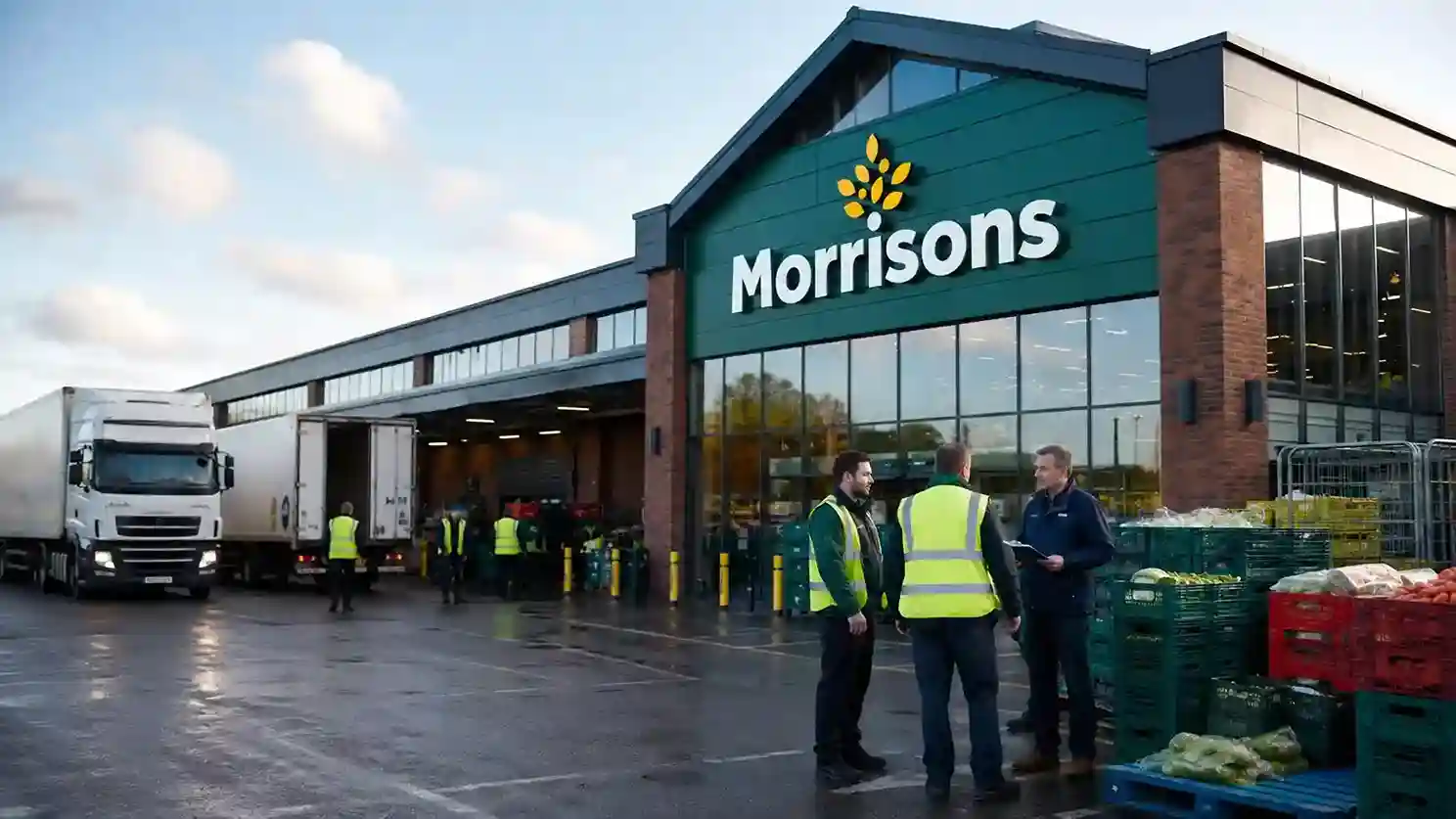
Morrisons debt management strategy now includes supply discussions with rival supermarket chains as the retailer works to reduce financial pressure, improve profitability and make better use of its Myton manufacturing division.
Facing losses of £381 million and net debt of £3.1 billion, the supermarket is exploring external supply agreements for products including pies, meat, fish and eggs while continuing wider restructuring efforts across the business.
Key Takeaways:
- Morrisons is using manufacturing partnerships to support debt management efforts
- The retailer is in talks with rival supermarkets and hospitality businesses
- Myton manufacturing remains central to Morrisons’ long-term strategy
- Rising borrowing costs continue to pressure profitability
- The company has introduced major cost-cutting measures, including store closures
- External supply agreements could create new revenue streams and improve factory efficiency
- Industry experts believe manufacturing control gives Morrisons a competitive advantage in the UK grocery market
Why Is Morrisons Expanding Its Debt Management Strategy Through Rival Supermarket Supply Talks?

Morrisons is reshaping its commercial strategy as financial pressures continue to weigh heavily on the supermarket chain.
The company’s decision to enter supply discussions with rival supermarkets represents more than a short-term response to debt concerns. It reflects a broader attempt to create diversified income streams while making better use of existing operational assets.
The supermarket industry in the UK has become increasingly competitive over the past several years. Rising inflation, energy costs, wage increases and changing consumer behaviour have affected profit margins across the sector.
For Morrisons, these pressures have been intensified by the debt accumulated following the company’s £10 billion takeover by private equity firm Clayton, Dubilier & Rice in 2021.The retailer’s management team appears to be focusing on a practical solution by monetising its internal manufacturing capabilities.
Instead of relying solely on supermarket sales, Morrisons is now positioning Myton manufacturing as a supplier to external customers, including rival grocery chains and hospitality businesses. This strategy allows the company to generate additional revenue without opening new stores or investing heavily in new infrastructure.
Since Myton already operates large-scale production facilities, expanding supply agreements may increase production volumes while improving cost efficiency.
The decision also reflects changing attitudes within the supermarket sector. Historically, major retailers were reluctant to work closely with competitors. However, financial pressure and operational costs are encouraging businesses to adopt more commercially flexible approaches.
Key Area Morrisons’ Strategy
Revenue Growth Expanding external supply agreements
Debt Reduction Improving operational profitability
Manufacturing Efficiency Increasing factory utilisation
Market Position Diversifying beyond supermarket retail
Cost Management Using existing infrastructure
Myton already supplies products to independent retailers, which demonstrates that the operational framework for external supply partnerships is already established.
Expanding those partnerships to larger supermarket chains simply increases the scale of the existing model. Industry observers believe the move could help Morrisons stabilise cash flow during a difficult financial period.
External contracts may provide more predictable income compared to supermarket retail sales, which can fluctuate depending on economic conditions and consumer confidence.
A retail operations consultant explained the industry trend clearly:
“I’ve seen more supermarkets become willing to separate manufacturing from direct competition. If a retailer has spare production capacity, it makes financial sense to use it rather than leave facilities underutilised. Morrisons appears to be applying that logic aggressively.”
The company’s manufacturing expansion is also linked to long-term operational sustainability. By increasing the number of external customers, Morrisons may reduce dependence on its own retail performance alone.
How Myton Manufacturing Fits Into Morrisons’ Financial Recovery Plan?
Myton manufacturing plays a critical role in Morrisons’ broader recovery strategy because it represents one of the company’s strongest operational assets.
Unlike many competitors, Morrisons stores maintains substantial control over food production, sourcing and distribution.
The division handles several key product categories, including:
- Sweet and savoury pies
- Fresh meat products
- Fish and seafood
- Eggs
- Flowers
This vertically integrated model gives Morrisons greater control over quality, pricing and supply chain operations. It also allows the company to react more quickly to market disruptions compared to retailers relying entirely on third-party suppliers.
Myton’s infrastructure has been built over decades and includes processing facilities, logistics systems and supplier relationships across the UK food industry. These capabilities provide Morrisons with an opportunity to generate manufacturing income independently from supermarket retail activity.
Myton Manufacturing Capabilities Business Benefit
In-house food production Better quality control
Established supplier network Supply chain stability
Large-scale facilities Capacity for external contracts
Existing logistics operations Faster product distribution
British food sourcing Appeal to UK retailers and hospitality
One important factor supporting the strategy is that Myton reportedly still has spare production capacity. This means Morrisons can potentially increase manufacturing output without requiring major capital investment.
The company has already hosted visits from rival supermarket representatives, including Sainsbury’s employees, who toured Myton facilities during discussions regarding potential supply agreements.
Morrisons is also targeting hospitality businesses looking for British-produced food products. Hotels, restaurants and catering providers continue to seek reliable domestic suppliers following years of supply chain disruption across global markets.
A food manufacturing specialist described the operational advantage clearly:
“I’ve worked with businesses that underestimated the value of owning production assets. When supply disruptions happen or ingredient costs rise quickly, retailers with direct manufacturing control are often in a stronger position to manage pricing and stock availability.”
The company’s leadership believes this operational control remains one of Morrisons’ biggest competitive strengths despite its current financial challenges.
How Serious Are Morrisons’ Financial Challenges in 2026?

Morrisons continues to face substantial financial pressure in 2026, with rising debt costs remaining one of the company’s biggest concerns. The retailer reported losses of £381 million for the financial year ending October 2026, highlighting the scale of the challenge facing management.
A major contributor to these losses is the company’s annual interest bill, which reached approximately £281 million. These costs are directly linked to the debt taken on during the 2021 acquisition. The retailer’s net debt currently stands at £3.1 billion, placing considerable pressure on cash flow and profitability.
Financial Position 2026 Figures
Annual Losses £381 million
Interest Payments £281 million
Net Debt £3.1 billion
Acquisition Cost £10 billion
The structure of private equity acquisitions often involves substantial borrowing, and Morrisons is now dealing with the long-term financial consequences of that approach.
The wider economic environment has made debt management even more difficult. Interest rates in the UK have remained elevated compared to previous years, increasing borrowing costs across many industries.
Inflation has also affected operating expenses throughout the retail sector. Energy prices, transportation costs and wage pressures have all contributed to tighter margins for supermarkets.
Consumer spending patterns have changed significantly as households continue to prioritise value-focused shopping. Customers are increasingly comparing prices, reducing discretionary purchases and seeking promotions.
These conditions create a difficult environment for retailers carrying high debt obligations because there is less room for profit growth through traditional store sales alone.
The Financial Impact of Rising Borrowing Costs
Rising borrowing costs have become a serious challenge across the UK retail market. Businesses carrying large amounts of debt are now paying significantly more in interest than they would have several years ago.
For Morrisons, this means a substantial portion of the company income is being directed towards debt servicing instead of investment or expansion.
Higher interest expenses can affect several areas of operations:
- Store improvements
- Technology investment
- Staff recruitment
- Supply chain upgrades
- Customer service expansion
The company’s management team is therefore attempting to improve operational profitability through restructuring and manufacturing growth. Retail analysts believe Morrisons’ current strategy reflects the need to generate cash flow quickly while avoiding expensive expansion projects.
How Inflation and Consumer Spending Pressures Affect UK Supermarkets?
Inflation continues to affect the entire UK grocery market. Consumers are becoming more price sensitive, which creates additional pressure on supermarkets competing for market share. Discount retailers have continued gaining popularity, forcing traditional supermarket chains to balance affordability with profitability.
Supermarkets are also facing rising supplier costs across several categories, including food production, packaging and logistics.
Economic Pressure Impact on Supermarkets
Inflation Higher operating expenses
Consumer caution Reduced discretionary spending
Energy costs Increased store and manufacturing costs
Wage growth Higher staffing expenses
Borrowing rates More expensive debt servicing
These economic conditions explain why Morrisons is pursuing alternative business opportunities beyond traditional retail operations.
What Products Could Morrisons Supply to Competing Supermarkets?
Morrisons’ Myton division has the capability to supply a wide range of food products to competing retailers and hospitality businesses. The company’s manufacturing portfolio includes several staple grocery categories commonly sold across UK supermarkets.
The division currently produces ready-made sweet and savoury pies, which have become one of its most recognisable product categories. It also handles meat processing, fish sourcing, egg distribution and flower supply operations.
These products are already integrated into Morrisons’ existing retail network, meaning the company has established production processes and logistics systems in place. The ability to scale production for external customers may help Morrisons maximise the efficiency of its facilities.
Product Category Potential External Demand
Pies and bakery items Supermarkets and catering
Meat products Grocery chains and hospitality
Eggs Food service providers
Fish products Retail and restaurant sectors
Flowers Seasonal retail demand
Representatives from rival supermarket chains have reportedly visited Myton facilities as part of ongoing discussions. This suggests competitors are seriously evaluating Morrisons’ manufacturing capabilities rather than treating the talks as informal conversations.
Hospitality businesses may also represent an important growth area for the division. Hotels, event venues and catering companies increasingly seek stable domestic food suppliers due to concerns over global supply chain disruptions.
The British-produced aspect of Myton’s products may further strengthen its appeal among UK businesses focused on sourcing local goods.
Why Is Myton Manufacturing Central to Morrisons’ Long-Term Strategy?
Myton remains central to Morrisons’ strategy because it gives the company operational advantages that many competitors no longer possess. Over recent decades, several supermarkets reduced direct involvement in manufacturing and became more dependent on third-party suppliers. Morrisons, however, retained significant control over food production.
Chief executive Rami Baitiéh has repeatedly defended this approach, arguing that manufacturing forms part of the company’s identity and long-term value.
The company believes owning production facilities supports several strategic goals:
- Better inventory control
- Faster response to supply disruptions
- Greater pricing flexibility
- Improved product consistency
- Additional wholesale revenue opportunities
Industry experts suggest these advantages could become increasingly important as supply chain reliability continues influencing retail competition.
A senior food supply executive explained the strategic value clearly:
“I’ve seen retailers struggle during supply shortages because they relied almost entirely on external producers. Morrisons still controls large parts of its production chain directly, which gives it more flexibility during difficult market conditions.”
Despite reports regarding a possible sale of Myton, the division continues to be viewed internally as a valuable long-term asset.
The manufacturing operation may also become increasingly important if Morrisons successfully expands wholesale and external supply partnerships in the coming years.
How Is Morrisons Reducing Costs While Managing Its Debt Burden?
Alongside manufacturing expansion, Morrisons has implemented several cost-cutting measures designed to reduce operational expenses and improve profitability. The company recently announced plans to close 100 convenience stores across the UK. It has also shut various in-store cafés and service counters.
These decisions form part of a wider restructuring strategy aimed at improving efficiency and reducing unnecessary operating costs. Earlier this year, Morrisons also closed bakery operations at its Wakefield site after reports suggested the facility had suffered significant losses.
Management appears to be focusing resources on business areas with stronger financial performance while reducing exposure to underperforming operations.
Cost Reduction Measure Purpose
Convenience store closures Reduce operating losses
Café closures Lower staffing and maintenance costs
Service counter reductions Improve operational efficiency
Bakery closure Remove unprofitable operations
Manufacturing expansion Increase revenue generation
Retail restructuring often creates difficult consequences for employees and local communities. Store closures may reduce customer convenience while also affecting jobs. However, businesses facing significant debt pressure frequently prioritise financial stability to protect long-term operations.
How Retail Cost-Cutting Measures Affect Customers and Employees?
Customers may notice fewer in-store services and reduced convenience as supermarkets streamline operations. In-store cafés and specialist counters often carry higher staffing costs, making them common targets during restructuring periods.
Employees may also face uncertainty during operational changes. Retail businesses undergoing restructuring frequently review staffing levels, store performance and operational priorities. Despite these challenges, management teams often argue that restructuring is necessary to maintain broader business sustainability.
The Balance Between Debt Reduction and Business Growth
Morrisons faces the difficult challenge of reducing debt while still investing in future growth opportunities. Excessive cost-cutting may weaken long-term competitiveness, while insufficient restructuring could worsen financial pressure.
The company appears to be attempting a balanced approach by reducing unprofitable operations while expanding manufacturing partnerships capable of generating additional income.
This strategy allows Morrisons to focus its investment on areas where it already possesses operational strength rather than pursuing entirely new business models.
Conclusion
Morrisons debt management strategy now extends beyond traditional retail restructuring and into broader manufacturing partnerships with rival supermarkets and hospitality businesses.
Faced with £3.1 billion in debt and significant annual interest payments, the company is actively seeking ways to strengthen revenue streams and improve operational efficiency.
The Myton manufacturing division has emerged as a central part of this strategy due to its production capabilities, profitability and spare manufacturing capacity. While speculation around a potential sale continues, Morrisons leadership remains committed to keeping manufacturing at the heart of the business.
As the UK grocery sector continues evolving under economic pressure, Morrisons’ approach may reflect a wider shift towards collaboration, supply chain efficiency and diversified income generation within British retail.
FAQs
Why is Morrisons speaking with rival supermarkets?
Morrisons is seeking additional supply agreements to generate new revenue streams and improve the use of its manufacturing facilities while managing financial pressure.
What is Morrisons’ current debt level?
Morrisons currently has net debt of approximately £3.1 billion following its 2021 takeover.
What products does Myton manufacture?
Myton produces pies, meat, fish, eggs, flowers and other food products supplied to Morrisons stores and external customers.
Why did Morrisons close convenience stores and cafés?
The closures are part of a wider cost-cutting and restructuring strategy aimed at improving profitability and reducing operational expenses.
Who owns Morrisons now?
Morrisons is owned by private equity firm Clayton, Dubilier & Rice following a £10 billion takeover completed in 2021.
Could Morrisons sell its manufacturing division?
The company has reportedly explored discussions regarding Myton, but senior leadership has stated that manufacturing remains central to Morrisons’ long-term strategy.
How could supply agreements help Morrisons financially?
External supply contracts may create additional revenue, improve factory efficiency and support long-term debt management efforts.