
The “pippa middleton planning dispute” centres on whether Mill Lane, a route across Barton Court in Berkshire, should legally remain private or be recognised as a public right of way.
Pippa Middleton and James Matthews closed access to the lane after buying the estate in 2022, but local residents say they have used it for decades to reach Kintbury safely. West Berkshire Council has sided with residents for now, while the estate is challenging that decision at a public inquiry.
Key points:
- Mill Lane was closed with gates, railings and warning signs in 2022
- Residents say the route is part of a long-established footpath
- The estate argues the lane has always been private
- West Berkshire Council has designated the route as a public right of way
- A Planning Inspectorate hearing on 14 May will decide the dispute
Why Did Pippa Middleton and James Matthews Close Mill Lane?
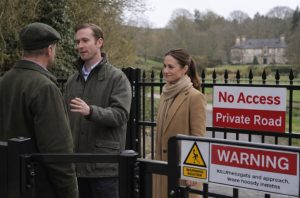
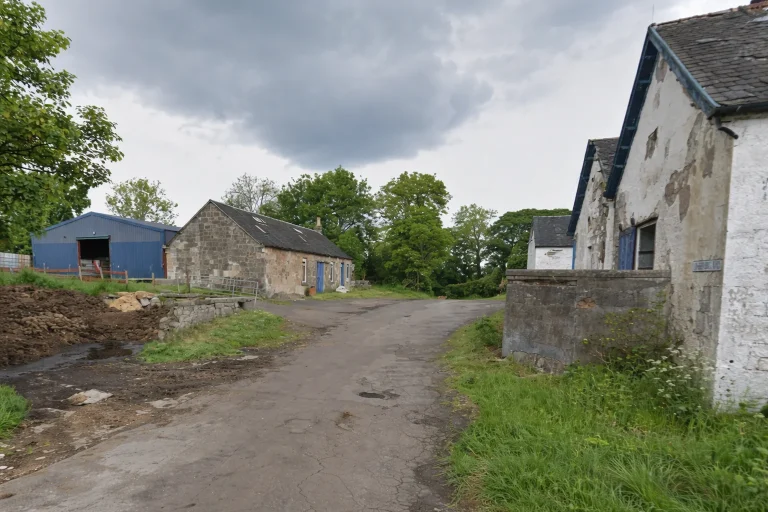
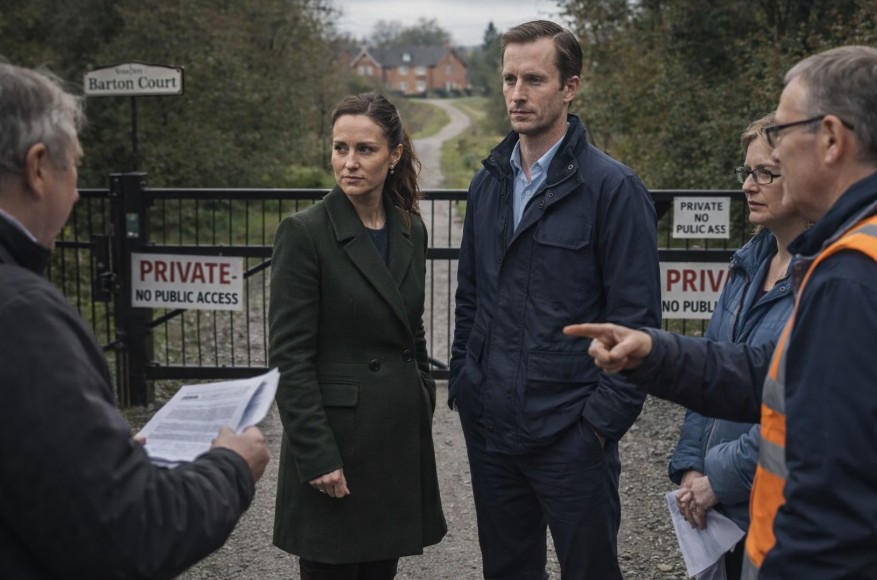
James Matthews closed Mill Lane shortly after purchasing Barton Court, a 145-acre estate previously owned by Sir Terence Conran. According to planning documents, gates and railings were added at the entrance, followed by an electric gate and signs warning “No Access”, “No Trespassing” and “Private: No Public Access”.
The estate maintains that the route has always been private and that public access was never legally established. The family argues that allowing walkers through the lane would create privacy and security concerns because the road runs close to their home and grounds.
| Issue | Estate’s Position |
|---|---|
| Status of Mill Lane | Private road, not a public footpath |
| Why gates were installed | To control access after the purchase in 2022 |
| Main concern | Privacy and security for the family |
| Legal claim | The lane does not meet the legal test for a right of way |
| Alternative for walkers | Other nearby routes are available |
The estate also argues that there were signs marking the lane as private long before the Matthews family arrived. In 2024, a formal highway declaration was submitted stating that no public rights existed over Mill Lane. The family believes this proves they are protecting a long-standing private route rather than removing an established public path.
Why Do Local Residents Believe Mill Lane Is a Public Right of Way?
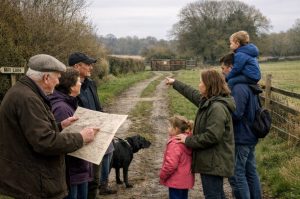
Local residents believe Mill Lane should be recognised as a public right of way because they say it has been openly used by walkers for generations.
They argue that the route forms part of a longer path through the village and that no one was prevented from using it until the gates appeared in 2022.
Many villagers also say the lane is not simply a convenient shortcut. In their view, it is the safest and most practical way to reach parts of Kintbury without walking along a narrow road.
How Have Villagers Used the Route for Decades?
Residents have told the public inquiry that Mill Lane has been used for many years by people walking into the village, taking dogs out, or heading towards the church and surrounding countryside.
Some villagers claim the route has been used since the 1960s. Others say they walked it several times a week and never saw signs or barriers until recently.
Key claims made by residents include:
- There were previously no locked gates or fences
- Walkers used the lane regularly without being challenged
- The route appeared on local maps and looked like part of the public footpath network
- The former owner, Sir Terence Conran, did not stop access
One local resident, Neil Lawrence, said he always believed the route was public. He explained that it looked like a natural continuation of the footpath and that closing it would remove “a key local amenity”.
As he put it:
“I was always of the belief that this route off of Station Road to the Kintbury footpath was public. When planning a walk, and executing a walk, the route looks logical, both on any available map and in reality on the ground. The closure would be a loss of a key local amenity.”
Another villager told the inquiry that there were no signs, gates or stiles preventing access before the new gate was installed. That resident said generations of local people had walked the route and assumed it formed part of the public footpath network.
Why Is the Alternative Route Considered Dangerous?
Residents say closing Mill Lane forces them onto Station Road, which they describe as narrow, busy and unsafe for pedestrians. The road reportedly has no pavement and very few places where people can step aside from traffic.
That concern has become one of the strongest arguments in the dispute. Campaigners say the issue is not only about access, but also about safety.
Residents and campaigners say the alternative route is dangerous because:
- Station Road has no pavement
- There are few verges or safe spaces beside the road
- Cars travel quickly along the lane
- Children, older people and dog walkers may be especially vulnerable
West Berkshire Ramblers chairman Eugene Futcher said the lane provides “a safe way to get to and from the village”.
He added:
“We have accounts of people having unfettered public access in the Sixties and the use probably goes back generations with people from other villages walking to Kintbury. It is a safe way to get to and from the village, so walkers are put at risk if they have to use the road.”
For many villagers, that safety concern is why the dispute has become so emotional. They believe losing Mill Lane would change how people move around the village every day.
How Did West Berkshire Council Become Involved?
West Berkshire Council became involved after the Ramblers’ Association applied for a definitive map modification order. This is the legal process used when people believe a route should officially be recorded as a public footpath.
The application argued that Mill Lane had been used openly and continuously by local people for more than 20 years. After reviewing evidence from residents, the council decided the route should be designated as a public right of way.
The council’s decision was supported by evidence including:
- Witness statements from local residents
- Historical use of the route
- Claims that there had been no barriers for many years
- Support from Kintbury Parish Council
The parish council reportedly voted in favour of recognising the lane as public after hearing different views from residents. Some people said they had always believed the route was private, while others described regular use over many decades.
West Berkshire Council’s decision does not settle the matter permanently. Because the estate has challenged the ruling, the final decision will now be made by the Planning Inspectorate.
What Arguments Are Pippa Middleton and James Matthews Making Against the Decision?

The estate has strongly opposed West Berkshire Council’s decision and insists that Mill Lane should not be added to the official map of public footpaths. The family’s argument is based on both legal and practical concerns.
They say there is not enough evidence to show the lane was ever intended for public use. They also argue that opening the route would affect the family’s privacy and security.
Why Does the Estate Say Mill Lane Is Not a Footpath?
According to James Matthews’ legal submission, Mill Lane does not meet the legal definition of a public footpath. The estate argues that a route only becomes a right of way if there has been uninterrupted public use without challenge for a long period.
The family says that did not happen here because the route was always treated as private.
The estate points to several pieces of evidence:
- Signs marking the lane as private were allegedly present since the 1980s
- The road was part of a private estate drive
- A 2024 highway declaration formally stated there was no public access
- Estate manager Patrick Newnham objected to the route being recorded as public
James Matthews’ statement says:
“The claimed route does not meet the legal requirements to be a footpath. It has been, and remains, marked as private. Public use would cause practical and security issues for the family.”
The estate also argues that the lane is different from a traditional countryside footpath. In its submission, Mill Lane is described as a surfaced drive with little scenic value and no clear purpose beyond reaching Station Road.
The family says that because the route was private from the beginning, the council should not treat occasional public use as evidence of a legal right.
Why Does the Family Believe Public Access Would Cause Problems?
The second major argument made by the estate is that public access would create difficulties for the family who live at Barton Court with their children.
The lane runs through land close to the house and estate buildings. The family believes this could create unwanted disturbance and reduce their privacy.
The estate has raised several concerns:
- Walkers could pass close to private parts of the property
- The route could make it harder to manage security
- Increased access could lead to more people entering the estate
- The family believes there are safer and more suitable alternatives nearby
The estate also says there are other walking routes in Kintbury that avoid the need to cross private land. According to its submission, these routes are more attractive and more appropriate for recreational walking.
James Matthews’ legal case argues that Mill Lane leads only to Station Road, which it describes as “busy and unattractive”. The estate therefore believes the route is not essential and that residents are exaggerating its importance.
What Evidence Have Local Residents Submitted to the Public Inquiry?
Residents supporting the public right of way claim have submitted statements, historical accounts and personal experiences to the inquiry. Most of the evidence is designed to show that Mill Lane was used openly for many years without interruption.
Several villagers have said they used the route hundreds of times each year. Others have described seeing many different people using the lane for walking, dog walking and access into Kintbury.
Evidence submitted includes:
- Witness statements describing regular use over decades
- Claims that there were no locked gates before 2022
- Descriptions of the lane connecting to an existing public footpath
- Testimony that the route avoided a dangerous road
One resident told the inquiry that until the gate was installed, there were “no signs, no gates or stiles of any kind” that stopped people walking there. The same witness said the lane always appeared to be part of the public footpath.
Another important point in the residents’ evidence is that the route links directly with the Causeway, a raised path beyond Mill Lane. Campaigners argue that Mill Lane and the Causeway have long worked together as one continuous route through the village.
Local people believe that if Mill Lane remains closed, the usefulness of the Causeway could also be reduced because walkers would struggle to reach it safely.
What Is the Causeway and Why Is It Important?

The Causeway is a raised footpath connected to Mill Lane near Barton Court. Although it has received less attention than the main dispute, many residents say it is one of the most important reasons why Mill Lane matters.
The Causeway allows people to cross land near Kintbury even when nearby fields become wet or flooded. Because of that, many villagers see it as an essential route rather than simply a leisure path.
How Does the Causeway Connect to Mill Lane?
Mill Lane acts as the main access point to the Causeway. Walkers travelling from Kintbury can use the lane to reach the raised footpath and continue into the countryside.
Campaigners say that if access to Mill Lane is lost, the Causeway becomes much harder to reach. That is why residents believe the dispute is about more than one lane.
The connection matters because:
- Mill Lane provides the easiest route to the Causeway
- The Causeway remains usable during floods
- The path links different parts of the village and surrounding land
- Many walkers rely on it throughout the year
According to residents, the Causeway has long been part of daily life in Kintbury. During periods of heavy rain, it may be the only practical walking route available because lower fields become difficult to cross.
West Berkshire Ramblers has argued that the lane and Causeway should be viewed together. In their view, blocking Mill Lane effectively blocks access to the wider footpath network as well.
Why Could Losing Access Affect Daily Life in the Village?
Residents say the impact would go beyond recreational walking. Losing access to Mill Lane and the Causeway could change how people move around the village every day.
Dog walkers, older residents and families with children may need to take longer and less safe routes. Some villagers say they use the path to reach the church, the countryside or other parts of Kintbury without using Station Road.
Potential effects include:
- Longer walking routes into the village
- More people using narrow roads without pavements
- Reduced access for older residents
- Greater risk during poor weather or flooding
A practical example often mentioned by campaigners involves a resident walking from the edge of Kintbury to St Mary’s Church. With Mill Lane open, the route is straightforward and avoids traffic. If the lane stays closed, that same person may have to walk along Station Road, where there is little room for pedestrians.
One resident described the change in simple terms:
“Until the point in time when a gate was installed across the metalled section of the walk, there were no signs, no gates or stiles of any kind that would impede progress. Over the years, I have seen and spoken with many villagers walking this path and I have always believed the roadway was part of the public footpath.”
For many villagers, that is why the dispute feels personal rather than technical.
What Happens at the Planning Inspectorate Hearing?
The final decision will be made at a hearing organised by the Planning Inspectorate. The hearing is scheduled for 14 May and will examine whether West Berkshire Council was correct to designate Mill Lane as a public right of way.
At the inquiry, both sides will present evidence. Residents and the Ramblers’ Association will try to show that the route has been used publicly for decades. The estate will argue that Mill Lane has always been private and that the council relied on incomplete evidence.
The inspector may review witness statements, maps, signs, photographs and legal documents before making a decision. That ruling will be legally binding.
If the inspector agrees with the council, Mill Lane could officially become a recognised public footpath. If the estate wins, the gates may remain and residents would lose their claim to use the route.
Could the Pippa Middleton Planning Dispute Affect Other UK Property Owners?
The Pippa Middleton planning dispute may matter beyond Berkshire because it highlights a wider legal issue affecting rural property owners across the UK.
Under British law, a route can sometimes become a public right of way if local people have used it openly for many years without challenge. That means landowners who do not clearly restrict access may later face claims that part of their land is public.
At the same time, the case also shows that private owners have legal rights to protect their homes, privacy and security. The final decision could therefore influence how other disputes are handled in future.
Many landowners may now review:
- Whether footpaths crossing their land are clearly marked
- Whether they need signs or legal declarations
- How to balance public access with private property rights
The hearing may become an important example of how courts and councils deal with long-used routes on private estates.
What Facts, Proposed Claims and Misinformation Need To Be Separated?
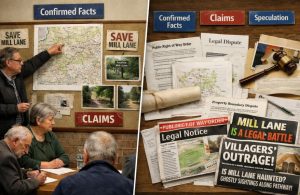
Because the dispute involves a high-profile family, there has been considerable speculation and confusion. Some reports focus heavily on celebrity details rather than the legal issues. It is therefore important to separate what has been confirmed from what is still uncertain.
What Has Been Confirmed?
Several facts are not disputed by either side.
Confirmed facts include:
- James Matthews bought Barton Court in 2022 for around £15.5 million
- Mill Lane was later closed with gates and signs
- West Berkshire Council designated the lane as a public right of way
- The estate has challenged that decision
- A Planning Inspectorate hearing is due to take place on 14 May
It is also confirmed that the route is used to reach parts of Kintbury and connects with the Causeway footpath.
The existence of privacy and safety concerns has also been confirmed. However, the reasonableness of those concerns is still being debated.
What Is Still Being Argued or Decided?
The central legal question has not yet been resolved. The inspector still needs to decide whether Mill Lane meets the legal test for a public footpath.
The following points remain disputed:
- Whether local people used the route continuously for more than 20 years
- Whether signs or barriers existed before 2022
- Whether the public believed they had a right to use the lane
- Whether the route is essential or simply convenient
Residents say there were no signs for many years. The estate says signs existed since at least the 1980s.
Residents say the lane is vital because Station Road is unsafe. The estate says alternative routes are available and that Mill Lane is not especially useful.
These are exactly the issues the Planning Inspectorate will examine before making its decision. Until that happens, neither side can claim to have legally won the argument.
What Claims Should Readers Treat Carefully?
Some claims appearing in media reports should be treated cautiously because they are based on opinion rather than confirmed evidence.
Readers should be careful about suggestions that:
- The family deliberately wanted to ignore local residents
- The lane was definitely public before the council decision
- The dispute is only about celebrity privilege
- Residents are certainly “being put at risk”
For example, some campaigners believe the family wants to stop walkers for privacy reasons. That may be true, but the estate has not publicly confirmed that as its only motive.
Similarly, some newspapers have suggested the family is “putting the public at risk”. That is an emotional description rather than a legal finding. The hearing has not yet decided whether Station Road is genuinely unsafe enough to justify keeping Mill Lane open.
The dispute is therefore best understood as a legal disagreement between private property rights and long-term public use. The final ruling may support either side, depending on the evidence.
At present, the most reliable conclusion is that the facts remain contested, and readers should avoid assuming that every headline reflects the full picture.
What Could Happen Next in the Pippa Middleton Planning Dispute?
The next stage is the Planning Inspectorate hearing in May. After reviewing the evidence, the inspector will issue a legally binding decision.
If the residents and council succeed, Mill Lane may officially become a public right of way. In that case, the estate could be required to allow walkers through the lane again.
If the estate succeeds, the route would remain private and the gates would stay in place. Residents would then need to rely on other routes through Kintbury.
Whatever the outcome, the dispute is likely to remain significant because it raises broader questions about access to countryside paths, village safety and private property rights.
For local people in Kintbury, however, the issue is simpler. They want certainty about whether a familiar route through the village will remain available in the future.
Conclusion
The pippa middleton planning dispute is no longer simply a local disagreement over one road in Berkshire. It has become a wider debate about whether long-used village routes should remain open when private ownership changes.
Residents believe Mill Lane has been part of daily life in Kintbury for decades, while Pippa Middleton and James Matthews insist the route has always been private and should stay that way.
The hearing in May will decide which argument is stronger under the law. Until then, the dispute remains unresolved.
What is clear is that the case highlights the difficult balance between protecting private homes and preserving public access to routes that communities believe they have used for generations.
FAQs
Can Pippa Middleton legally stop people using Mill Lane?
Pippa Middleton and James Matthews can stop access if the lane is legally confirmed as private land. However, if the Planning Inspectorate decides it is a public right of way, the route may have to reopen.
Why do residents believe Mill Lane is a public footpath?
Residents say they have used the route for decades without barriers or warning signs. Many also believe it forms part of the established footpath network around Kintbury.
When will the final decision on the planning dispute be made?
The Planning Inspectorate hearing is scheduled for 14 May. A legally binding decision is expected after the inquiry has reviewed all the evidence.
What is a definitive map modification order?
A definitive map modification order is the legal process used to add or change a public footpath on the official map. In this case, it is the reason West Berkshire Council recognised Mill Lane as a possible right of way.
Why is Station Road considered unsafe by local people?
Residents say Station Road is narrow and has no pavement for pedestrians. They believe walkers, children and older people could be at greater risk if Mill Lane stays closed.
Could this dispute affect other landowners in the UK?
Yes, because the case highlights how long-term public use can sometimes create a legal right of way. Other rural landowners may review access across their land as a result.
Does the dispute involve Pippa Middleton directly or mainly James Matthews?
The legal challenge has mainly been filed by James Matthews and the Barton Court estate. Pippa Middleton is involved because she lives at the property with her family.