
To send a postal order to DVLA, identify the correct application, confirm its current fee and copy the payee wording from the relevant form, DVLA letter or GOV.UK instructions.
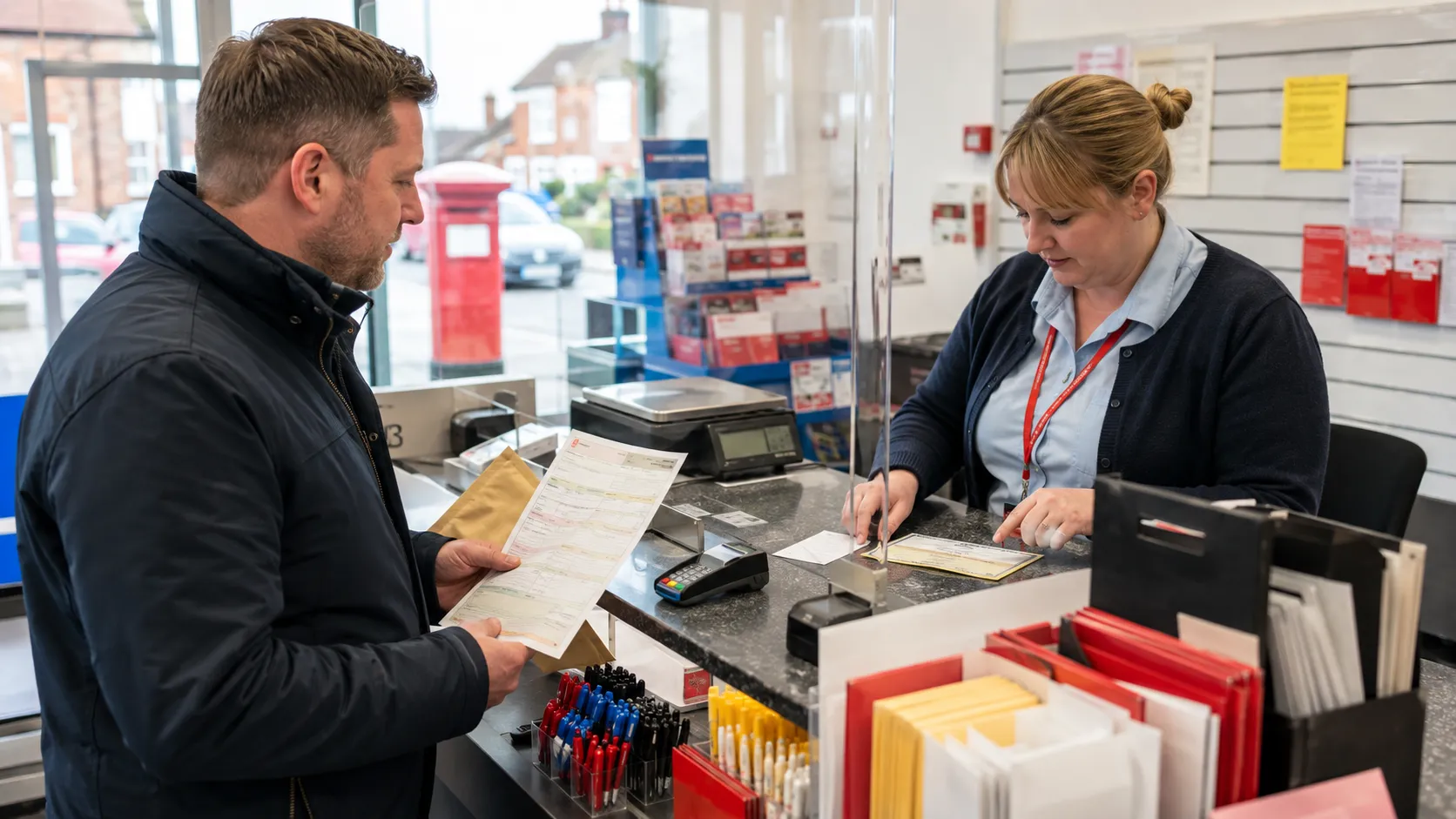
Buy the postal order at a Post Office branch, retain the receipt and enclose the payment with your completed application. The envelope must be sent to the address specified for that particular DVLA service.
The basic process is:
- Find the current instructions for your DVLA application.
- Confirm the exact application fee.
- Note the required payee name.
- Buy a postal order for the correct amount.
- Add any reference details requested by DVLA.
- Keep the receipt and postal-order number.
- Send the payment, form and required documents to the specified address.
For example, a postal photocard-licence renewal currently requires a £17 cheque or postal order payable to DVLA, while a V62 application that requires payment uses different payee wording and a different postcode.
Key Takeaways:
- DVLA accepts postal orders for certain paper applications, but not every service requires or permits one.
- The correct payee may be shown as DVLA or DVLA, Swansea, depending on the application.
- There is no single DVLA postal order address for every form.
- The Post Office charges a purchase fee in addition to the face value of the postal order.
- Postal orders can currently be purchased only with cash.
- Keeping the receipt is important if the postal order is lost or a payment problem arises.
- A tracked postal service can provide delivery evidence, but it does not make DVLA process the application faster.
Sending a postal order to DVLA is usually straightforward once the correct amount, payee wording and application address have been confirmed.
What Is a Postal Order?
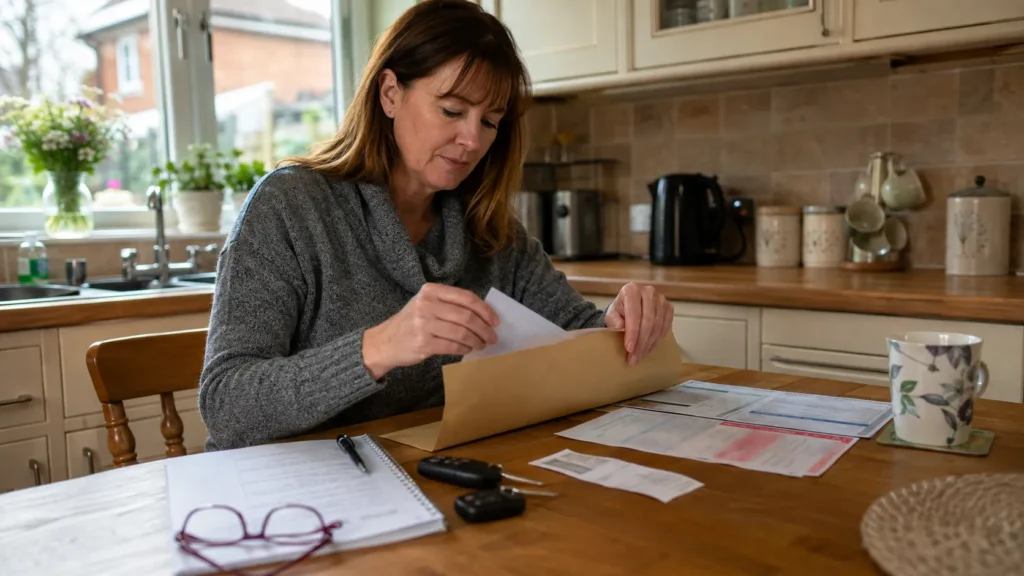
A postal order is a prepaid paper payment sold by the Post Office. It works in a similar way to a cheque, but the purchaser does not need a bank account or cheque book.
The purchaser pays the value printed on the order plus a Post Office service charge. The order is then made payable to a named recipient and sent with the relevant documents.
Postal orders can currently be issued for amounts from 50p to £250. The recipient’s name is required whether the postal order is crossed or uncrossed.
How Does a Postal Order Work?
A postal order has a fixed face value. For example, if a DVLA application costs £25, the applicant buys a postal order with a face value of £25. The Post Office fee is paid separately and must not be deducted from the DVLA payment.
An applicant therefore should not buy a postal order for less than the required application fee in an attempt to account for the purchase charge. DVLA must receive the full amount shown in its instructions.
Why Might DVLA Require Payment by Post?
Some DVLA transactions still require paper forms, photographs, signatures or original supporting documents. A postal order provides a way to pay for an eligible paper application without sending cash or writing a personal cheque.
It is particularly useful for applicants who do not have a cheque book or who prefer not to include bank-account details with a postal application.
Does DVLA Accept Postal Orders?
Yes. DVLA accepts postal orders for specified postal applications. Acceptance, payment amount and payee wording depend on the service being used.
For example, the current postal driving-licence renewal instructions state that an applicant renewing by post should include a £17 cheque or postal order payable to DVLA. The same page gives the address as DVLA, Swansea, SA99 1DH.
That information applies to the particular renewal service. It should not be copied automatically onto a V62 application, medical application, licence exchange or unrelated vehicle form.
Which Applications May Accept a DVLA Postal Order?
Postal orders may be accepted for services such as:
- Certain paper driving-licence applications
- Some driving-licence renewals or changes
- Applications for a replacement V5C using form V62
- Certain vehicle-registration transactions
- Applications that require original supporting documents
- Other services whose current instructions request a cheque or postal order
Applicants should rely on the instructions supplied for their own transaction rather than a generic address found on an old forum discussion or another DVLA form.
How to Buy a Postal Order for DVLA?
Postal orders are purchased at Post Office branches. Before travelling, take or write down:
- The exact DVLA application fee
- The required payee wording
- The application or form number
- Any reference or vehicle registration number that may be needed
- Enough cash to cover the postal order and its purchase fee
The Post Office’s current support guidance says postal orders can only be purchased with cash because card payments are not accepted for this product.
How Much Does a DVLA Postal Order Cost?
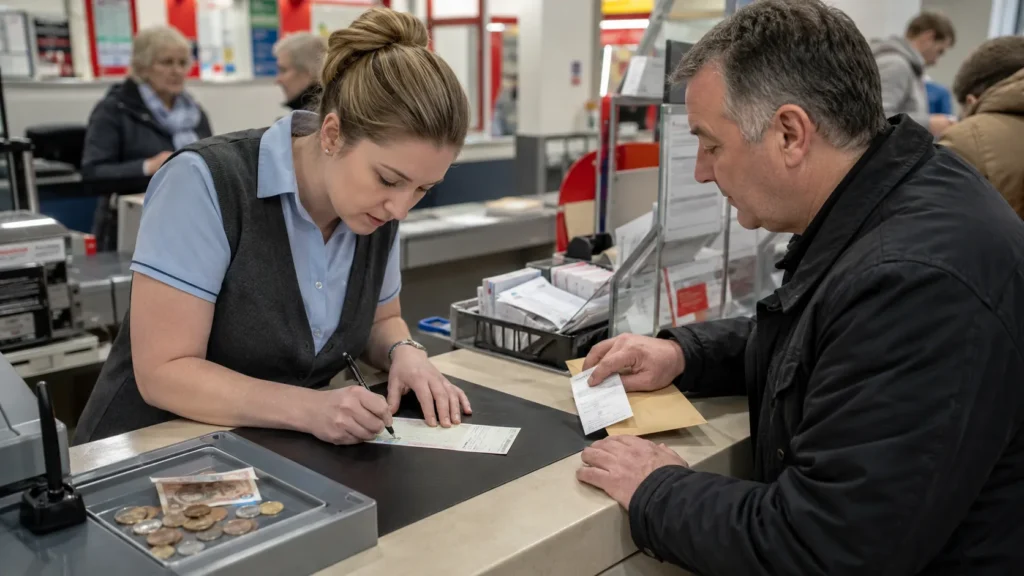
The cost has three possible parts:
- The amount DVLA requires
- The Post Office purchase fee
- The cost of posting the application
The current postal-order fee bands are:
| Postal-order value | Post Office fee |
|---|---|
| 50p to £4.99 | 50p |
| £5 to £9.99 | £1 |
| £10 to £99.99 | 12.5% of the face value |
| £100 to £250 | Maximum fee of £12.50 |
These charges are administrative fees and do not provide postal insurance.
For common DVLA amounts, the approximate cost before postage would be:
| DVLA fee | Approximate postal-order fee | Approximate amount paid at branch |
|---|---|---|
| £17 | £2.13 | £19.13 |
| £25 | £3.13 | £28.13 |
| £43 | £5.38 | £48.38 |
| £65 | £8.13 | £73.13 |
The figures above apply the published 12.5% fee and are rounded to the nearest penny. Branch staff can confirm the final amount charged.
How to Fill In a Postal Order for DVLA?
To fill in a postal order for DVLA correctly, start with the instructions for the exact application. Do not assume that every order should contain identical wording.
The applicant should confirm:
- The recipient or payee name
- The face value of the postal order
- Whether it should be crossed
- Any information required on the reverse
- The application address
Is Your DVLA Postal Order Ready?
Follow three short stages to identify the application, check the essential payment details and receive a personalised next step.
Choose the DVLA application
Application fees, payee wording and Swansea postcodes are not identical for every DVLA service.
Confirm the essential details
Select an answer for each point before purchasing or posting the postal order.
Complete the previous stages
Your personalised guidance will appear here.
Remember: a tracked delivery service can provide evidence that the envelope arrived, but it does not make DVLA process the application more quickly.
Who Should a DVLA Postal Order Be Payable To?
Some driving-licence services state that the payment should be made payable to DVLA. Certain vehicle applications instead specify DVLA, Swansea.
For example, a V62 application requiring a £25 fee currently instructs applicants to make the cheque or postal order payable to “DVLA, Swansea”.
The safest approach is to copy the payee exactly as it appears on the current form or official service page. Avoid adding a personal name, making the payment payable to “Driver Licensing” or relying on wording from an unrelated application.
What Should You Write on the Postal Order?
The recipient’s name must appear on the postal order. Depending on the DVLA service, the application instructions may also request identifying information such as:
- Applicant’s full name
- Driver number
- Vehicle registration number
- Postcode
- Application reference
- Case or customer reference
Do not add information that has not been requested, especially sensitive details that are unnecessary for matching the payment to the application.
What Should You Write on the Back?
There is no universal rule requiring every applicant to write the same details on the back of a DVLA postal order.
Where the form or accompanying guidance asks for identifying information, copy it carefully. This may include a name, driver number, registration mark or application reference.
Writing a reference on the reverse can help the receiving department associate the payment with the correct application, but the relevant DVLA instructions remain the controlling source.
Should a Postal Order to DVLA Be Crossed?
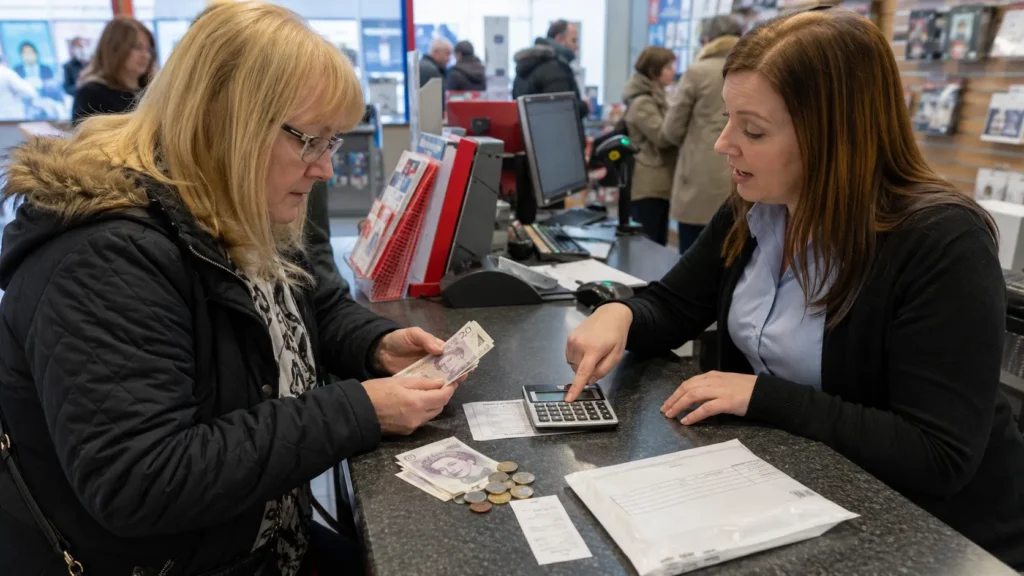
The Post Office recommends crossing a postal order whenever possible. A crossed postal order can only be paid through a bank rather than cashed over the counter.
Post Office branch staff can cross the postal order when it is purchased. The crossing appears as two vertical lines through the order. An uncrossed order is treated much like cash and is therefore less secure if it is lost or intercepted.
Do not erase, overwrite or alter a postal order after purchase. Post Office terms state that payment may be refused if an order has erasures, alterations or damage.
Where Should You Send a Postal Order to DVLA?
The correct DVLA postal order address depends on what the applicant is applying for.
DVLA uses different addresses and postcodes for:
- Driving-licence applications
- Vehicle-registration applications
- Medical licensing cases
- Foreign-licence exchanges
- Vehicle-information requests
- Enforcement matters
- Personalised-registration transactions
This means “DVLA, Swansea” is not a complete universal address. Applicants should copy the department and postcode shown on their current form, official letter or GOV.UK service page.
Example: Postal Driving-Licence Renewal
A current postal photocard-licence renewal is sent to:
DVLA
Swansea
SA99 1DH
The application must include a £17 cheque or postal order payable to DVLA, unless the stated fee exemption applies.
Example: V62 Postal Order
When a fee is required for the relevant V62 application, the current instructions specify a £25 cheque or postal order payable to “DVLA, Swansea” and give:
DVLA
Swansea
SA99 1DD
The V62 postcode should not be reused for a driving-licence application merely because both services are administered by DVLA.
Postal Orders for Common DVLA Applications
V62 Postal Order for a V5C
Form V62 is used in situations where a person needs to apply for a vehicle registration certificate, commonly called a log book or V5C.
A £25 payment may be required, although the circumstances matter. For example, an applicant with the most recent green new-keeper slip may not need to pay in some situations, whereas an applicant without it may need to include the fee.
When payment is required, current guidance uses the payee wording “DVLA, Swansea”.
Postal Order for a Driving Licence
The correct driving-licence payment depends on the service. A standard postal photocard renewal currently costs £17, but other applications may have different fees or exemptions.
Applicants aged 70 or over, or those with a qualifying medical short-period licence, may not need to pay the normal postal renewal fee.
Postal Order for a Foreign-Licence Exchange
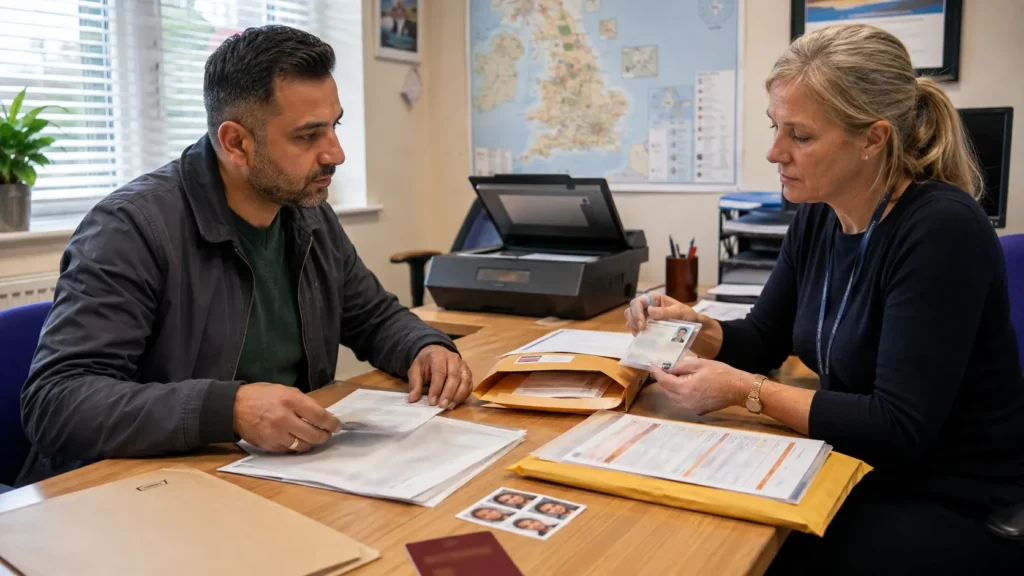
Foreign-licence exchange requirements can vary according to the issuing country, the type of licence and the applicant’s circumstances.
The applicant should use the fee, payment wording, documents and postal address stated in the current exchange pack. Original documents may be required, making secure posting and retention of copies particularly important.
How Should You Package and Post the Application?
Before sealing the envelope, make sure it contains:
- The current application form
- All required signatures
- The correct supporting documents
- A postal order for the full DVLA fee
- The correct payee name
- Any requested payment reference
- The correct department and postcode
Keep the postal-order receipt separately. Do not place the only proof of purchase inside the envelope.
Should You Use Tracked or Signed Delivery?
Proof of posting establishes that an envelope was handed to the postal operator. A tracked service can also show its progress and delivery status.
For applications containing valuable original documents or a postal order, Royal Mail Special Delivery Guaranteed provides full tracking, a delivery signature and compensation subject to its conditions. Other tracked or signed services may cost less but provide different levels of cover.
Using a faster postal service does not shorten DVLA’s internal processing time. DVLA’s current service update asks applicants using paper services to allow four weeks for new documents, although some individual services publish a different expected period and medical cases can take longer.
Can You Track a Postal Order Sent to DVLA?
You can track the envelope if it was sent using a Royal Mail service that provides tracking. This shows whether the item has entered the postal network and whether delivery has been recorded.
It does not normally show whether DVLA has:
- Opened the envelope
- Matched the payment to the form
- Processed the postal order
- Approved the application
- Issued the requested document
Keep both the posting reference and the postal-order receipt until the application is complete.
What Happens If the Postal Order Is Lost?
Post Office guidance states that if a postal order is lost in the post, the purchaser can obtain a P58 lost-post form from a branch. A photocopy of the proof of purchase is required, and the claim process begins after the stated waiting period.
The original receipt should be retained because its unique identification number may be needed.
Avoid sending another postal order immediately unless the status of the first payment has been clarified. Otherwise, DVLA could receive two payments for the same application.
Can You Cancel or Replace a Postal Order?
Cancellation, refund or replacement will depend on the condition and status of the postal order. The receipt will normally be important when discussing the issue with the Post Office.
Do not alter a postal order after making a mistake. Take the order and receipt back to a Post Office branch and ask which remedy is available.
Postal orders currently expire six months after issue. Payment after that point is at the Post Office’s discretion, so applicants should not keep an unused postal order indefinitely before sending it.
If DVLA returns an application, establish whether the postal order has also been returned and remains usable before purchasing a replacement.
Alternatives to Sending a Postal Order to DVLA
Some DVLA services offer easier payment methods.
| Payment method | Suitable for | Main advantage | Main limitation |
|---|---|---|---|
| Postal order | Eligible paper applications | No cheque book needed | Purchase fee and cash required |
| Cheque | Services accepting postal payment | No postal-order fee | Requires a suitable bank account |
| Online card | Eligible digital applications | Faster submission | Not offered for every transaction |
| Post Office service | Eligible in-person transactions | Branch assistance | Availability depends on the service |
For example, renewing a photocard licence online currently costs £14, compared with £17 by post plus the postal-order purchase fee. An eligible applicant may therefore save money by applying online.
The choice should be based on the particular DVLA service, not simply on which payment method is most familiar.
What Should You Do Next?
Before buying a DVLA postal order, complete these steps:
- Identify the exact application or form.
- Use the latest official instructions.
- Confirm whether a postal order is accepted.
- Confirm the full application fee.
- Copy the payee wording exactly.
- Find the application-specific postal address.
- Buy the postal order with sufficient cash.
- Ask for it to be crossed where appropriate.
- Add only the references requested by DVLA.
- Keep the receipt and a copy of the application.
- Obtain proof of posting or use a tracked service.
Conclusion
Sending a postal order to DVLA requires three details to be correct: the amount, the payee and the application address. Those details can vary between driving licence, V5C and other DVLA services, so they should always be taken from the latest instructions for the transaction.
Buy the postal order for the full application fee, retain the receipt and avoid altering it after purchase. Using the correct postcode and keeping proof of posting can also reduce uncertainty if the application or payment is delayed.
Frequently Asked Questions
Who should I make a postal order payable to for DVLA?
Use the exact wording in the instructions for your application. Some services say “DVLA”, while certain vehicle applications use “DVLA, Swansea”. Do not assume the wording is identical for every form.
What should I write on the back of a DVLA postal order?
Write only the identifying details requested in the current form or DVLA letter. These may include your name, driver number, registration number or application reference.
What address should I send a DVLA postal order to?
Send it to the address stated for the specific application. DVLA uses several Swansea postcodes, so there is no single postal address that applies to every service.
How much does a postal order to DVLA cost?
You pay the full DVLA fee, the Post Office purchase fee and postage. Postal orders valued between £10 and £99.99 currently attract a purchase fee equal to 12.5% of their face value.
Can I buy a DVLA postal order with a debit card?
No. Current Post Office guidance says postal orders can only be purchased with cash. Take enough cash to cover both the DVLA amount and the purchase fee.
Can I track a postal order sent to DVLA?
You can track the envelope when using an eligible tracked postal service. The tracking record does not confirm whether DVLA has processed or redeemed the postal order.
Can I pay DVLA online instead of using a postal order?
Many DVLA services accept online card payments, but some applications still require forms or original documents by post. Use the payment options listed for the exact transaction.