


Shabana Mahmood immigration reforms aim to tighten the UK immigration system by extending settlement timelines, increasing enforcement, and restoring public confidence, but they have triggered strong political and public debate.
The reforms propose longer waiting periods for permanent residence, tougher rules for low paid migrants, and stricter deportation measures, including for those already living in the UK.
Key takeaways
- Settlement waiting time may double from five to ten years
- Retrospective application has caused major backlash from Labour MPs and unions
- Enforcement and deportation powers are being expanded
- Migrant families and social care workers face long term uncertainty
These proposals have become one of the most contested policy areas in the current Labour government.
What Are Shabana Mahmood’s New Immigration Reforms?
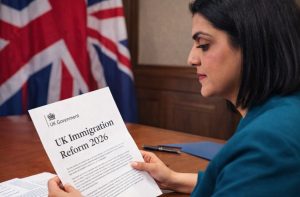
Shabana Mahmood immigration reforms focus on reshaping how migrants earn the right to settle permanently in the UK. At the centre of the proposals is a plan to extend the standard route to indefinite leave to remain from five years to ten years.
Settlement, also known as indefinite leave to remain, allows migrants to live, work, and study in the UK without time limits and to access benefits if eligible.
Shabana Mahmood defended the proposals, stating:
“The unprecedented number of people arriving in the UK demands an answer from the government.”
The reforms introduce a tiered system where migrants can shorten or lengthen their wait depending on income, employment stability, and use of public funds. High earners and individuals on global talent or innovator visas may qualify for faster settlement.
In contrast, low paid workers, particularly those in health and social care, could face waits of up to fifteen years. Migrants who rely on benefits for extended periods may face delays stretching to twenty years or more.
The government argues that these changes reinforce the principle that migrants must contribute economically and socially before gaining permanent status.
Ministers have stressed that people who already hold settlement will not lose it, but those currently in the process may see their expectations changed under the new framework.
Who Will Be Affected by These Immigration Changes?
The proposed reforms affect a wide range of migrants, particularly those already living and working in the UK. The most controversial aspect is that the changes may apply to people who entered the country legally and planned their futures around existing rules.
Groups most affected include:
- Migrants currently on the five year route to settlement
- Health and social care workers who entered on dedicated visas
- Low income workers in non graduate roles
- Families with dependent partners or children
- Migrants who have claimed benefits during periods of hardship
Many of those affected arrived during the period of high migration between 2021 and 2024. These individuals may now face longer waits despite having followed all previous requirements.
Families nearing settlement could see plans delayed by years, creating uncertainty around housing, employment stability, and education for children.
Employers are also impacted, especially in sectors already experiencing labour shortages. Social care providers have warned that extended settlement routes may discourage workers from staying in the UK long term, worsening staffing pressures and increasing costs across essential public services.
Why Are the Immigration Rules Being Changed Now?

The government has framed the reforms as a response to structural pressures that have built up over several years. Ministers argue that without action, the immigration system risks losing public trust and becoming unsustainable.
Surge in Legal and Illegal Migration Post Boris Era
Migration levels rose sharply between 2021 and 2024, a period often referred to as the Boris era. Large numbers of migrants arrived through work, study, and humanitarian routes. The government states that this surge placed strain on processing systems and settlement pathways, making reform unavoidable.
Pressure on Public Services and Housing
Increased migration has coincided with rising demand for housing, healthcare, and local services. Ministers argue that communities have felt the impact most acutely, particularly in areas with limited infrastructure. The reforms are presented as a way to balance openness with capacity.
Pressure on Public Services and Housing
Shabana Mahmood has repeatedly stated that maintaining public consent is essential for a functioning asylum and immigration system. She has described migration levels as unprecedented and argued that clear contribution based rules are necessary to reassure voters that the system is fair and controlled.
A government spokesperson supporting Mahmood’s position said:
“She has made the progressive case for these reforms – that we need to act if we are to retain public consent for having an asylum system at all.”
Labour’s Long Term Immigration Policy Direction
Labour’s approach combines tougher enforcement with legal reform. Alongside settlement changes, the government is increasing removals of illegal migrants and foreign criminals, streamlining appeals, and tightening border controls.
The aim is to show firmness on enforcement while reshaping legal migration around economic contribution and social cohesion.
Why Is the Retrospective Application So Controversial?
Retrospective application is the most divisive element of the Shabana Mahmood immigration reforms. Critics argue that changing rules for people already in the UK violates principles of fairness and trust.
Many migrants planned their lives around the expectation of gaining settlement after five years, making financial and family decisions based on existing policy.
In response to this element of the policy, Labour MPs have described the move as “un-British” and accused the government of “moving the goalposts.”
Labour MPs opposing the plans have described the approach as un British and as moving the goalposts. They argue that migrants who followed the rules, paid taxes, and contributed to their communities should not be penalised after the fact.
The concern is particularly strong for social care workers and low paid employees who kept essential services running during difficult periods.
Supporters of the policy counter that without retrospective application, the reforms would take years to have any real impact. However, the backlash highlights the tension between political objectives and the lived realities of migrant families already embedded in UK society.
How Have Labour MPs and Civil Society Reacted?
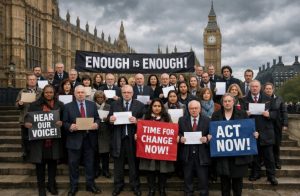
Reaction within Parliament and civil society has been intense and highly organised. A broad coalition has emerged to challenge the retrospective elements of the reforms.
Summary of the Letter to Shabana Mahmood
A formal letter was sent to the Home Secretary urging her not to apply new settlement rules to migrants already in the UK. The letter argues that the proposals are unfair to workers who have put down roots and contributed to their communities.
It calls for the government to honour commitments made under previous rules and to pause the consultation until a full impact assessment is published.
Number of MPs, Peers, and Organisations Who Signed
The letter was signed by 35 Labour MPs, 17 MPs from other parties, 21 peers, and 33 civil society organisations. This breadth of support underscores how widespread concern has become across political and social groups.
The open letter to Shabana Mahmood, signed by MPs and civil groups, included this pointed statement:
“The proposals to change settlement rules would pull the rug from under migrant workers, including in social care who provide dignity and comfort to our loved ones, often in difficult conditions and for low pay.”
It also emphasised a moral argument rooted in public values:
“The British public believe in fair play: that if you work hard, follow the rules and contribute, that government should tread lightly on your life.”
And it concluded with a strong demand:
“The Government must uphold its promises – we cannot simply change the rules halfway through an agreed process.”
Civil society signatories, including the UK’s largest trade union UNISON, further called on the Home Secretary to take immediate action:
“The Government must immediately rule out applying new immigration rules to migrant families already in the UK.”
Role of UNISON and Left Leaning MPs
UNISON, the UK’s largest trade union, played a prominent role. Its leadership warned that extending settlement timelines could push the social care sector closer to breaking point.
Left leaning Labour MPs, including former senior figures, have echoed these concerns, highlighting labour shortages and moral obligations.
Internal Pressure on Starmer and Labour Leadership
The dispute has added pressure on Prime Minister Keir Starmer during a challenging period.
With more than 40 Labour MPs criticising the reforms in parliamentary debates, the issue has become a test of party unity. Some insiders warn that ignoring these voices risks deepening divisions within Labour at a critical moment.
What Other Reforms Are Included in the UK’s Migration Policy?

Beyond settlement changes, the Shabana Mahmood immigration reforms include wide ranging enforcement measures. The government has increased removals and deportations of illegal migrants and foreign criminals, reporting the highest figures in a decade.
New powers under recent legislation allow faster deportation of foreign offenders, including those already in custody. The appeals system is also being overhauled.
A single appeal route is planned to replace what ministers describe as a broken system. Article 8 of the European Convention on Human Rights, often cited in removal cases, is being restricted to prevent repeated legal challenges. Cases with little chance of success may be fast tracked.
Cost reduction measures are another focus. The government has cut spending on migrant hotels, moved people into more basic accommodation, and increased enforcement against illegal working. These changes are framed as necessary to protect taxpayers and deter organised immigration crime.
What Do These Reforms Mean for Migrant Families in the UK?
For migrant families, the reforms introduce prolonged uncertainty. Extended settlement routes mean longer periods without permanent status, affecting access to mortgages, long term employment security, and family planning. Couples may delay major life decisions due to unclear timelines.
Children are also impacted. Families worry about stability during key education years, particularly if visa renewals become more frequent and costly. Dependents may face emotional stress linked to uncertain futures.
Key implications include:
- Delayed permanent residence for families close to eligibility
- Increased financial pressure from repeated visa fees
- Risk of family separation if employment conditions change
- Reduced sense of belonging despite long term residence
Community groups warn that these pressures could undermine integration efforts, making it harder for families to fully participate in British life even after years of lawful residence.
What Are the Main Arguments For and Against the Reforms?
The debate around Shabana Mahmood immigration reforms is sharply divided, reflecting broader tensions in UK immigration policy.
Arguments Supporting the Reforms
Supporters argue that the reforms restore credibility to the immigration system. They believe longer settlement routes ensure that migrants demonstrate sustained contribution and commitment.
Proponents also say that public concern about migration has been ignored for too long and that decisive action is needed to maintain trust.
Other supporting points include:
- Greater control over long term migration numbers
- Fairness to taxpayers funding public services
- Stronger deterrence against abuse of the system
- Alignment with tougher enforcement against illegal migration
Government sources insist that without these measures, public consent for legal migration could erode, threatening the system as a whole.
According to a senior Labour Party insider defending the proposals:
“Voters have been crying out for action on immigration and have felt ignored. It is on us to make sure that we are seen to be addressing the voters’ concerns, and actually dealing with them.”
Arguments Opposing the Reforms
Opponents argue that the reforms punish the wrong people. They stress that many affected migrants are workers who followed every rule and filled vital roles in healthcare and social care. Retrospective changes are seen as breaking promises and damaging the UK’s reputation for fairness.
Critics highlight:
- Moral concerns around changing rules mid process
- Economic risks from losing experienced workers
- Increased stress on migrant families and children
- Potential legal challenges and administrative burdens
Labour MPs opposing the plans warn that fairness and trust are central British values and that undermining them could have lasting social consequences.
What Happens Next With These Proposed Changes?
The reforms are currently subject to consultation, with civil society groups calling for the process to pause until a full impact assessment is completed. The government has not indicated a willingness to abandon the proposals but may adjust aspects in response to pressure.
Possible next steps include:
- Parliamentary scrutiny and potential amendments
- Legal challenges focusing on retrospective application
- Continued negotiations within Labour ranks
- Implementation timelines linked to new legislation
Much depends on whether the leadership seeks compromise to ease internal tensions or pushes forward unchanged to demonstrate firmness on immigration control.
What Should Migrants and Employers Prepare For?
Migrants should prepare for longer settlement timelines and more frequent visa renewals. Seeking professional immigration advice and maintaining clear records of employment and compliance will be essential. Financial planning is also important due to ongoing visa costs.
Employers, especially in health and social care, should assess workforce retention risks. Supporting staff through immigration changes and factoring in longer settlement routes may be critical to maintaining stability. Clear communication and workforce planning can help mitigate disruption.
Both migrants and employers should stay informed as the policy evolves, as amendments or transitional arrangements could significantly affect long term outcomes.
Conclusion
Shabana Mahmood immigration reforms represent one of the most significant shifts in UK immigration policy in recent years. By extending settlement timelines, tightening enforcement, and applying changes retrospectively, the government aims to restore public confidence and control.
However, the strong reaction from Labour MPs, trade unions, and civil society highlights deep concerns about fairness, trust, and economic impact. For migrant families and essential workers, the reforms introduce uncertainty at a time when stability is most needed.
For the government, the challenge lies in balancing public consent with compassion and credibility.
As consultations continue and political pressure builds, the final shape of these reforms will determine not only the future of migration policy but also Labour’s broader social contract with those who have chosen to build their lives in the UK.
FAQs
Will the new rules apply to migrants already in the UK?
The government plans for retrospective application, but this is being strongly challenged by MPs and unions. Final decisions may change after consultation.
Why is the settlement period being extended to ten years?
Ministers argue it ensures migrants demonstrate long term contribution and helps maintain public confidence in the system.
Who will face the longest wait for settlement?
Low paid workers and those who rely on benefits, particularly in health and social care roles, may face waits of up to twenty years or more.
Are high earners treated differently under the reforms?
Yes, high earners and global talent visa holders may qualify for faster settlement routes.
What changes are being made to deportation rules?
The government is increasing removals of illegal migrants and foreign criminals and streamlining the appeals process.
How could this affect the social care sector?
Unions warn that longer settlement routes could worsen staff shortages and increase pressure on already stretched services.
Can the reforms still be amended or reversed?
Yes, parliamentary scrutiny, legal challenges, and internal political pressure could lead to changes.