

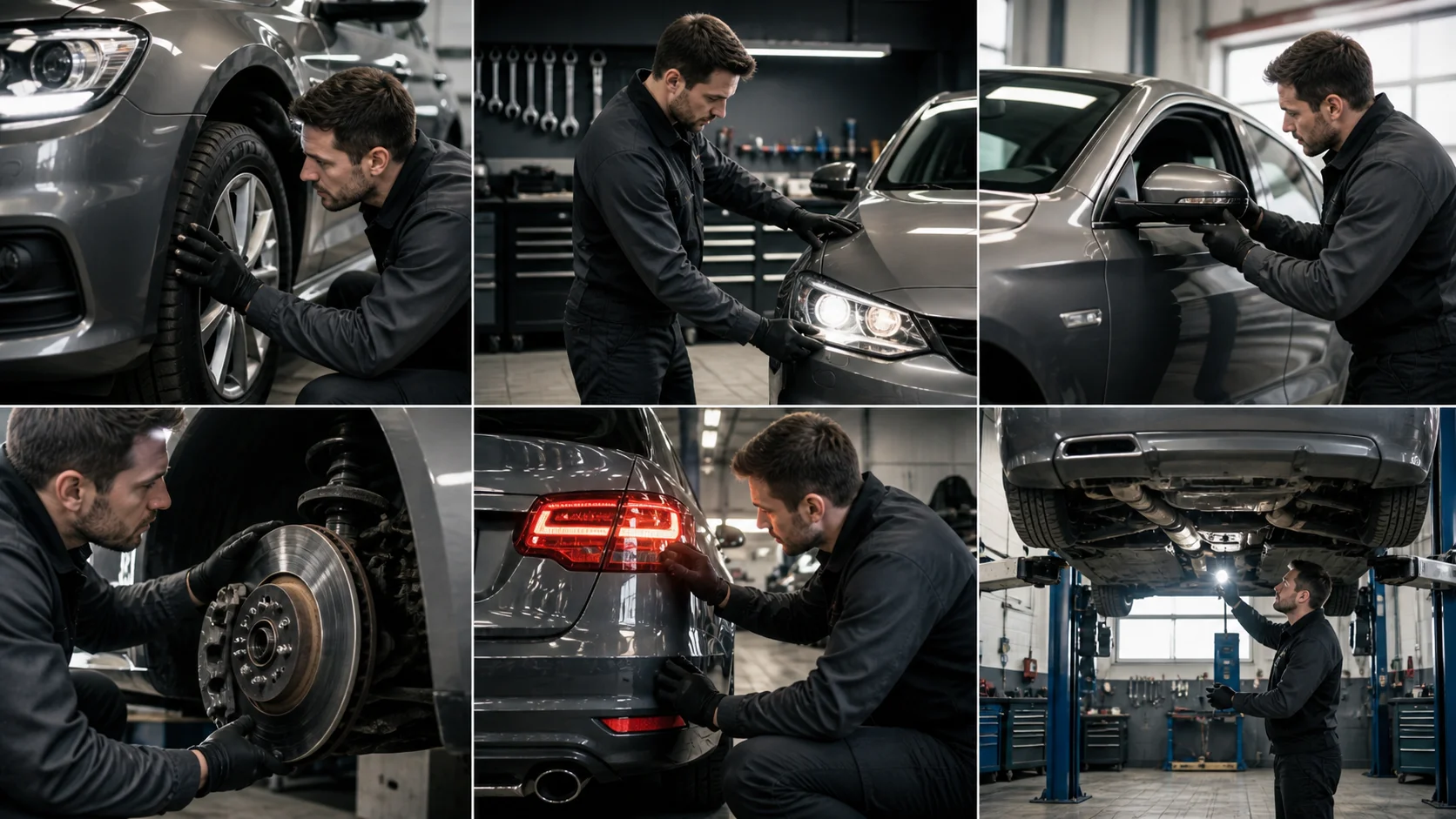
The law in the UK does not focus on just one part of your car, it requires multiple key components to be kept in good condition at all times to ensure the vehicle is roadworthy and safe. This includes tyres, brakes, lights, mirrors, seat belts, and more. Maintaining these parts is a legal responsibility, not just a recommendation, and applies every time the vehicle is used, not only during an MOT.
Key takeaways:
- UK law requires your entire vehicle to be roadworthy, not just specific parts
- Tyres, brakes, lights, and visibility systems are strictly regulated
- An MOT certificate does not guarantee ongoing legal compliance
- Driving an unsafe vehicle can result in fines, penalty points, or prosecution
- Regular checks and maintenance are essential for legal and personal safety
What Does UK Law Say About Keeping Your Car in Good Condition?

UK law clearly states that any vehicle used on public roads must be maintained in a safe and roadworthy condition at all times. This requirement is established under the Road Traffic Act 1988 and the Construction and Use Regulations 1986, which place responsibility directly on the driver or vehicle owner.
A roadworthy vehicle is defined as one that does not pose a danger to the driver, passengers, or other road users. Authorities such as the DVSA Driving Law enforce these standards through MOT testing, roadside inspections, and police checks. However, passing an MOT only confirms compliance at the time of testing, not beyond it.
As highlighted in competitor research, “While many motorists rely on the annual MOT test to assess their vehicle’s condition, it’s essential to understand that maintaining a roadworthy vehicle is a daily legal responsibility.” This reinforces that drivers must actively monitor their vehicle condition, not rely solely on periodic inspections.
Why Is It Important to Keep Your Car Roadworthy at All Times?
Keeping a car roadworthy is essential not only for legal compliance but also for safety and financial protection. A poorly maintained vehicle increases the likelihood of accidents, mechanical failure, and legal consequences.
From a safety perspective, even minor faults can escalate quickly. For example, worn tyres can reduce grip, while faulty lights can make your vehicle less visible to others. These risks affect not just the driver but everyone on the road.
As one source explains, “Driving a car in poor condition puts everyone at risk. Brake failure, bald tyres, or poor visibility can lead to accidents, injury, or even death.” This highlights the real-world consequences of neglect.
Key reasons to maintain roadworthiness include:
- Legal compliance: Avoid fines, penalty points, or bans
- Road safety: Reduce accident risks for all road users
- Insurance validity: Claims may be rejected if the car is unsafe
- Vehicle performance: Proper maintenance improves handling and reliability
A simple real-life scenario: a driver ignores a worn tyre and continues driving. During heavy rain, the tyre loses grip, causing the car to skid and collide with another vehicle. In such cases, the driver could face legal penalties and insurance complications.
What Part of the Car Does the Law Require You to Keep in Good Condition?
The law requires multiple visible and operational components of a car to be maintained consistently. These parts primarily relate to visibility and communication with other road users.
Which Car Lights Must Be Working and Why Are They Legally Required?

All exterior lights must function correctly, including headlights, brake lights, indicators, fog lights, and number plate lights. These are essential for both seeing the road and being seen by others.
Faulty lights can lead to reduced visibility, especially at night or in poor weather. Drivers may face fines or MOT failure if lights are not working properly.
- Lights must be clean and correctly aligned
- Brake lights and indicators must respond instantly
- Driving with defective lights can result in penalties
How Should Windscreens and Wipers Be Maintained to Meet Legal Standards?

The windscreen must provide a clear, unobstructed view of the road. Cracks or chips in the driver’s line of sight can make the vehicle illegal to drive.
Wipers must effectively clear rain, dirt, and debris. Washer systems must also function properly, including having sufficient fluid.
- Windscreen damage must not impair visibility
- Wipers must operate smoothly without streaking
- Lack of washer fluid can lead to penalties
What Are the Legal Requirements for Mirrors on a Vehicle?

Vehicles must have at least two functioning mirrors, typically a rear-view mirror and a driver-side mirror. If the rear-view mirror is obstructed, both side mirrors must be usable.
Mirrors are essential for safe manoeuvres such as overtaking, reversing, and changing lanes. A missing or damaged mirror can make the vehicle unsafe and illegal.
- Mirrors must be securely attached and undamaged
- Visibility through mirrors must be clear
- Faulty mirrors can lead to fines or MOT failure
Which Critical Safety Components Must Always Meet UK Legal Standards?
Beyond visibility, the law also focuses on components that directly impact control, stopping ability, and occupant protection.
What Are the Legal Requirements for Tyres in the UK?

Tyres are one of the most regulated parts of a vehicle due to their impact on grip and braking. The legal minimum tread depth is 1.6mm across the central portion of the tyre.
Tyres must also be free from damage such as cuts, bulges, or exposed cords. Incorrect tyre pressure or mismatched tyres can also affect safety.
- Minimum tread depth: 1.6mm
- Severe fines per illegal tyre
- Poor tyres increase accident risk significantly
How Do Brakes and Steering Systems Affect Legal Roadworthiness?
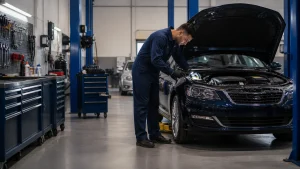
Brakes must function effectively to allow the vehicle to stop safely under all conditions. Any delay or weakness in braking can lead to dangerous situations.
Steering systems must provide accurate control without excessive looseness or stiffness. Faults in these systems can compromise handling and increase accident risk.
- Brakes must respond quickly and evenly
- Steering should be smooth and precise
- Faults often result in immediate MOT failure
Why Must Seat Belts Always Be Fully Functional?

Seat belts are a critical safety feature designed to protect occupants during collisions. The law requires all seat belts to be in good working condition.
They must fasten securely, retract properly, and show no signs of wear or damage. Drivers are responsible for ensuring passengers use them correctly.
- All seats must have functional seat belts
- Damaged belts must be replaced immediately
- Non-compliance can lead to fines and penalties
What Other Vehicle Parts Must Be Kept in Good Condition by Law?
In addition to primary safety systems, several other components are legally regulated.
What Are the Legal Rules for Exhaust Systems and Emissions?
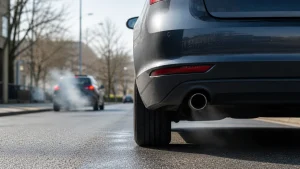
Exhaust systems must not produce excessive noise or emissions. Vehicles must meet environmental standards set during MOT testing.
Faulty exhaust systems can release harmful gases or create noise pollution, making them illegal.
- Emissions must remain within legal limits
- Visible smoke may indicate a fault
- Non-compliance leads to MOT failure
What Are the Requirements for Number Plates in the UK?
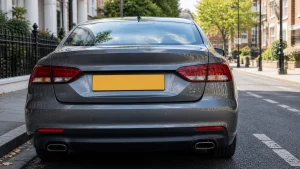
Number plates must be clearly visible, clean, and correctly formatted. They must use approved fonts and spacing.
Dirty, damaged, or incorrectly displayed plates can lead to fines.
- Plates must be readable at all times
- Reflective material is required
- Incorrect formatting can result in penalties
How Does Suspension Condition Impact Vehicle Safety and Legality?

Suspension systems help maintain stability and control, especially on uneven roads. Worn components can affect braking and handling.
Drivers may not always notice suspension issues immediately, making regular checks important.
- Shock absorbers and springs must be in good condition
- Poor suspension affects vehicle balance
- Faults can lead to safety risks and MOT failure
What Are the Legal Requirements for Key Car Components in the UK?
Understanding the legal requirements for each component helps drivers stay compliant and safe. While the law does not list a single part, it clearly defines standards across multiple systems.
Component Legal Requirement Penalty/Risk
Tyres Minimum 1.6mm tread, no damage Up to £2,500 fine + 3 points per tyre
Lights Fully operational and aligned £100 fine, MOT failure
Windscreen/Wipers Clear visibility, functional system Fine, MOT failure
Mirrors At least two working mirrors Fine, MOT failure
Seat Belts Fully functional, no damage Fine, safety risk
Exhaust Legal emissions and noise levels MOT failure, fines
Number Plates Clear, readable, properly formatted Up to £1,000 fine
Steering/Suspension Safe operation, no faults MOT failure, accident risk
This structured overview improves clarity and helps drivers quickly identify legal expectations.
What Happens If You Drive a Car That Is Not in Good Condition?

Driving an unroadworthy vehicle can lead to serious legal and financial consequences. Authorities can take immediate action if a vehicle is deemed unsafe.
As one competitor source states,
“If your car is found to be unroadworthy, even with a valid MOT certificate, you may still be fined or face prosecution.” This highlights the strict enforcement of road safety laws.
Possible consequences include:
- Fixed penalty notices
- Fines up to £2,500 per offence
- Penalty points on your licence
- Vehicle seizure for dangerous defects
- Insurance becoming invalid
- Driving bans in severe cases
These penalties are designed to ensure that all vehicles on UK roads meet minimum safety standards.
How Can Drivers Ensure Their Car Always Meets Legal Standards?
Maintaining compliance with UK vehicle laws requires consistent attention and regular checks. Drivers should not wait for MOT tests to identify issues.
Routine inspections can help detect problems early. This includes checking tyres, lights, mirrors, and fluid levels regularly. Professional servicing also plays a key role in identifying hidden faults.
Drivers should pay attention to warning signs such as unusual noises, dashboard alerts, or changes in handling. Addressing these early can prevent more serious issues.
Ultimately, staying proactive with maintenance ensures both legal compliance and safer driving conditions for everyone on the road.
Conclusion
In the UK, the law does not single out one specific part of a car, it requires multiple critical components to be kept in good condition at all times. From tyres and brakes to lights, mirrors, and seat belts, each plays a vital role in ensuring road safety and legal compliance.
Drivers must understand that maintaining a roadworthy vehicle is a continuous responsibility, not something limited to MOT testing.
Neglecting even a single component can lead to fines, penalty points, or more serious consequences. By staying vigilant and performing regular checks, drivers can avoid legal trouble and contribute to safer roads for everyone.
FAQs
Can a car be illegal to drive even with a valid MOT?
Yes, a car can still be illegal if it becomes unsafe after passing its MOT test. The MOT only confirms roadworthiness on the day of testing, not ongoing condition.
How often should drivers check their tyres for legal compliance?
Drivers should check their tyres at least once a month and before long journeys. Regular checks help ensure tread depth, pressure, and condition meet legal standards.
Is it illegal to drive with a dashboard warning light on?
It depends on the warning light, as some indicate serious safety issues like brakes or engine faults. Ignoring critical warning lights can make the vehicle unsafe and potentially illegal to drive.
What is considered a dangerous vehicle defect in the UK?
A dangerous defect is any fault that poses an immediate risk to safety, such as faulty brakes or severely worn tyres. These issues can lead to instant fines, penalty points, or vehicle seizure.
Can police stop drivers for minor car faults?
Yes, police can stop vehicles if they suspect any defect that affects safety or legality. Even minor issues like a broken light or unreadable number plate can result in penalties.
Are drivers legally required to perform regular car checks?
While not explicitly stated as routine checks, drivers are legally responsible for ensuring their vehicle is roadworthy at all times. This means regular checks are necessary to stay compliant.
What should be checked before going on a long drive?
Drivers should inspect tyres, lights, brakes, mirrors, and fluid levels before any long journey. This helps prevent breakdowns and ensures the vehicle remains safe and legal on the road.