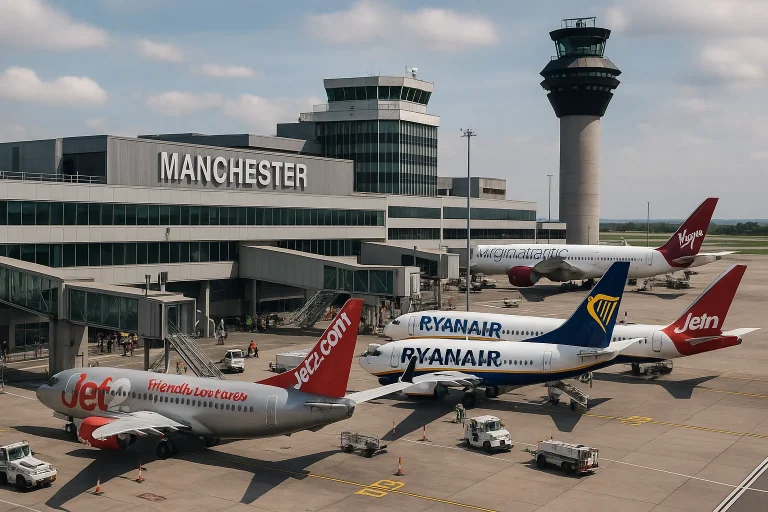


Gatwick Airport, the UK’s second-busiest hub, is a vital part of national infrastructure, economic growth, and global travel. Behind its busy terminals and major expansion plans lies a complex ownership framework shaped by international investors and seasoned operators.
Understanding who owns Gatwick Airport provides valuable insight into how major UK infrastructure is funded, managed, and influenced by global capital.
With private ownership common across UK airports, Gatwick’s stakeholders highlight how strategic partnerships guide airport development, governance, and long-term planning. This article explores the airport’s ownership, structure, and the key players driving its future.
What is Gatwick Airport Limited and How is it Structured?

Gatwick Airport is operated by Gatwick Airport Limited, a private company licensed by the UK Civil Aviation Authority (CAA) to manage the airport’s operations, safety standards, and regulatory compliance.
Gatwick Airport Limited is a wholly owned subsidiary of Ivy Holdco Limited, the holding company through which the airport’s ownership and governance are executed.
This entity serves as the link between Gatwick and its investor-owners, ensuring accountability, financial reporting, and alignment with long-term infrastructure goals.
Although the airport is privately owned, it is regulated under UK law, meaning it must meet performance targets, passenger satisfaction levels, and environmental responsibilities set by the CAA and the Department for Transport.
Who Currently Owns Gatwick Airport?
Gatwick Airport is co-owned by a consortium of international investors, with primary stakes held by VINCI Airports and Global Infrastructure Partners (GIP).
| Stakeholder | Ownership Percentage | Description |
|---|---|---|
| VINCI Airports | 50.01% | Global private airport operator |
| GIP Consortium | 49.99% | Managed group of international investors |
Key Details:
- VINCI Airports acquired its 50.01% majority stake in May 2019 for approximately £2.9 billion, becoming the principal decision-maker in Gatwick’s operational and strategic planning.
- Global Infrastructure Partners (GIP) continues to manage the remaining 49.99% on behalf of various sovereign wealth and pension fund investors, including ADIA, CalPERS, and South Korea’s National Pension Service.
This joint ownership model balances operational excellence with long-term financial investment, providing Gatwick with the stability and funding required for ongoing growth and innovation.
What is VINCI Airports’ Role as the Majority Stakeholder?

As the world’s leading private airport operator, VINCI Airports holds majority ownership and provides strategic guidance across all aspects of Gatwick’s operation.
Global Expertise and Operational Integration
VINCI operates a network of over 65 airports in 12 countries, serving more than 240 million passengers annually. This global experience is directly applied to Gatwick through:
- Cross-functional knowledge sharing
- Investments in digital infrastructure
- Sustainability planning and carbon reduction strategies
- Commercial partnerships and route development
Impact at Gatwick
At Gatwick, VINCI’s involvement goes beyond capital. Its majority ownership allows it to:
- Lead strategic decisions
- Appoint executive leaders
- Influence long-term infrastructure and commercial development
With over 3,200 colleagues employed at Gatwick under VINCI’s leadership, the majority shareholder plays a central role in the airport’s culture and performance metrics.
As part of ongoing improvements under VINCI’s leadership, passenger security processes continue to evolve, including updates to airport rules such as changes to Gatwick’s liquid regulations.
How Does Global Infrastructure Partners Contribute to Gatwick’s Operations?
While VINCI provides operational leadership, GIP brings infrastructure investment acumen and financial management expertise.
GIP first acquired Gatwick in 2009, when it purchased the airport from BAA (now Heathrow Airport Holdings) following regulatory intervention to break up airport monopolies in the UK.
GIP’s Ongoing Role
- Investor Management: Oversees a syndicate of global investors
- Board Representation: Maintains multiple voting director seats
- Strategic Input: Focuses on long-term asset performance, value growth, and governance
Although it ceded operational control to VINCI in 2019, GIP remains a highly influential voice on major decisions, especially those concerning capital expenditure and sustainability goals.
Who are the Key Decision-Makers on the Board of Directors?
The Gatwick Airport Limited Board of Directors consists of 14 members, combining aviation professionals, infrastructure specialists, and independent advisors.
Key Members of Gatwick’s Board:
| Name | Role | Affiliation |
|---|---|---|
| Baroness Margaret Ford | Chair | Independent |
| Pierre-Hugues Schmit | CEO, Non-voting Director | VINCI |
| Stewart Wingate | Voting Director | VINCI |
| Jim Butler | CFO, Non-voting Director | VINCI |
| Michael McGhee | Voting Director | GIP |
| Marten Soderbom | Voting Director | GIP |
| David McMillan | Voting Director | CalPERS |
| Lucy Chadwick | Voting Director | GIP |
| Nicolas Notebaert | Voting Director | VINCI Concessions |
| Olivier Mathieu | Voting Director | VINCI |
| Rémi Maumon de Longevialle | Voting Director | VINCI |
| Benoit Forest | Voting Director | VINCI |
| Sir David Higgins | Voting Director | Independent |
| Alvaro Leite | Non-voting Director | VINCI |
The board determines Gatwick’s long-term business strategy, oversees ethical and legal compliance, and ensures appropriate resource allocation.
What is the Role of Gatwick’s Executive Committee in Daily Management?
The Executive Committee is responsible for the daily operations and strategic implementation of decisions set by the board. This 13-member team is led by:
- Pierre-Hugues Schmit: Chief Executive Officer
- Jim Butler: Chief Financial Officer
- Jonathan Pollard: Chief Commercial Officer
- Mark Johnston: Chief Operating Officer
This group oversees everything from passenger services and infrastructure upgrades to IT and HR, ensuring the airport runs efficiently and continues to deliver on its vision.
How Has Gatwick Airport’s Ownership Changed Over Time?

The history of Gatwick’s ownership reflects wider changes in the UK aviation industry.
Ownership Timeline of Gatwick Airport:
| Year | Owner | Notes |
|---|---|---|
| 1966 | British Airports Authority (BAA) | Public ownership under government mandate |
| 1986 | BAA plc (Privatised) | UK government sells stake through public flotation |
| 2009 | Global Infrastructure Partners | Purchased from BAA post-monopoly review |
| 2019 | VINCI Airports (50.01% stake) | Became majority owner, GIP retains 49.99% |
The 2009 transfer to GIP marked the end of an era under BAA, ushering in private equity-backed expansion. The 2019 acquisition by VINCI Airports was a further step towards global integration, aligning Gatwick with an international network of airport operations.
How Does Ownership Impact Gatwick’s Strategic Direction and Growth?
Ownership plays a decisive role in shaping Gatwick’s future. With VINCI and GIP at the helm, Gatwick is strategically positioned to:
- Expand Runway Capacity: Plans are underway to make its standby runway fully operational.
- Boost Sustainability: Introduce green energy initiatives and carbon neutrality targets.
- Strengthen Connectivity: Attract more long-haul airlines and improve multimodal access.
These owners bring financial stability, a long-term investment view, and operational excellence to the table, enabling Gatwick to remain competitive in both domestic and global aviation markets.
Why is Gatwick’s Ownership Important to the UK’s Aviation Ecosystem?

Gatwick’s ownership structure is representative of a broader shift towards private ownership of critical infrastructure in the UK.
This model has enabled:
- Access to global capital for expansion and innovation
- Operational efficiency through experienced management
- Accountability to investors as well as public regulators
As the second-busiest airport in the UK, Gatwick supports regional development, relieves congestion at Heathrow, and facilitates trade and tourism.
Its international ownership brings best practices while still requiring compliance with UK aviation standards.
Conclusion
Understanding who owns Gatwick Airport provides much more than names on a shareholder register, it reveals how global expertise, financial muscle, and strategic planning drive the airport’s growth, efficiency, and role in national infrastructure.
With VINCI Airports at the helm and GIP providing long-term investment backing, Gatwick remains a key pillar in UK aviation, balancing operational excellence with sustainable development.
Frequently Asked Questions
Does Gatwick Airport receive any public funding or subsidies?
No, Gatwick Airport operates entirely under private ownership and does not receive regular public funding. It generates revenue through airline fees, retail, parking, and commercial property operations.
How does Gatwick compare to Heathrow in terms of ownership and scale?
While Heathrow is owned by a consortium led by Spanish infrastructure firm Ferrovial and Qatar Investment Authority, Gatwick is primarily owned by VINCI Airports and GIP. Heathrow is larger in terms of passenger volume and route network.
Is Gatwick Airport owned by Nigerians?
No, Gatwick Airport is not owned by any Nigerian individual or entity. Its shareholders include European, American, Asian, and Middle Eastern investment firms and infrastructure funds.
Are there any future plans to change Gatwick’s ownership structure?
There are no confirmed plans to change Gatwick’s ownership structure. However, ownership stakes may be rebalanced over time, particularly among GIP’s managed investor group.
What other UK airports are owned by VINCI or GIP?
VINCI also has stakes in Belfast International Airport and Edinburgh Airport. GIP was previously involved with London City Airport and maintains a focus on UK transport infrastructure.
Who regulates and approves changes to Gatwick’s management?
The Civil Aviation Authority (CAA) and the UK Government oversee changes that affect strategic direction, safety, and competition. Any major ownership changes require regulatory approval.
How do airport ownership models differ across Europe?
In Europe, ownership varies. Some airports remain publicly owned (like Frankfurt), while others, such as Gatwick and Rome Fiumicino, operate under private or mixed ownership models.
What benefits do private investors bring to UK airports like Gatwick?
Private investors bring major advantages to UK airports like Gatwick, including access to global capital, more efficient governance, stronger long-term growth strategies, and improved customer service driven by innovation.
{
“@context”: “http://schema.org/”,
“@type”: “FAQPage”,
“mainEntity”: [
{
“@type”: “Question”,
“name”: “Does Gatwick Airport receive any public funding or subsidies?”,
“acceptedAnswer”: {
“@type”: “Answer”,
“text”: “No Gatwick Airport operates entirely under private ownership and does not receive regular public funding. It generates revenue through airline fees retail parking and commercial property operations.”
}
},
{
“@type”: “Question”,
“name”: “How does Gatwick compare to Heathrow in terms of ownership and scale?”,
“acceptedAnswer”: {
“@type”: “Answer”,
“text”: “While Heathrow is owned by a consortium led by Spanish infrastructure firm Ferrovial and Qatar Investment Authority, Gatwick is primarily owned by VINCI Airports and GIP. Heathrow is larger in terms of passenger volume and route network.”
}
},
{
“@type”: “Question”,
“name”: “Is Gatwick Airport owned by Nigerians?”,
“acceptedAnswer”: {
“@type”: “Answer”,
“text”: “No Gatwick Airport is not owned by any Nigerian individual or entity. Its shareholders include European American Asian and Middle Eastern investment firms and infrastructure funds.”
}
},
{
“@type”: “Question”,
“name”: “Are there any future plans to change Gatwick’s ownership structure?”,
“acceptedAnswer”: {
“@type”: “Answer”,
“text”: “There are no confirmed plans to change Gatwick’s ownership structure. However ownership stakes may be rebalanced over time, particularly among GIP’s managed investor group.”
}
},
{
“@type”: “Question”,
“name”: “What other UK airports are owned by VINCI or GIP?”,
“acceptedAnswer”: {
“@type”: “Answer”,
“text”: “VINCI also has stakes in Belfast International Airport and Edinburgh Airport. GIP was previously involved with London City Airport and maintains a focus on UK transport infrastructure.”
}
},
{
“@type”: “Question”,
“name”: “Who regulates and approves changes to Gatwick’s management?”,
“acceptedAnswer”: {
“@type”: “Answer”,
“text”: “The Civil Aviation Authority CAA and the UK Government oversee changes that affect strategic direction safety and competition. Any major ownership changes require regulatory approval.”
}
},
{
“@type”: “Question”,
“name”: “How do airport ownership models differ across Europe?”,
“acceptedAnswer”: {
“@type”: “Answer”,
“text”: “In Europe ownership varies. Some airports remain publicly owned like Frankfurt while others such as Gatwick and Rome Fiumicino operate under private or mixed ownership models.
”
}
},
{
“@type”: “Question”,
“name”: “What benefits do private investors bring to UK airports like Gatwick?”,
“acceptedAnswer”: {
“@type”: “Answer”,
“text”: “Private investors bring major advantages to UK airports like Gatwick including access to global capital more efficient governance stronger long-term growth strategies and improved customer service driven by innovation.”
}
}
]
}