
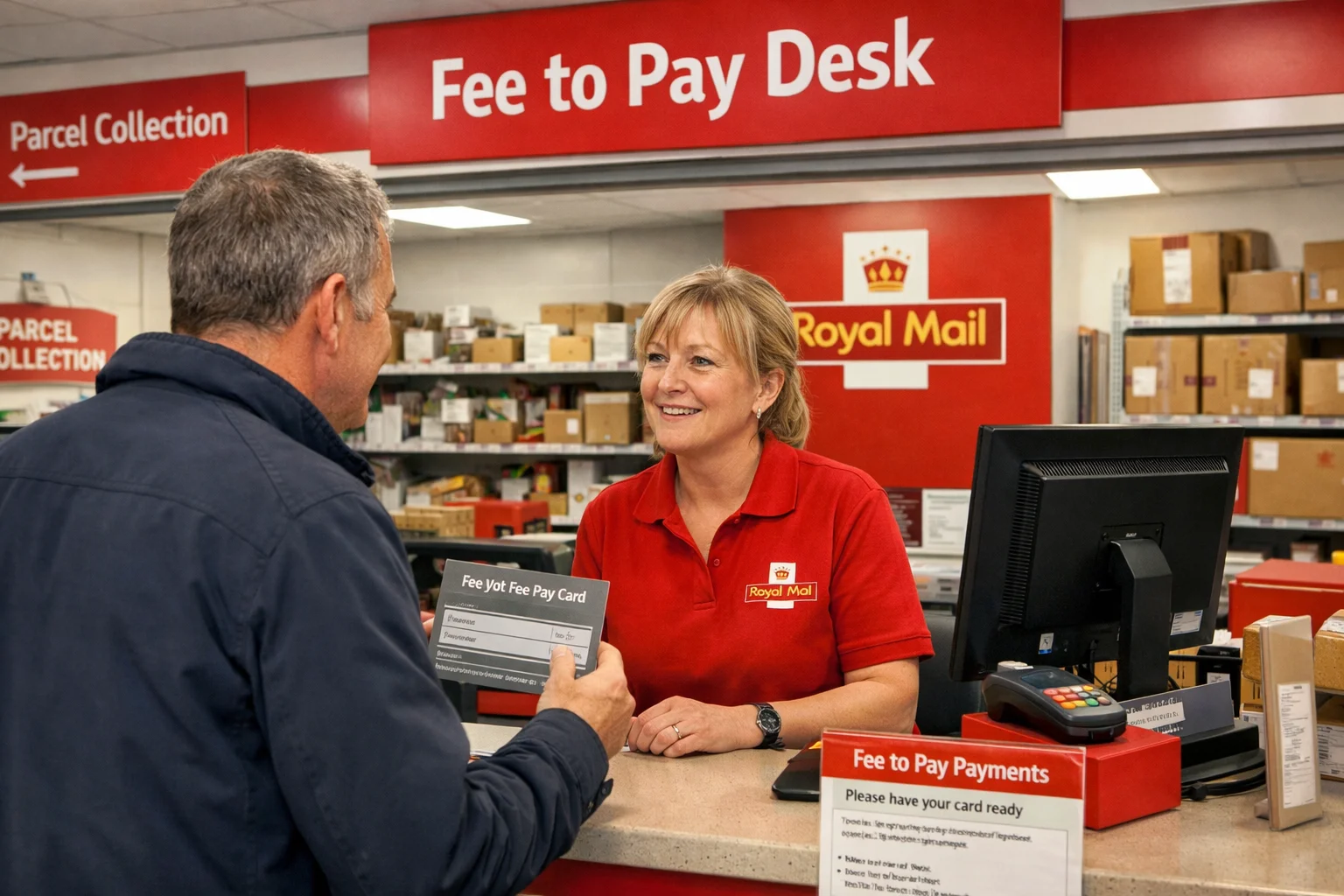
If you’ve received a “Fee to Pay” card from Royal Mail, it means you need to pay extra charges, usually due to unpaid postage or customs fees, before your item can be delivered. These charges vary based on the parcel’s size, the sender’s error, or whether the item came from outside the UK. You can settle the fee online or at your local delivery office.
Here are the key things you should know:
- Charges apply due to insufficient postage or customs duties.
- Letters and parcels have fixed penalty amounts.
- Payments can be made online or in person.
- Royal Mail holds items for 18 to 21 days.
- Scams exist; genuine notices never ask for phone payments.
Understanding how this process works can help you avoid unnecessary delays or falling for fake messages.
What Does a Royal Mail “Fee to Pay” Mean?
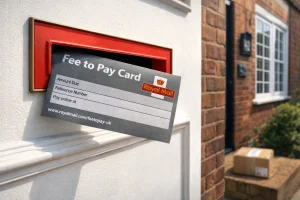
When you receive a “Fee to Pay” card from Royal Mail, it means they’re holding your mail until a specific charge is paid. This fee often arises due to either insufficient postage or customs duty applied to international items. Royal Mail pays this charge on your behalf and then recovers it from you before releasing the parcel.
There are generally two types of reasons behind this charge. First is domestic postage underpayment, where the sender has not applied enough stamps, used incorrect postage for the item’s weight or size, or used counterfeit or non-barcoded stamps.
The second is related to international mail, where HMRC imposes import VAT or customs charges, which Royal Mail pays in advance and then requests repayment from the recipient.
Royal Mail notifies recipients using a grey or white card that outlines the reason for the fee. It also provides a barcode or reference number to make the payment process easier. You must pay the fee within the specified period to avoid the item being returned to the sender.
Why Did You Receive a Royal Mail Fee to Pay Notice?
Receiving a Royal Mail “Fee to Pay” card typically means that something about your parcel didn’t meet the postal requirements.
There are several reasons why this happens, both for domestic and international shipments:
- Insufficient postage: The sender didn’t pay enough based on size, weight or service.
- Counterfeit or reused stamps: These are not valid, and Royal Mail applies a penalty.
- Non-barcoded stamps: Since 2023, only barcoded stamps are valid.
- Items from outside the UK: Subject to customs fees like VAT or duties.
- Oversized or overweight packages: These require extra payment based on measurements.
When Royal Mail encounters these issues, they either leave a grey “Fee to Pay” card at your address or send a notification via email or text. The card states the reason for the charge, along with how much you owe and how to pay it.
In most cases, the recipient is not at fault but still needs to cover the charges unless they decide to refuse the item. Understanding the reason is essential to deciding your next step.
Who Is Responsible for the Royal Mail Fee to Pay Charge?
When you receive a Royal Mail Fee to Pay card, it’s natural to wonder whether the cost should fall on you or the sender. The answer depends entirely on the type of mail and the reason the charge was applied. For domestic items sent from within the UK, the sender is usually the party who made the mistake.
This may happen if the wrong postage was applied, the item exceeded size or weight limits, or the stamps used were counterfeit or non-barcoded. Royal Mail does not bill the sender upfront if the parcel reaches the recipient’s area, so the charge appears at your end. You can still refuse the parcel if you do not wish to cover the shortfall.
For items coming from abroad, the responsibility works differently. Most customs charges apply to the recipient, unless the sender or retailer prepaid VAT, usually during online checkout.
When Royal Mail pays HMRC on your behalf, they recover that cost from you. If you choose not to pay a Fee to Pay on an unknown item, Royal Mail will return it to the sender, who may then take responsibility. This gives you the choice to accept or decline the parcel depending on your circumstances.
How Much Will You Have to Pay for a Royal Mail Fee?
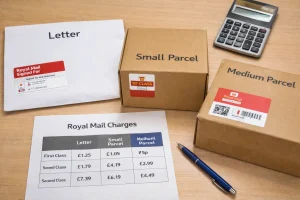
The amount you’re required to pay depends on what caused the issue. Royal Mail has set fees based on postage errors or customs handling. If the item has missing or incorrect postage, a flat fee is added along with the missing postage value. If the fee is due to customs charges, it includes HMRC charges plus Royal Mail’s handling fee.
Here’s a breakdown of current Royal Mail fees:
Item Type Fee Reason Cost
Letters/Large Letters No postage or counterfeit stamp £5.00
Letters/Large Letters Insufficient postage £1.50
Letters/Large Letters Non-barcoded stamp £2.50
Small Parcel No postage/counterfeit £7.00
Small Parcel Insufficient/Non-barcoded £3.50
Medium Parcel Oversized or overweight £10.00 + postage
Customs Handling Royal Mail admin fee £8.00
Parcelforce Handling Customs handling for higher value £12–£25
The final cost shown on your card includes any applicable VAT or customs duties, calculated by HMRC, not Royal Mail. Always check the notice carefully.
How Can You Pay a Royal Mail Fee?
Paying a Royal Mail fee is straightforward and designed to be convenient.
Once you receive the grey “Fee to Pay” card or a notification, you’ll have two main options to settle the fee:
- Online Payment: Visit royalmail.com/pay-a-fee and enter the barcode or card details. You can pay via debit card, credit card, or PayPal. After payment, you can select a redelivery date that suits you.
- In-Person Payment: Go to your nearest Royal Mail Customer Service Point with your card. You can pay the fee at the counter and collect the item immediately.
Before paying online, make sure you have:
- The reference number from your card, or tracking ID
- Your full delivery address as shown on the card
- A valid payment method (Visa, Mastercard, or PayPal)
Royal Mail will never call or ask for payment over the phone. If you see suspicious messages, report them immediately. Paying early helps ensure faster delivery or avoids the risk of the item being returned.
How Long Do You Have to Pay Before the Item Is Returned?
Royal Mail allows a limited time for you to pay the outstanding fee before they send the item back to the sender. Understanding this timeline helps prevent unnecessary delays or losing your parcel.
- 18 calendar days: For items with unpaid or insufficient postage, Royal Mail holds the item for up to 18 days from the notice date.
- 21 calendar days: For items with customs charges, Royal Mail extends the holding period slightly to 21 days to allow time for international processing.
Important points to remember:
- Always check the date on your “Fee to Pay” card to calculate your deadline.
- It’s best to pay online at least 48 hours before the deadline to ensure your item is not returned prematurely.
- Items not collected or paid for within the timeframe will automatically be returned to the sender.
If the item is returned, the original sender is then charged or the item is destroyed depending on the origin and contents. Make sure to act swiftly once you receive a notice.
How to Tell if a Royal Mail Fee Notice Is a Scam?
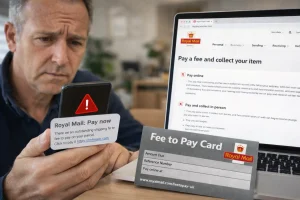
With scam messages becoming more common, it’s essential to verify whether your Royal Mail fee notice is legitimate. Scammers often send fake emails or texts with payment links to steal your information. Fortunately, Royal Mail has clear rules that help you identify genuine notices.
A real “Fee to Pay” notice will:
- Be delivered as a physical grey or white card.
- Include a clear reason for the charge such as “insufficient postage” or “customs fee.”
- Direct you only to the official Royal Mail site: royalmail.com/pay-a-fee
- Never ask for payment over phone calls or via unofficial links.
Scam messages usually have vague language, poor grammar, or urgent tones. If you receive an unexpected message, always cross-check the barcode number on the Royal Mail website or visit your local delivery office directly.
You can report any suspicious message to reportascam@royalmail.com. Staying vigilant and informed is your best defence against fraud.
What Should You Do If You Don’t Recognise the Sender?
If you receive a Royal Mail “Fee to Pay” card for an item from an unknown sender, you are not obliged to pay it. You have every right to refuse the item if you are uncertain about the origin or if you suspect it may be a scam.
Here’s what you should do:
- Check the card details: Look for a tracking number or item reference. You can verify it using Royal Mail’s Track & Trace service.
- Review the sender info: Sometimes, online orders may arrive under different names or seller IDs.
- Refuse the parcel: If you’re unsure about the item or don’t want it, simply don’t pay the fee. Royal Mail will return it to the sender after the holding period.
- No cost to you: If you choose not to accept the item, you won’t be charged or penalised.
Refusing unknown items is a safe option to avoid paying unnecessary charges or falling for fake mail. When in doubt, choose safety first.
How Do You Collect an Item from a Royal Mail Customer Service Point?
Collecting your item in person after paying the fee is a straightforward process, but you must bring the right documents for identity verification. Royal Mail has strict rules to ensure only the correct recipient collects the parcel.
Here’s what you need:
- Fee to Pay card: Always bring the original card.
- Photo ID: Such as a passport, driving licence, or NHS medical card.
- Proof of address: Required if the parcel is addressed to someone else or if the collector is not the named recipient.
If someone else is collecting the item for you, they must bring:
- The original Fee to Pay card
- Their photo ID
- One proof of your address
In rare cases, if no ID is available in the name of the recipient, Royal Mail allows collection with three different ID proofs, including proof of address and photo ID. This protects against fraud and ensures safe delivery. Always check local Customer Service Point hours before visiting.
What If You Think the Fee or Customs Charge Is Incorrect?
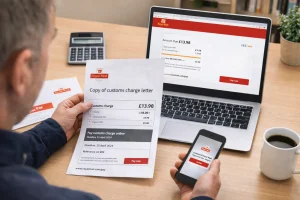
Sometimes, the amount shown on your Royal Mail “Fee to Pay” card may seem too high or unjustified. If this happens, it’s important to understand how the fees are calculated and what you can do if you think the charge is incorrect.
Understanding Fee Responsibility
Royal Mail does not decide customs fees. For international items, the UK Border Force and HMRC are responsible for calculating VAT, import duties, and customs charges. Royal Mail merely facilitates the payment on your behalf, adds their standard £8 handling fee, and then asks you to repay before releasing the item.
When to Dispute a Fee?
You should consider raising a dispute if:
- You believe the declared value on the item was incorrect
- You have already paid customs at the point of sale
- You were charged VAT on a gift or document that should be exempt
Note that Royal Mail’s handling fee is non-refundable, even if your customs dispute is resolved.
How to Raise a Query?
To challenge customs charges, you must contact HMRC directly, not Royal Mail. Visit the official government site GOV.UK – Tax and Customs for goods sent from abroad and follow the process for appealing a charge.
You’ll likely need:
- Evidence of item value
- Payment receipts or invoices
- Tracking reference number
Border Force may review the case, and if your challenge is accepted, you’ll receive a refund for the duty or VAT component.
Royal Mail does not have control over customs charge decisions. If you feel you were wrongly charged, act quickly and submit the relevant documents to HMRC. Although the handling fee remains, recovering the customs portion can make a difference, especially on high-value imports.
Can You Pay a Royal Mail Fee on Someone Else’s Behalf?
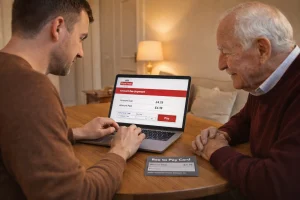
Yes, Royal Mail does allow you to pay a “Fee to Pay” charge on behalf of someone else, such as a family member or housemate. This can be useful if the intended recipient is unavailable or if you’re managing deliveries for someone at the same address.
To pay for someone else, make sure:
- The name and address you use at the payment stage exactly match what’s printed on the Fee to Pay card.
- You have the card reference number or barcode from the notice.
When paying online, you can enter your own payment details (such as your debit card or PayPal), as the system only uses the recipient’s address for matching the delivery. There is no restriction on who pays, as long as the correct delivery information is used.
It’s a secure and efficient method of ensuring that important items aren’t delayed due to the recipient’s unavailability. Once paid, you can also choose a convenient redelivery date for the person receiving the parcel.
Final Thoughts on Handling a Royal Mail Fee to Pay
Dealing with a Royal Mail “Fee to Pay” card might seem frustrating at first, but understanding how the process works makes it manageable. These fees are not random; they result from very specific issues such as underpaid postage, customs duties, or use of non-valid stamps.
Make sure to check the card carefully, verify the tracking number if needed, and use only the official Royal Mail website for payments. The online process is usually quick, and you’ll have the option to reschedule your delivery for a time that suits you best.
Being cautious about scams is just as important. Never respond to unsolicited calls or suspicious emails claiming to be from Royal Mail. And if you’re unsure about a sender or the charge itself, you always have the option to refuse the item.
With the right information and a careful approach, handling a Royal Mail fee can be straightforward and stress-free. The key is to stay informed and act promptly to avoid missing your item.
Conclusion
In summary, a Royal Mail “Fee to Pay” is a notice informing you of unpaid charges on your mail item, typically due to insufficient postage or customs duty. You’re given 18 to 21 days to pay either online or in person before the parcel is returned to the sender.
It’s important to understand the fees, how they’re calculated, and what your options are. Whether it’s a missed stamp, an international customs fee, or simply an unfamiliar sender, you’re now equipped to make the right decision.
Always use official channels, check for scams, and remember that you’re not obligated to pay if the item isn’t recognised. This guide should help you avoid unnecessary stress and take the right steps when faced with a fee notice.
FAQs
How do I know if the Royal Mail fee to pay is real?
Check that the notice directs you to the official Royal Mail website and includes a reference number. Royal Mail will never call or text you for payment.
Can I pay the Royal Mail fee for someone else?
Yes, just make sure the name and address match what’s on the Fee to Pay card, even if you’re using your own payment method.
What happens if I don’t pay the Royal Mail fee?
Royal Mail will hold the item for 18 or 21 days, depending on the fee type. After that, the item is returned to the sender.
How are customs charges calculated for UK deliveries?
Border Force and HMRC calculate the customs fees based on the item’s value, origin, and content. Royal Mail only facilitates the payment.
Can I collect an item without paying the fee?
No, payment must be made before collection. If you don’t want the item, you can refuse it and it will be sent back to the sender.
What if I lost my Fee to Pay card?
You can still pay online using your delivery address and tracking number, or visit your local delivery office for help.
Is Royal Mail responsible for customs charges?
No, Royal Mail is not responsible. The charges are determined by HMRC and collected by Royal Mail as part of their service.