

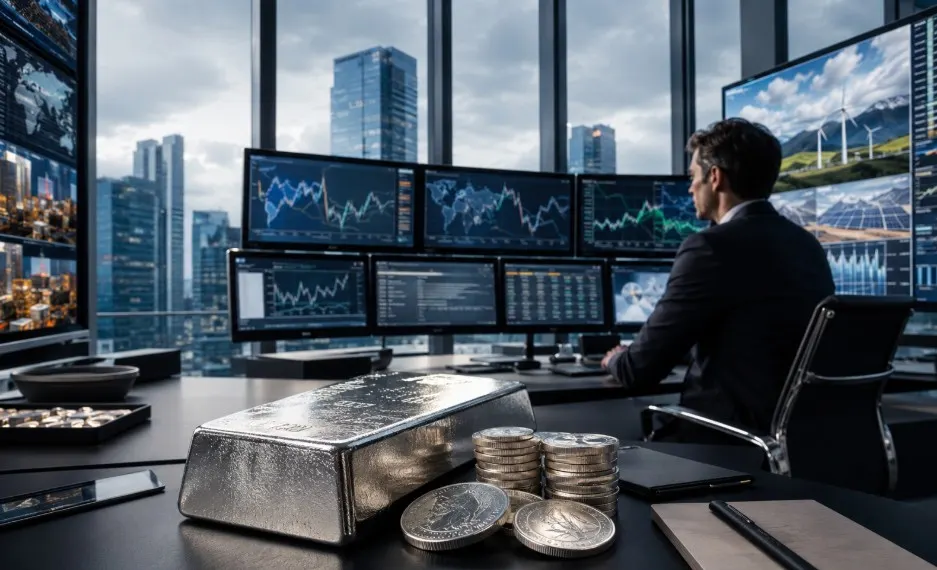
What if a single metal could reflect the fear of inflation, the rise of new technologies, and the direction of global economies all at the same time? That’s exactly what silver does.
It doesn’t just sit in vaults or jewellery stores; it moves with the world, reacting to every major shift in demand, currency strength, and industrial growth. This is why investors and traders constantly keep a close watch on it, trying to understand what comes next.
In today’s fast-changing financial environment, assets that can balance stability with opportunity are rare. Silver has managed to stay relevant because it plays both roles, acting as a safe haven during uncertainty while also powering industries like electronics and renewable energy.
For anyone looking to understand market behaviour or identify potential opportunities, tracking the silver chart becomes a powerful way to read these global signals in real time.
What makes this even more important is how quickly silver responds to global changes. A shift in interest rates, inflation data, or industrial demand can instantly reshape its direction. For readers, this isn’t just about watching prices; it’s about gaining insight into how the world economy is moving and where opportunities may emerge next.
Where Silver Stands in Today’s Global Markets and Why Does It Matter to Investors?
Why Silver Continues to Attract Global Attention?

Silver has historically played a critical role in financial systems, and its relevance has not faded in the modern economy. Unlike purely speculative assets, silver is deeply tied to real-world usage. This means its value is influenced not only by investor sentiment but also by actual consumption across industries.
Investors often turn to silver during uncertain economic cycles because it is considered more accessible than gold while still offering similar protective characteristics. At the same time, traders are drawn to its volatility, which creates frequent opportunities for short-term gains.
Key reasons behind its consistent demand include:
- Rising industrial applications in solar panels and electronics
- Its affordability compared to gold, making it accessible to retail investors
- A hedge against inflation and currency depreciation
- Strong liquidity in global commodity markets
This combination of practical and financial demand ensures that silver remains an active and closely tracked asset in global markets.
Global Factors Influencing Silver Prices
Silver prices are shaped by a wide range of global forces, making it one of the more dynamic commodities to analyse. Economic indicators, central bank policies, and industrial trends all play a role in determining its direction.
One of the most important drivers is inflation. When inflation rises, investors often shift toward precious metals as a store of value. Similarly, interest rate decisions by major central banks can significantly impact silver, as higher rates may reduce demand for non-yielding assets.
Industrial demand also plays a major role. The growing adoption of renewable energy, especially solar power, has increased the need for silver in manufacturing photovoltaic cells. This structural demand provides long-term support for prices.
Other key influences include:
- US dollar strength or weakness
- Global economic growth trends
- Mining supply levels and production costs
- Geopolitical tensions and market uncertainty
Together, these factors create a constantly shifting environment that keeps silver highly reactive in global markets.
Technical Perspective and Market Behavior
From a trading standpoint, silver is known for its sharp movements and strong reaction to key support and resistance levels. Traders often rely on technical analysis to identify potential entry and exit points, especially during periods of high volatility.
The silver chart often displays repeating patterns such as breakouts, consolidations, and trend reversals. These patterns are used by analysts to predict short-term price direction and identify momentum shifts. Moving averages, RSI (Relative Strength Index), and volume indicators are commonly applied to better understand market sentiment.
Some commonly observed technical behaviours include the following:
- Strong reactions at psychological price levels
- Rapid breakouts during high-volume trading sessions
- Periods of consolidation before major directional moves
- Increased volatility during macroeconomic announcements
By studying these patterns, traders can gain insights into market psychology and improve their timing strategies. However, silver remains unpredictable, which is why risk management is a crucial part of any trading approach.
Investment Outlook and Strategic Considerations
For long-term investors, silver offers both opportunities and challenges. On one hand, it provides diversification benefits and acts as a hedge against inflation. On the other hand, its volatility requires a disciplined approach to investing.
Many investors choose to allocate a portion of their portfolio to silver as a balance against more stable but lower-yielding assets. This approach helps reduce overall risk while maintaining exposure to potential upside during economic uncertainty.
Strategic considerations include:
- Diversifying across multiple asset classes rather than relying solely on commodities
- Monitoring macroeconomic indicators that influence precious metals
- Maintaining a long-term perspective rather than reacting to short-term fluctuations
- Understanding the balance between industrial demand and investment demand
Silver’s role in renewable energy technologies also adds a future growth dimension, making it more than just a traditional store of value. As global economies transition toward cleaner energy sources, demand could continue to strengthen over time.
Conclusion
Silver continues to hold a unique position in global financial markets due to its dual role as both an industrial metal and a store of value. Its price movements reflect a wide range of economic, political, and industrial factors, making it one of the most closely watched commodities worldwide.
For traders and investors alike, analysing the silver chart provides valuable insights into market behaviour, helping them make more informed decisions in an uncertain financial environment.
Ultimately, silver remains a dynamic asset that responds quickly to global changes. Whether used for short-term trading strategies or long-term portfolio diversification, its importance is unlikely to diminish anytime soon.
In today’s financial world, real-time market analysis tools are essential for smart decision-making. TradingView is a leading platform that provides live charts, technical indicators, and market insights for traders and investors worldwide.
At its core, TradingView helps users track global markets, analyse price movements, and make more informed trading decisions with ease. For users, it offers an easy-to-use interface with live data and tools suitable for both beginners and experienced traders, helping them understand market trends quickly and effectively.