
The New Claire Wine tax dispute became one of the most closely watched UK tax cases of 2026 after HMRC uncovered significant discrepancies in the company’s records and pursued more than £427,000 in tax liabilities and penalties.
The case eventually reached the Upper Tribunal before the London-based wine wholesaler entered creditors’ voluntary liquidation (CVL).
Key points:
- HMRC found more than 9,700 cases of wine had been purchased off the books.
- The company faced assessments relating to VAT, Corporation Tax, and Section 455 liabilities.
- The legal dispute centred on whether the conduct was deliberate rather than dishonest.
- The Upper Tribunal dismissed New Claire Wine’s appeal in March 2026.
- The company entered creditors’ voluntary liquidation on 19 May 2026.
The case offers valuable lessons for UK businesses about record-keeping, tax compliance, and the serious consequences of inaccurate tax reporting.
What Is the New Claire Wine Tax Dispute and Why Has It Attracted Attention?

The New Claire Wine tax dispute arose following an HMRC investigation into the company’s financial records and tax returns. New Claire Wine Limited, a Woolwich-based wine wholesaler incorporated in 2012, became the subject of scrutiny after tax officials identified substantial inconsistencies between stock records, purchases, and declared sales.
What elevated the case beyond a typical tax investigation was the legal argument surrounding the meaning of “deliberate” conduct. Rather than focusing solely on unpaid taxes, the appeal examined whether HMRC needed to prove dishonesty when alleging deliberate inaccuracies in tax returns.
“This case highlights the distinction between deliberate inaccuracies and allegations of dishonesty, which are treated differently under UK tax law.” — Tax Tribunal Observer
As a result, the dispute attracted attention from tax professionals, legal experts, insolvency practitioners, and business owners across the UK.
Why Did HMRC Launch an Investigation into New Claire Wine Limited?
HMRC’s investigation began after concerns emerged regarding discrepancies within the company’s accounting records. According to tribunal findings and subsequent reports, the tax authority identified significant differences between inventory movements and reported sales figures.
Investigation triggers reportedly included:
- Severe discrepancies in stock records
- Missing purchase invoices
- Unrecorded sales transactions
- Purchases made outside official accounting records
- Potential understatements in VAT and Corporation Tax returns
These findings prompted HMRC to conduct a deeper review of the company’s tax affairs. As the investigation progressed, officials concluded that inaccuracies within the tax returns extended beyond simple administrative errors.
What Did HMRC Discover About the Company’s Wine Purchases and Sales Records?

HMRC’s findings formed the foundation of the New Claire Wine tax dispute and played a major role in shaping the tribunal’s conclusions.
During the investigation, officials reviewed company records and identified several inconsistencies that raised concerns about record-keeping and tax reporting accuracy. These findings became central to the case and shaped the legal arguments that followed
The 9,700 Cases of Wine Purchased Off the Books
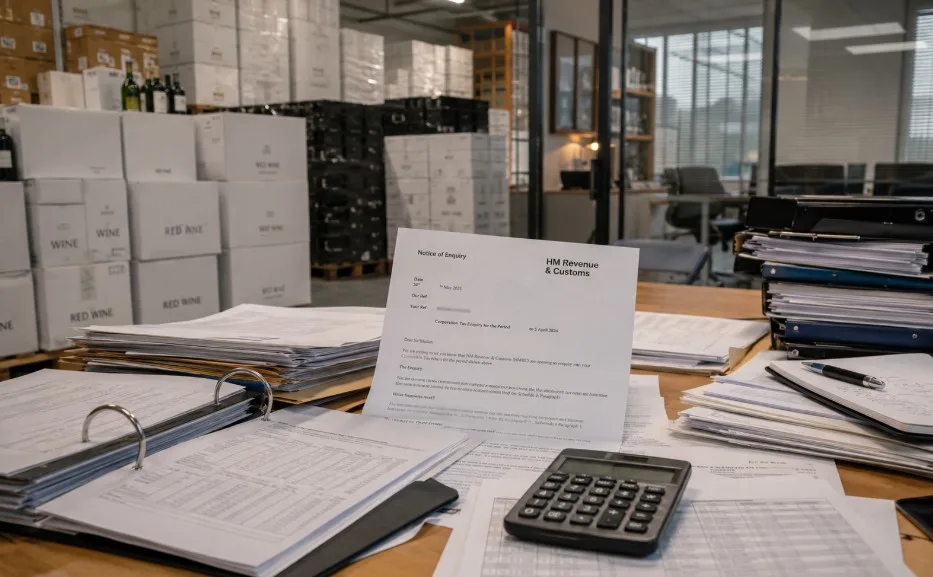
One of the most notable discoveries involved more than 9,700 cases of wine that had reportedly been purchased without being properly recorded in company accounts. These transactions became central to HMRC’s assessment of the business’s tax liabilities.
The scale of the discrepancy raised questions about the accuracy of reported sales and the completeness of financial records submitted to HMRC.
How Missing Invoices and Unrecorded Sales Raised Red Flags?
Investigators also identified missing purchase invoices and sales that had not been fully reflected in accounting records. HMRC argued that these omissions resulted in understated taxable income and reduced tax liabilities.
Reported record issues included:
| Record Issue | HMRC Concern |
|---|---|
| Missing purchase invoices | Incomplete accounting trail |
| Unrecorded wine sales | Understated turnover |
| Stock discrepancies | Potential undeclared transactions |
| Off-book purchases | Reduced transparency |
| Director advances | Possible tax implications |
These findings strengthened HMRC’s position that the inaccuracies were not merely accidental bookkeeping mistakes.
HMRC’s Findings on Record-Keeping and Tax Reporting
The tribunal ultimately accepted HMRC’s argument that the inaccuracies represented deliberate conduct. The evidence suggested that the company knew the tax returns did not accurately reflect business activities.
This distinction became crucial during the appeal process and shaped the legal debate that followed.
How Did the £427,310 HMRC Tax Assessment Arise?
HMRC’s assessment totalled approximately £427,310 and covered multiple tax areas rather than a single issue. The authority argued that unrecorded transactions and omitted sales affected several tax obligations simultaneously.
Assessment breakdown overview:
| Tax Area | Purpose |
|---|---|
| VAT | Tax on taxable sales |
| Corporation Tax | Tax on company profits |
| Section 455 Liability | Tax relating to director loan accounts |
| Penalties | Deliberate inaccuracies in returns |
The case demonstrates how accounting issues can create wider tax exposure across multiple categories. It also highlights how weak record-keeping practices can quickly lead to significant financial liabilities and increased regulatory scrutiny.
What Was the Key Legal Argument Between New Claire Wine and HMRC?

The most significant legal issue in the New Claire Wine tax dispute concerned the interpretation of deliberate conduct.
Deliberate Inaccuracy vs Dishonest Behaviour
New Claire Wine argued that the tribunal’s finding of deliberate conduct effectively implied dishonesty. The company contended that if dishonesty was being alleged, HMRC should have formally pleaded and proved it.
HMRC took a different position. The tax authority maintained that deliberate inaccuracies and dishonesty are not necessarily identical concepts under tax law.
Why the Meaning of “Deliberate” Became Central to the Appeal?
The appeal focused on whether the First-tier Tribunal had erred in its reasoning. New Claire Wine claimed that additional explanation should have been provided regarding how conduct could be deliberate without being dishonest.
The Upper Tribunal disagreed.
Key legal distinction:
| Concept | Meaning |
|---|---|
| Careless behaviour | Lack of reasonable care |
| Deliberate behaviour | Intentional inaccuracy or misleading conduct |
| Dishonest behaviour | Involves a separate legal threshold |
This distinction ultimately became the decisive factor in the appeal outcome. The tribunal concluded that HMRC was not required to specifically allege dishonesty to establish deliberate inaccuracies.
“A deliberate inaccuracy may involve dishonesty, but the two concepts are not automatically interchangeable in tax proceedings.” — UK Tax Law Specialist
The ruling has broader implications for future HMRC enforcement actions and appeals involving tax penalties.
Why Did the Upper Tribunal Reject New Claire Wine’s Appeal?
In March 2026, the Upper Tribunal dismissed the company’s appeal and upheld the earlier findings.
The tribunal examined whether the First-tier Tribunal had made an error of law when determining that the inaccuracies were deliberate. After reviewing the arguments, the judges concluded that the appeal lacked sufficient grounds.
The Upper Tribunal found that the core issue was whether the inaccuracies were deliberate or careless. It was not necessary for HMRC to establish dishonesty as part of its case.
This decision reinforced HMRC’s position and left the company facing the full consequences of the assessments and penalties already imposed.
How Did the HMRC Investigation Contribute to New Claire Wine Entering Liquidation?
Following the prolonged tax dispute and tribunal proceedings, New Claire Wine Limited entered creditors’ voluntary liquidation (CVL) on 19 May 2026.
Timeline of major events:
| Date | Event |
|---|---|
| January 2024 | First-tier Tribunal decision |
| 12 March 2026 | Upper Tribunal decision published |
| 8 April 2026 | Winding-up petition reportedly filed |
| 19 May 2026 | Company entered CVL |
| 26 May 2026 | Gazette notice published |
Reports indicate that Giles McCarthy of Netchwood Finance Ltd was appointed as liquidator. While the official liquidation notice does not specifically attribute insolvency to the HMRC dispute alone, the timing suggests the case placed significant financial pressure on the business.
The liquidation marked the end of a company that had operated within the UK wine wholesale sector for approximately 14 years.
What Does the New Claire Wine HMRC Case Reveal About Tax Compliance Risks for UK Businesses?

The case illustrates several compliance risks that affect businesses across multiple sectors, not just wine wholesalers.
Companies can face substantial consequences when accounting records fail to accurately reflect commercial activity. HMRC increasingly uses data analysis, stock reconciliation, and transactional reviews to identify inconsistencies.
“Businesses should view accurate record-keeping as a core compliance function rather than an administrative task.” — Former HMRC Compliance Adviser
The dispute also demonstrates that legal challenges may focus on technical interpretations of tax law, yet underlying documentation remains critical. Where records are incomplete or inconsistent, defending tax positions becomes significantly more difficult.
Businesses should therefore ensure accounting systems, inventory records, invoices, and tax filings remain fully aligned.
What Does This Case Mean for the UK Drinks Industry in 2026?
The New Claire Wine tax dispute serves as a significant reminder for businesses across the UK drinks industry that regulatory scrutiny is becoming increasingly sophisticated.
HMRC is placing greater emphasis on reviewing stock records, sales data, purchase invoices, and tax returns to identify inconsistencies that may indicate underreported income or compliance failures. For wine merchants, wholesalers, and alcohol distributors, maintaining accurate records is no longer simply a best practice but a critical business requirement.
In 2026, the case also highlights the financial and reputational risks associated with poor tax governance.
As operating costs and compliance obligations continue to rise, drinks businesses are likely to invest more heavily in accounting controls, inventory management systems, and professional tax advice to reduce the risk of costly investigations and disputes
Conclusion
The New Claire Wine tax dispute shows how poor record-keeping, accounting irregularities, and inaccurate tax reporting can create serious financial and legal consequences.
HMRC’s investigation, tribunal decisions, and the company’s liquidation highlight the importance of maintaining accurate records and strong compliance practices.
Beyond the legal arguments, the case serves as a reminder for UK businesses that proactive compliance, transparent reporting, and proper financial management remain essential for avoiding costly disputes and regulatory action.
FAQs About New Claire Wine Tax Dispute
What is an HMRC discovery assessment and when can it be issued?
An HMRC discovery assessment allows the tax authority to recover unpaid tax when new information reveals that a tax return was incomplete or inaccurate.
What penalties can HMRC impose for deliberate inaccuracies in tax returns?
HMRC can impose financial penalties that are generally higher than those applied to careless errors, particularly where inaccuracies are considered deliberate.
Can poor bookkeeping trigger a tax investigation in the UK?
Yes. Inconsistent records, missing invoices, unexplained stock discrepancies, and unusual reporting patterns can all attract HMRC scrutiny.
What is a director’s loan account and why can it create tax liabilities?
A director’s loan account records money borrowed from or owed to a company by a director. Certain unpaid balances may trigger Section 455 tax charges.
What happens to creditors when a company enters a creditors’ voluntary liquidation?
Creditors may submit claims through a proof-of-debt process and receive distributions depending on available assets and creditor ranking.
How does HMRC distinguish between careless and deliberate tax errors?
Careless errors arise from a failure to take reasonable care, while deliberate errors involve knowingly submitting inaccurate information.
Can a company appeal an HMRC tax penalty after a tribunal decision?
Companies can appeal tribunal decisions where legal grounds exist, although higher courts will generally focus on legal errors rather than factual disagreements.