
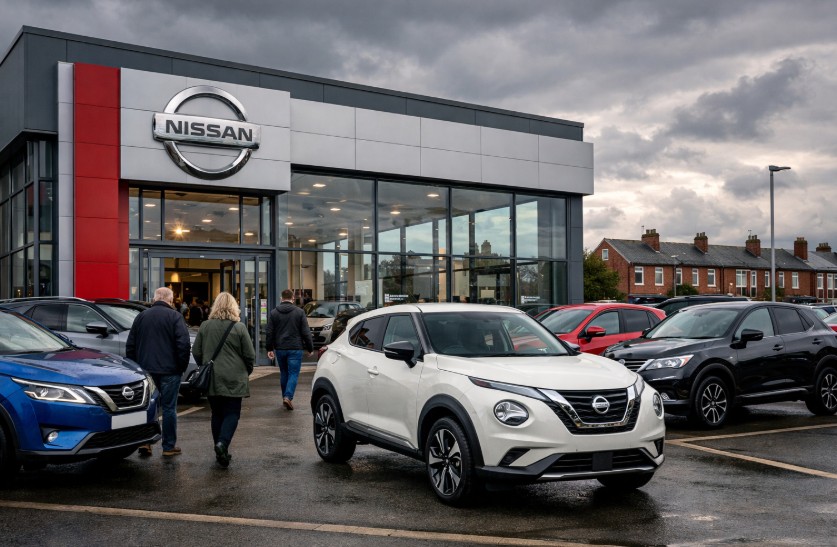
No, Nissan is not going out of business in 2026. The company remains under significant financial and competitive pressure, but the latest evidence points to an active turnaround rather than an imminent shutdown.
Nissan returned to quarterly profit in the three months ending June 2026. It reported ¥77.9 billion in consolidated operating profit and approximately ¥3.8 billion in net profit, reversing the losses recorded in the same quarter a year earlier.
The company has also kept its full-year operating profit forecast at ¥200 billion. That does not mean Nissan’s problems have disappeared.
The carmaker is still cutting costs, reducing its workforce, consolidating factories and dealing with difficult conditions in China. However, there is currently no bankruptcy filing, liquidation announcement or confirmed plan to stop trading in the UK.
Why Did People Think Nissan Was Going Out of Business?
The question began attracting widespread attention after Nissan’s financial performance deteriorated sharply during 2024 and 2025.
A combination of weak profitability, high inventories, difficult conditions in China and North America, leadership changes and production cuts created legitimate concern about the company’s future.
The biggest warning signs included:
- Large Annual Losses
- Thousands Of Planned Job Cuts
- Factory Consolidation
- Falling Production Volumes
- Weak Performance In China
- The Failed Honda Merger Talks
- A Widely Reported “12 To 14 Months” Survival Warning
Those developments were serious. The problem is that many articles continue to present them as though nothing has happened since.
The picture in August 2026 is more complicated.
What Happened to Nissan’s “12 to 14 Months to Survive” Warning?
One of the biggest reasons people began searching “is Nissan going out of business” was a late-2024 report quoting an unnamed senior Nissan official who reportedly said the company had “12 or 14 months to survive”.
That comment was never an official bankruptcy deadline.
It was better understood as a warning about how quickly Nissan needed to secure funding, improve performance or find another strategic solution.
The implied period has now passed.
Nissan is still producing vehicles, publishing financial results, launching new models, raising and managing financing, operating factories and maintaining dealership networks in August 2026.
That does not prove Nissan is permanently safe, but it does demonstrate why the original warning should no longer be presented as a countdown to the company closing.
Since that period, Nissan has changed chief executive, launched the Re:Nissan recovery programme and begun restructuring its manufacturing network.
Is Nissan Recovering Financially in 2026?

There are now genuine signs of improvement, although Nissan is not yet back to the financial position it would want.
The company recorded a ¥533.1 billion net loss for the financial year ending March 2026. That followed an even larger ¥670.9 billion loss in the previous year.
However, the first quarter of Nissan’s 2026 financial year produced a much stronger result.
Nissan Financial Position
| Financial Measure | FY2024 | FY2025 | April–June 2026 |
|---|---|---|---|
| Net Result | ¥670.9bn loss | ¥533.1bn loss | ¥3.8bn profit |
| Operating Result | ¥69.8bn profit | ¥58.0bn profit | ¥77.9bn profit |
| Direction | Severe deterioration | Losses remained substantial | Quarterly improvement |
| Main Concern | Weak profitability | Restructuring costs and weak sales | China and global sales volumes |
The April–June 2026 quarter delivered approximately ¥2.96 trillion in revenue, up from roughly ¥2.71 trillion a year earlier. Nissan also reaffirmed its full-year operating profit forecast of ¥200 billion.
This is one of the most important changes to Nissan’s story.
Earlier reports largely asked whether Nissan could stop its financial deterioration. The question now is whether it can turn one improved quarter into sustained profitability and positive automotive cash flow.
Why One Profitable Quarter Does Not Mean the Crisis Is Over
The latest figures are encouraging, but they should not be overstated.
Nissan reduced its expected full-year global vehicle sales from around 3.3 million to 3.15 million vehicles, mainly because conditions in China became more difficult. Raw material prices, geopolitical disruption and intense competition remain additional risks.
Two consecutive annual net losses also cannot be erased by one profitable quarter.
The latest result therefore provides evidence that the recovery measures are beginning to work, rather than evidence that every financial problem has been solved.
What Is Nissan Doing to Avoid Going Out of Business?
Nissan’s response is centred on the Re:Nissan recovery plan.
The official objective is to achieve positive automotive operating profit and positive free cash flow during FY2026. The plan combines cost reductions with changes to manufacturing, product development, market priorities and partnerships.
Reducing the Workforce
Nissan intends to reduce its global workforce by a total of around 20,000 positions by FY2027, including earlier announced reductions.
The cuts cover manufacturing, sales and administrative operations, research and development, and contractual workers.
The scale of the cuts shows the seriousness of the restructuring, but reducing staff is not the same as liquidating the company. Nissan is attempting to lower its cost base so that it can remain profitable at lower production volumes.
Consolidating Factories
Manufacturing is also being reshaped.
Nissan’s plan is to reduce its vehicle production footprint from 17 plants to 10 by FY2027, while raising utilisation at the remaining facilities and reducing production capacity outside China from approximately 3.5 million to 2.5 million vehicles.
By May 2026, Nissan said it had announced all seven of the manufacturing-site consolidation decisions envisaged at that stage of the plan.
This is a significant contraction, but its purpose is to remove excess capacity rather than stop Nissan manufacturing cars altogether.
Simplifying the Nissan Model Range
Nissan is also reducing complexity in the vehicles it develops.
Its April 2026 long-term strategy outlined plans to streamline the global portfolio from 56 models to 45, concentrating investment on products with clearer roles and stronger commercial prospects.
That means Nissan’s future may involve fewer individual models but more focused investment in the vehicles it believes can generate sustainable sales.
Is Nissan Sunderland Closing in 2026?
No. Nissan has not announced the closure of its Sunderland factory.
Sunderland remains Nissan’s main manufacturing base in Britain and employs around 6,000 people.
There has, however, been a significant operational change.
In May 2026, Nissan announced that production previously spread across two Sunderland lines would be consolidated onto one line. The company said the change itself would not cause production job losses at Sunderland.
That distinction matters.
Closing one production line is not the same as closing the Sunderland factory.
The consolidation is designed to increase factory utilisation and leave Nissan with spare manufacturing capacity that can potentially be used by another carmaker.
Could Chery Cars Be Built at Nissan Sunderland?
This is one of the biggest developments missing from many older Nissan articles.
In June 2026, Nissan and Chery International UK signed a non-binding memorandum of understanding to examine whether Nissan could manufacture Chery passenger vehicles at Sunderland.
Under the proposal:
- Nissan Would Continue To Own The Sunderland Factory
- Employees Would Remain Nissan Employees
- Chery Vehicles Could Use Production Line One
- Production Could Potentially Begin In FY2027
- The Agreement Remains Subject To Further Negotiations
Nissan’s own vehicles are being concentrated on Line Two, while the proposed Chery arrangement could make productive use of Line One.
This should not be presented as a completed manufacturing deal because the agreement remains non-binding.
Even so, Nissan seeking additional production for Sunderland is materially different from preparing to abandon the site.
Is Nissan Still Selling Cars Successfully in the UK?
Yes, and the Nissan Qashqai provides useful evidence.
According to July 2026 UK new-car registration figures, the Nissan Qashqai was Britain’s second-most registered new car during the month, with 3,224 registrations.
Across January to July 2026, the Qashqai recorded 26,326 registrations, making it the UK’s fourth-most registered model year to date.
| UK Qashqai Measure | 2026 Position |
|---|---|
| July Registrations | 3,224 |
| July UK Ranking | 2nd |
| January–July Registrations | 26,326 |
| Year-To-Date UK Ranking | 4th |
Those figures do not prove Nissan as a whole is financially healthy, but they do show that consumer demand for an important Nissan model remains substantial in Britain.
They are also more relevant to UK buyers than relying on sales figures for American models such as the Kicks, Pathfinder or Murano.
Did the Failed Honda Merger Leave Nissan Without a Partner?
No.
Nissan and Honda formally abandoned their proposed business integration in February 2025. The discussions had considered creating a combined group before disagreements emerged over the structure of the transaction.
However, the collapse of the merger did not end all cooperation between the companies.
Nissan’s current strategy continues to identify Honda, Mitsubishi Motors and Renault Group among partners involved in areas such as electrification and vehicle intelligence.
By July 2026, Nissan CEO Ivan Espinosa was also describing discussions with Honda as project-based cooperation rather than renewed integration negotiations.
The distinction is important. Nissan and Honda are not currently pursuing the abandoned merger, but cooperation on specific technologies and projects can continue.
Could Nissan Still Go Bankrupt?
It cannot be ruled out forever, but there is currently a major difference between Nissan’s financial difficulties and an actual bankruptcy or liquidation process.
Nissan is still trading, producing vehicles, investing in new products, operating factories and forecasting positive full-year operating profit.
When a car retailer genuinely enters liquidation, the consequences are much more immediate. The recent Suffolk car dealership collapse involved a company formally entering creditors’ voluntary liquidation, with customers having to distinguish between dealer obligations, finance arrangements and manufacturer-backed warranties.
Nissan is not currently in that position.
Five Signals That Would Matter More Than Bankruptcy Rumours
Anyone assessing Nissan’s future should focus less on social media rumours and more on measurable indicators.
| Signal to Watch | Why It Matters |
|---|---|
| Consecutive Operating Results | Shows whether restructuring creates sustainable profitability |
| Automotive Free Cash Flow | Indicates whether the core car business generates cash |
| Cash And Financing Access | Determines Nissan's ability to fund operations and debt |
| Global Vehicle Sales | Continued declines would make fixed costs harder to absorb |
| Re Targets | Missing cost, capacity and profitability targets would increase pressure |
The August 2026 quarter improved several of these indicators, but Nissan still needs to demonstrate that the progress can continue.
Should UK Drivers Worry About Buying a Nissan?

There is currently no strong evidence that UK drivers need to avoid Nissan solely because of rumours that the company is going out of business.
Nissan dealerships continue selling vehicles, manufacturer support remains available and there has been no announcement that Nissan is abandoning the British market.
It is also important to separate a manufacturer’s financial position from changes inside its retail network. Recent Mercedes-Benz UK dealership changes demonstrate how dealership ownership and retail structures can change significantly without the underlying vehicle brand disappearing from Britain.
For a prospective Nissan buyer, practical considerations should therefore remain similar to those for any car purchase:
- Check The Warranty Terms
- Compare Finance Costs Carefully
- Consider Expected Depreciation
- Check Local Dealer And Servicing Availability
- Research Parts And Maintenance Costs
- Choose The Model Based On Suitability Rather Than Bankruptcy Rumours
A local dealership could change ownership or close even when the manufacturer itself remains active, so buyers should understand who provides each part of the warranty, finance and servicing package.
Is Nissan Still Investing in Electric and Hybrid Cars?
Yes.
Cost cutting does not mean Nissan has stopped developing future vehicles.
The company’s revised strategy places particular emphasis on electrification, e-POWER hybrids, electric vehicles, software and a smaller number of strategically important models.
Nissan’s long-term plan also includes the all-electric Juke and further use of its e-POWER system, while Sunderland remains closely associated with the company’s UK electrification plans.
For British motorists considering models such as the Leaf or other future Nissan EVs, running costs will depend heavily on where the vehicle is charged. The difference between home and public charging can be substantial when calculating how much it costs to charge an electric car.
Nissan’s continued investment in new powertrains is another reason its present situation should be viewed as restructuring rather than preparation for shutdown.
What Are Nissan’s Biggest Risks for the Rest of 2026?
The latest financial result is better, but Nissan still faces several difficult tests.
- China: China remains particularly challenging because domestic manufacturers have expanded rapidly in electric and electrified vehicles. Nissan reduced its FY2026 global sales forecast partly because of weaker conditions there.
- Global Sales Volumes: Cost savings help profitability, but Nissan ultimately needs competitive vehicles that customers want to buy. Persistent declines in volume would place more pressure on factories and profit margins.
- Restructuring Execution: Reducing plants, employees, development costs and product complexity is difficult to execute without disrupting operations. Nissan must make the company smaller and more efficient without weakening its ability to compete.
- New Product Performance: Future Nissan models will have to perform strongly against Toyota, Hyundai, Kia, BYD, Chery and other increasingly competitive manufacturers.
The recovery therefore depends on product strength as much as accountancy and cost cutting.
What Happens Next for Nissan?
The next phase will show whether Nissan’s turnaround can move from emergency restructuring into sustainable recovery.
The areas worth watching are:
- Further Quarterly Profitability
- Progress Towards Positive Automotive Free Cash Flow
- Delivery Of Re:Nissan Cost Reductions
- The Revised 3.15 Million Vehicle Sales Target
- Performance In China
- Progress At Sunderland
- Whether The Chery Manufacturing Proposal Becomes Binding
- Demand For New Electric And e-POWER Models
Nissan has moved beyond the point when the original “12 to 14 months” claim suggested its future might have to be decided.
It is still here.
The question for late 2026 is therefore no longer simply whether Nissan will survive the next few months. It is whether the company can convert cost savings, restructuring and new products into consistent profitability.
Conclusion
Nissan is not going out of business in 2026.
The company remains in a serious restructuring programme after recording two consecutive annual net losses, cutting thousands of jobs and reducing its global manufacturing footprint.
However, the latest evidence is more positive than the headlines that originally triggered collapse rumours.
Nissan returned to a small net profit in the April–June 2026 quarter, generated ¥77.9 billion in consolidated operating profit and maintained its full-year operating profit forecast. The Qashqai also remains one of Britain’s most registered cars, Sunderland has not been announced for closure and Nissan is exploring additional manufacturing at the plant with Chery.
The turnaround is not complete and the risks should not be understated. China, global sales volumes, restructuring costs and product competitiveness will determine what happens next.
For now, though, the evidence supports recovery and restructuring rather than imminent bankruptcy or withdrawal from the UK.
Frequently Asked Questions
Is Nissan Going Bankrupt in 2026?
No bankruptcy or liquidation has been announced. Nissan remains operational and returned to quarterly profit in April–June 2026.
Is Nissan Sunderland Closing?
No closure has been announced. Nissan is consolidating its own production onto one line while examining possible Chery production on the other.
Is Nissan Still Losing Money?
Nissan recorded a substantial loss for FY2025, but returned to a small net profit in the first quarter of FY2026.
What Happened to Nissan’s 12-Month Survival Warning?
The reported warning came from an unnamed source in late 2024 and was not an official bankruptcy deadline. The implied period has now passed and Nissan continues operating.
Is Nissan Still Selling Well in the UK?
Yes. The Qashqai was the UK’s second-most registered new car in July 2026 and ranked fourth for January to July combined.
Is Honda Buying Nissan?
No Nissan-Honda merger is currently planned. The companies ended integration talks in 2025 but continue exploring cooperation on selected projects.
Is It Safe to Buy a Nissan in 2026?
There is currently no indication that Nissan is withdrawing customer support from the UK. Buyers should still assess warranty, finance, servicing and resale considerations in the normal way.